- Album
Fathom by Mortal
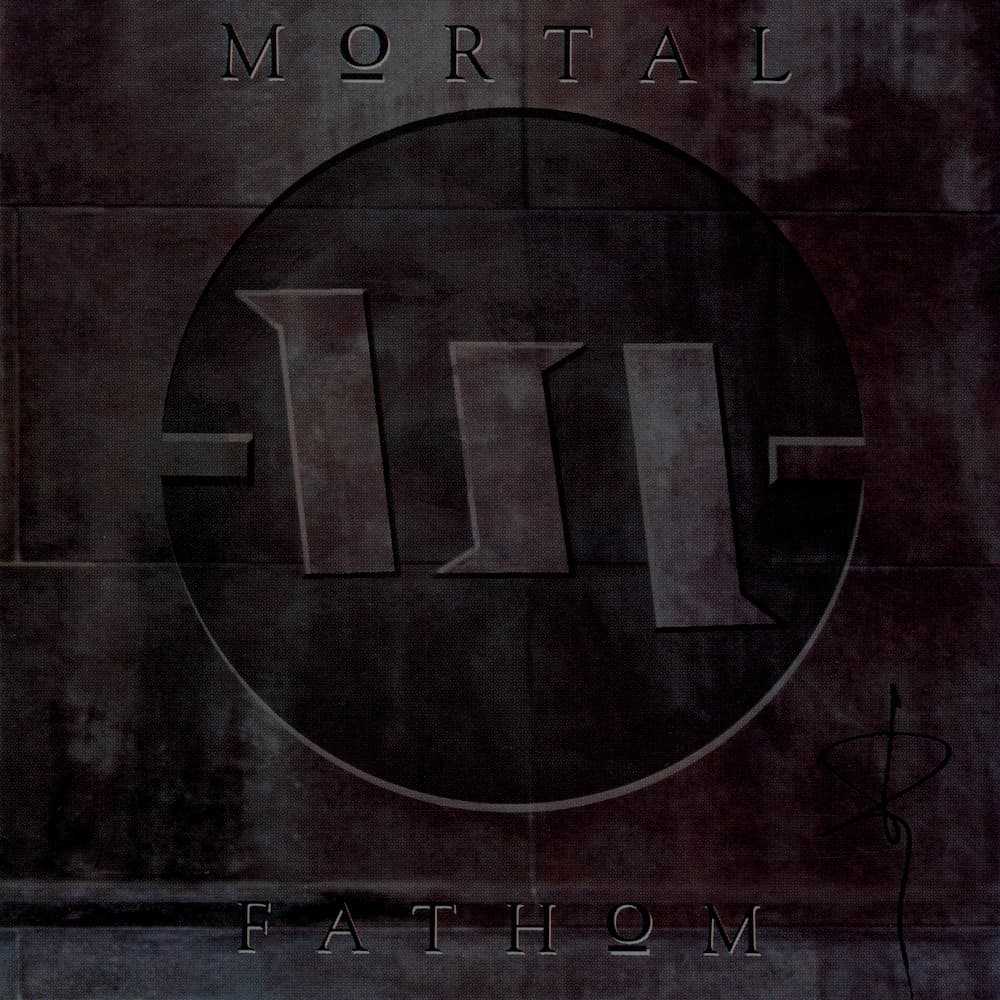
As a ’90s youth group kid who had recently discovered the likes of The Cure, Depeche Mode, and Nine Inch Nails, I was firmly convinced that Christian music was lamer than lame. Sure, I’d been a fan of DC Talk — for the record, I still hang with some of Nu Thang’s songs — and rocked out to the occasional Petra tune. But compared to the intensity I heard in those secular artists, an intensity that really resonated with my angst-ridden adolescent soul, most of the Christian music I heard just seemed weak, pallid, and irrelevant.
And then my friend Daniel let me borrow his copies of The Prayer Chain’s Whirlpool EP and Mortal’s Fathom. Both were explicitly Christian in their lyrics, but actually sounded good. The former was a decent collection of alternative rock tunes that evinced equal love for U2’s atmospherics and Alice in Chain’s grunge. But it was Mortal’s Fathom that I really took to. I had recently discovered industrial music via Nine Inch Nails and Ministry, and the thought of Christians exploring the genre without sacrificing any spiritual or musical integrity was instantly intriguing.
I’m sure true rivetheads might raise an eyebrow at Mortal’s inclusion in the genre. Indeed, Mortal themselves called their music “hypersoul.” In any case, the duo’s mix of metal and dance music, replete with lots of sci-fi samples (Aliens, Blade Runner, Dune), instantly grabbed me by the throat. Songs like “Alive and Awake” and “Ne Plus Ultra” had me head-banging away in my bedroom to their chunky riffs, lighting-fast beats, and screaming vocals. But the band also had a softer, more contemplative side, as heard on “Jil Sent Me” and “Rainlight.”
And the lyrics… Thought-provoking and even sensitive, Jyro used rich imagery to explore faith and life in ways that I’d never heard before from a Christian artist. “Rift” condemned the damage of sexual and spiritual abuse while “Jil Sent Me” found Jyro struggling to maintain a faith that “dies with every living proof” and finding peace through “ineffable” grace. (Did Fathom expand my vocabulary? Almost certainly.) “Above & Beyond” saw him looking for hope and wisdom “above and beyond the temporal” (and quoting St. Augustine for good measure). And finally, “Bright Wings” had the genius to set Gerard Manley Hopkins’ poetry to a Beastie Boys beat.
For a few months, Mortal was my favorite band and Fathom was my favorite album. They gave me a new lexicon through which to express my faith and doubts, and they did so with music that felt fresh, vital, and relevant to my young ears. What’s more, they proved beyond any doubt that Christian artists could hold their own — musically, aesthetically, lyrically — with their secular counterparts.