- Album
We Are the Music Makers by Joy Electric
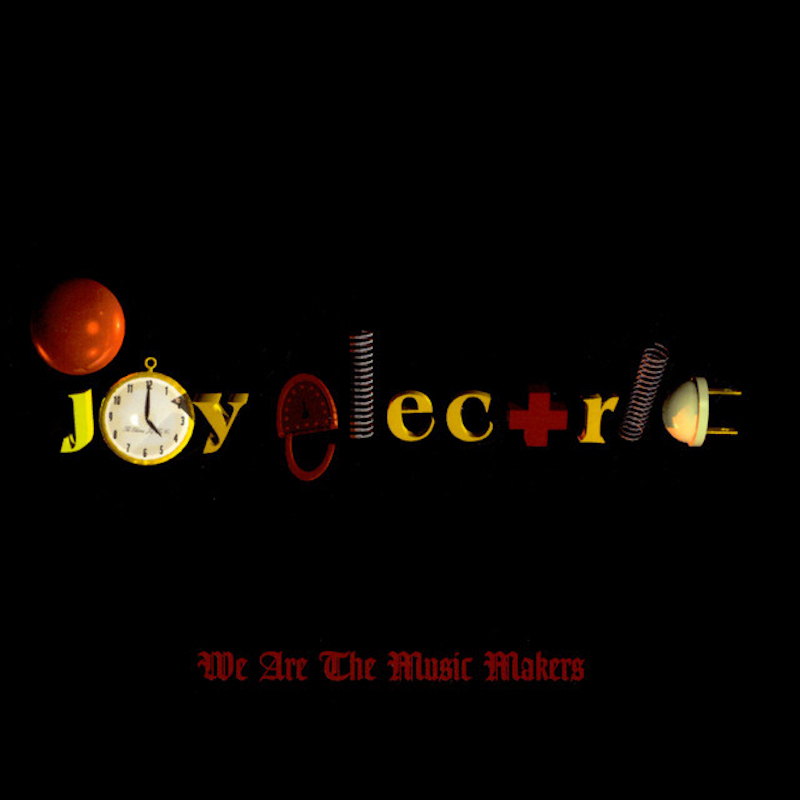
As I understand it, Ronnie Martin — the genius behind Joy Electric’s dazzling array of bleeps and bloops — has effectively disowned this, his sophomore album. While recording the album, his synthesizer’s memory was erased, meaning he had to start all over. All of that extra work, combined with his dissatisfaction with the songwriting, has led him to call We Are the Music Makers his least favorite album.
But with all due respect to Mr. Martin, who has been crafting pristine synth-based music since the early ’90s, We Are the Music Makers has charmed me since day one. That’s certainly due to Martin’s synth arrangements, which embraced a more old school “purist” approach centered on a single Roland JD-990 synth. But much of that’s due to the album’s medieval imagery.
As a longtime fan of all things fantasy and Arthurian, I loved the notion of a synth-pop artist singing about knights, dragons, ancient kingdoms, ghosts, and madrigals — especially when delivered in Martin’s trademark fey, breathy vocals. On paper, it’s rather silly, but Martin embraces the album’s conceit so earnestly that lyrics like “But there was hope once in my heart/When minstrels sang sweet their song” and “Grim nor gale shall hinder clove or heather/Ghouls nor satyr partakes goblets and gold fount” just make perfect sense.
Add to that Martin’s Christian faith, which he proclaims on such fanciful songs as “Old Castle Madrigal,” “Christendom on White Horses,” and “May All Saints.” Forget about secular listeners or critics for a minute. I love the thought of Christian bookstore employees, youth pastors, and concerned parents alike trying to figure out what’s the deal with some dude in mascara and a frilly poet’s blouse singing “We come forth, our Lord be with us/We come forth, in unison and grace” or “May all Saints sing of your name/May the wicked be slain by your holy name.” Is he for real, or is this some sort of parody?
Let me assure you that “Count Ronald Martin” has always been for real, and We Are the Music Makers is early proof why.