30 Years of Serenity: Dirk Serries Reflects on vidnaObmana’s The River of Appearance
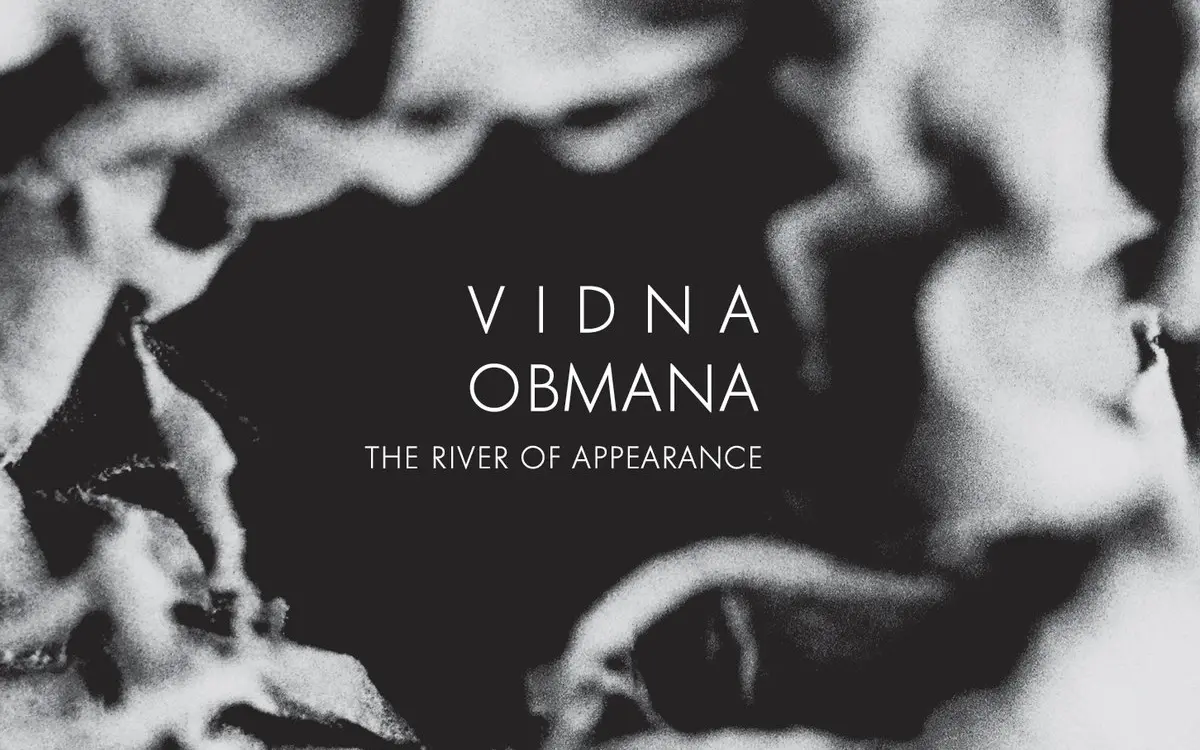
I can still recall the moment when I learned about vidnaObmana’s The River of Appearance. I was browsing Soulwhirlingsomewhere’s website and reading Michael Plaster’s blurbs about the music he was listening to at the time. Eating the Sea was my favorite album at the time, so I was naturally intrigued by his picks, and doubly so when I saw him describe The River of Appearance as the sort of music he imagined souls might hear upon entering heaven. Such a vivid description sealed the deal for me, and so The River of Appearance was in my next order from Projekt Records.
As it turns out, Plaster’s description wasn’t too far off. With its graceful intertwining of melancholy synths, sparse piano melodies, subtle guitar, and tribal percussion, The River of Appearance is a masterpiece of contemplative ambience. I can’t even begin to count the number of times I’ve listened to it since the late ’90s — among other things, it’s become one of my go-to albums for when I’m suffering from a debilitating migraine — and never once has it failed to draw me into its serene, twilit world.
I’ve written a lot about The River of Appearance over the years, including an exhaustive song-by-song breakdown for its 25th anniversary. But to mark the album’s 30th anniversary, I decided to go right to the source: Dirk Serries, the Belgian producer and guitarist who recorded and released over 150 titles as vidnaObmana before retiring the moniker in the mid ’00s. Serries graciously agreed to an interview, and I took the opportunity to ask him at length about vidnaObmana’s history, the process of recording The River of Appearance, his thoughts on the album’s legacy, and much more.
This interview has been lightly edited for consistency and continuity.
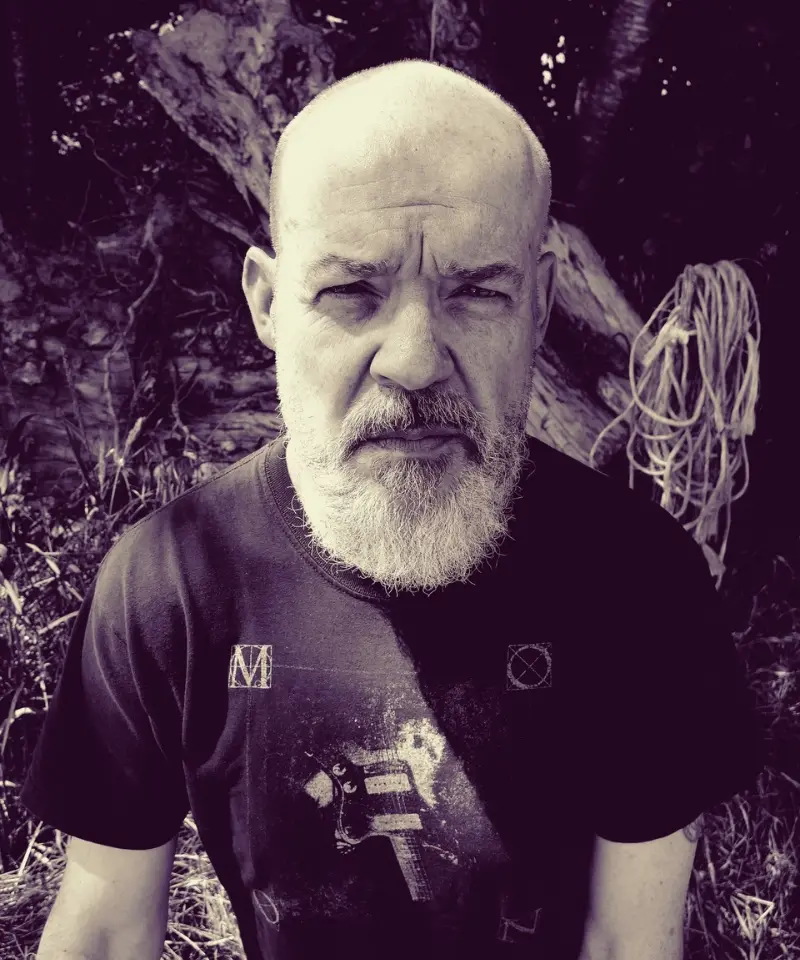
First, let’s establish some context for readers who might not be familiar with your music. What is your musical background and what were the origins of vidnaObmana? And why did you ultimately decide to retire vidnaObmana and focus on releasing music under your own name?
I started out experimenting with sound at the age of 14. From a young kid on, I was a film buff and eventually got hooked on movie soundtracks. Ennio Morricone, John Carpenter, Jerry Goldsmith, etc. So when my turntable’s needle got stuck in one of the grooves of a vinyl of Ennio Morricone’s soundtrack, I discovered something that really triggered my fantasy and fascination. Something new musical and non-musical appeared and with this simple set-up, I got to generate otherworldly sounds. First with just a turntable, a DJ mixing desk, radio frequencies, and a couple of effects, and later on, thanks to the support of my parents, a Korg MS-20.
I was very much an autodidact and the sky became the limit as my fascination for sound grew over time. My hunger for pushing forward and trying different things, exploring various genres and blending them, always surpassed my original intentions to stick with a genre or style. VidnaObmana became a restless alter-ego with which I continued to move forward. However when creating albums like The Trilogy, The River of Appearance, Crossing the Trail, or my albums with Steve Roach, I just didn’t realize that listeners, labels, and fans had other expectations.
With the requests for more ambient melancholy and my own fanatic experimentation in the studio — which became more like a laboratory that squeezed out all the passion, spontaneous playing, and fun — I felt that the end of vidnaObmana was near. When I got an offer from metal label Relapse Records to do an album for them, I was able to push my work as vidnaObmana to its final edge with the Dante trilogy. That trilogy brought all my influences, ideas, and work together while featuring some musicians from the metal and prog rock scenes (e.g., Neurosis’s Steve Von Till, Porcupine Tree’s Steven Wilson). It was the final chapter of the fantastic story that vidnaObmana was, but I felt that it was time to move on and unleash some other ideas I had, including my Microphonics series and music under my own name.
Do you remember which Morricone soundtrack you were listening to when your turntable’s needle got stuck in the groove?
Oh yes, it was the combined soundtracks of For a Few Dollars More and A Fistful of Dollars. I clearly remember that the needle got stuck on that particular piece which used a very dramatic organ. It just blew my mind and planted the seed, I guess.
If someone listened to The River of Appearance and then went back and listened to some of the earliest vidnaObmana releases, like 1985’s The Ultimated Sign of Burning Death and 1987’s Hope and Die, they might think they were listening to two very different artists. Those earlier albums are quite a bit harsher, filled with industrial noise and power electronics. What led to this pretty marked sonic and musical evolution?
Hahaha, oh absolutely. This is actually a beautiful example of how restless I was as a musician, while growing and maturing as a human being. The music couldn’t be further apart but the albums came from the same mind. It’s a long story of events that led to this drastic change, but in my mind it made sense as, after being exposed to the beauty of sound, I was not only an ambitious person who wanted to create sound and music but also extremely eager to discover new music.
(Editor’s note: Back in 2017, I wrote about vidnaObmana’s musical evolution and reviewed some of those earlier albums.)
While movie soundtracks did have snippets of experimentation, noise, and sound effects, it wasn’t enough, so the search for strange music continued in record stores and later on through small DIY labels and distributors. Hence my exposure to industrial and noise music but almost simultaneously, I discovered Brian Eno’s ambient music as well, so within a frame of a couple of years, vidnaObmana transformed from an industrial project to an ambient entity. I always knew that industrial music was a limited source of inspiration for me, so when I started to listen to Eno’s Music For Airports and his amazing On Land album, I felt immediately drawn to that style and what it could mean for me.
The transition took me a year or so and when I visited the States for my first tour in 1989 and met PBK in person (with whom I’d just done Monument of Empty Colours), the musical possibilities became almost endless when I was able to work in his studio in San Bernardino and use the interesting tools he worked with. There I recorded the foundations for my first full ambient album, Gathering in Frozen Beauty. I completed the album back home after buying myself the amazing Korg M1 workstation. This synthesizer took me to the next level and I was able to realize my own signature.
When you began working on The River of Appearance, were there any specific ideas or concepts that you sought to communicate with the album? Can you recall your mindset as you began the recording process?
While working on the Trilogy — Passage in Beauty, Shadowing in Sorrow, and Ending Mirage — I got to explore the full capacities of the Korg M1 and was able to buy myself its follow-up, the 01/W. This became my core set-up for recording The River of Appearance.
Prior to this, I was already exploring tribal-esque music, both solo (Echoing Delight) and in collaboration with Steve Roach (Well of Souls), so I really felt if I was going to record a new solo album, and the first one for Projekt, then I needed to return to melancholy and create an album that could stand out for its more harmonic, melodic nature while still using some acoustic elements from my tribal phase. An album which also could stand on its own.
By then I got to invest some extra budget in upgrading my studio with a decent multi-track system and extra outboard gear, which was necessary to record and realize the fineness of what I had in mind. Conceptually, it wasn’t but the main idea was to compose an album that was beautiful, introspective, and positive. And foremost, more structured, strict, and more classical in the framework of ambient music.
How did you create and develop the songs on The River of Appearance? They’re incredibly graceful and free-flowing, which suggest an improvisational approach to their recording. But they’re also very detailed and structured, especially for ambient music, which would suggest a very meticulous approach.
Nice to hear this, however, there was no improvisation at all. Everything on The River of Appearance was indeed meticulously composed and performed. I really wanted to score an album that was carefully written out and performed that way. Even the subtle rainstick additions were done in the strict context of each composition, its movement carefully performed.
Prior to The River of Appearance, I had hardly worked with multi-tracking, due to the reason I had no access to these recording devices, so that I had to work with just a few overdubs. The River of Appearance was the first time I got to work with the ADAT recording system. Not in a million years comparable with the multi-tracking on your computer nowadays but the ADAT brought interesting new techniques and foremost, an impeccable audio quality for that time. It gave me the freedom to work with several extra layers of sound, whether it was synth-based or acoustic. I do think you can really hear how The River of Appearance reveals so much more detail and nuance, and this is exactly what I wanted to achieve with this album.
Each piece was composed and performed in order as they are on the album. This way I could determine how many piano-esque pieces I wanted to do and how I would streamline the album so that it got that smoothness and organic flow from one song to the next.
You employ some very evocative titles for the album’s songs (e.g., “The Angelic Appearance,” “The Ominous Dwelling”). Did the titles come after you finished the songs, and you were trying to find some way to describe them? Or did you start with the titles, and use them to help shape and inform the songs?
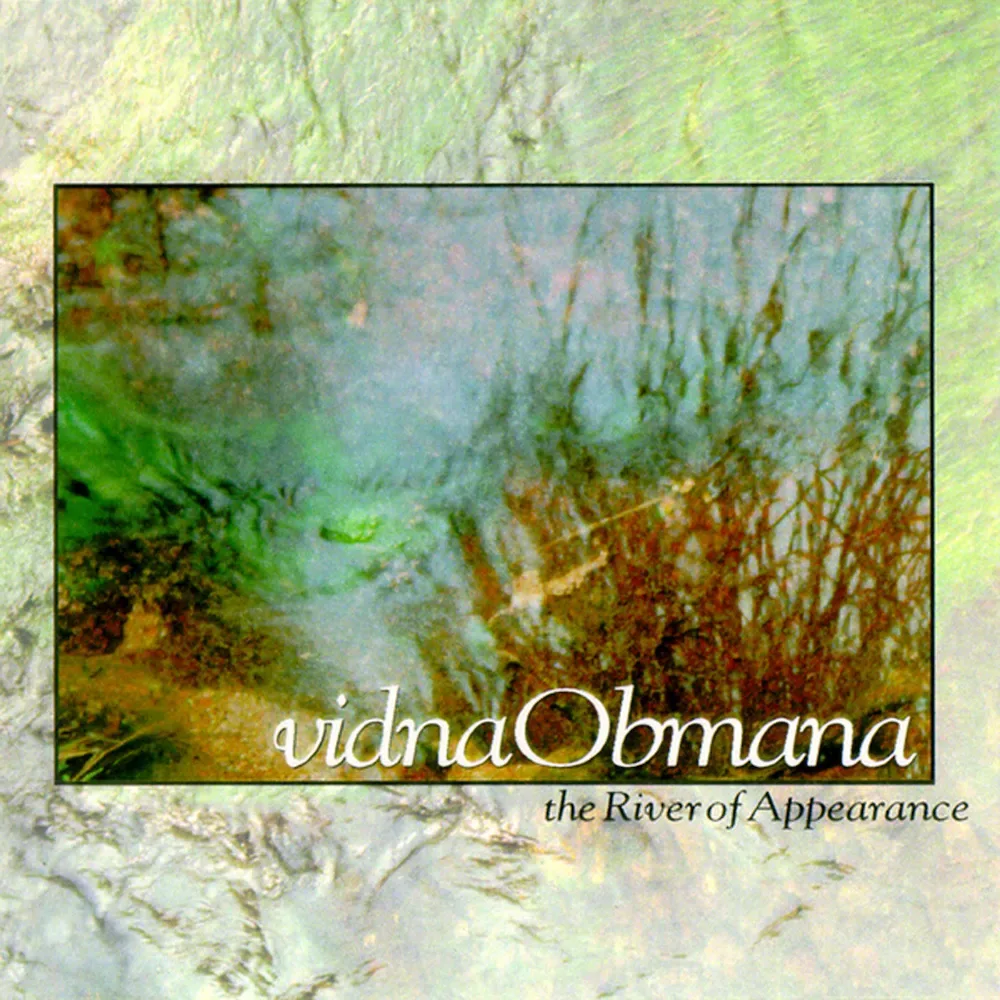
Most of the time I do have an album before I start recording. With The River of Appearance, it was exactly that, when I shot that photo of the tree reflecting in the water. I never liked the idea of attaching my music to a specific concept (whether socially, politically, or philosophically). I preferred to more or less describe my music through the photography I was using for its release and the titles. The titles are definitely specifically for The River of Appearance and are in a way representative for the feelings when staring into water and noticing all the detailed reflections and slow evolving structures due to the current. Also, the original image didn’t have anything intrusive or confrontational but was just a still from a peaceful moment in time on the river. The titles therefore could say something but only to a degree of suggestion. They would never impose a specific feeling, idea, or theme upon the listener. I’m still convinced that more unconventional music, the ones we like, is involving enough so that the individual listener can absorb, digest, and experience the music however and whenever they want.
When Steve Roach was working on 1984’s Structures From Silence, he would put the music on repeat, even while sleeping, in order to better understand the album and fine tune it. Listening to The River of Appearance, I can’t help but wonder what sort of approaches or techniques you employed to ensure its incredibly nuanced sonics, especially considering the eclectic instrumentation that you used.
I firmly believe that Steve is just a genius in sculpting these long form pieces which you can easily put on repeat. The way they are scored is just brilliant and with each spin something else seems to happen. Of these, The Dream Circle is my favorite, altering the awareness of time to such a degree that you just don’t realize anymore which part you’re listening to. It’s perhaps not so per se with Structures From Silence, but I can imagine the constant playback did make Steve aware of things that could have been redundant or pointless, and where there was space to accentuate particular elements.
However, I did nothing like that on The River of Appearance as the pieces were too strictly composed and performed. Of course, I listened back to every piece numerous times but only in the function of mixing each piece or to re-record a specific layer. Compared to my other albums, I do believe that The River of Appearance is my most strictly executed album based upon what I wrote down, despite the fact that later on computers arrived for recording.
The River of Appearance was one of your first titles for Projekt Records, which released several albums and compilations of your older material, like Twilight of Perception and The Trilogy. How did you get connected with Sam Rosenthal and Projekt?
If I recall correctly, we met during my visit to the US in 1990. Prior to this, I discovered some of the instrumental pieces that Sam Rosenthal made solo and with his Black Tape For a Blue Girl band, so I reached out. In 1990, we met and I was invited to contribute a piece to Projekt’s compilation series From Across This Gray Land.
I don’t know anymore how our contact evolved from there on but we definitely worked very closely together over the years, which intensified during the successful period of the compact disc in the ’90s. We worked musically together on Terrace of Memories in 1992 and Projekt released Well of Souls with Steve Roach in 1995.
The River of Appearance was my first main solo album for Projekt, and since then, they’ve been an immense supporter and believer in my music, and I’m happy we’re still working together for albums under my own name or in collaboration.
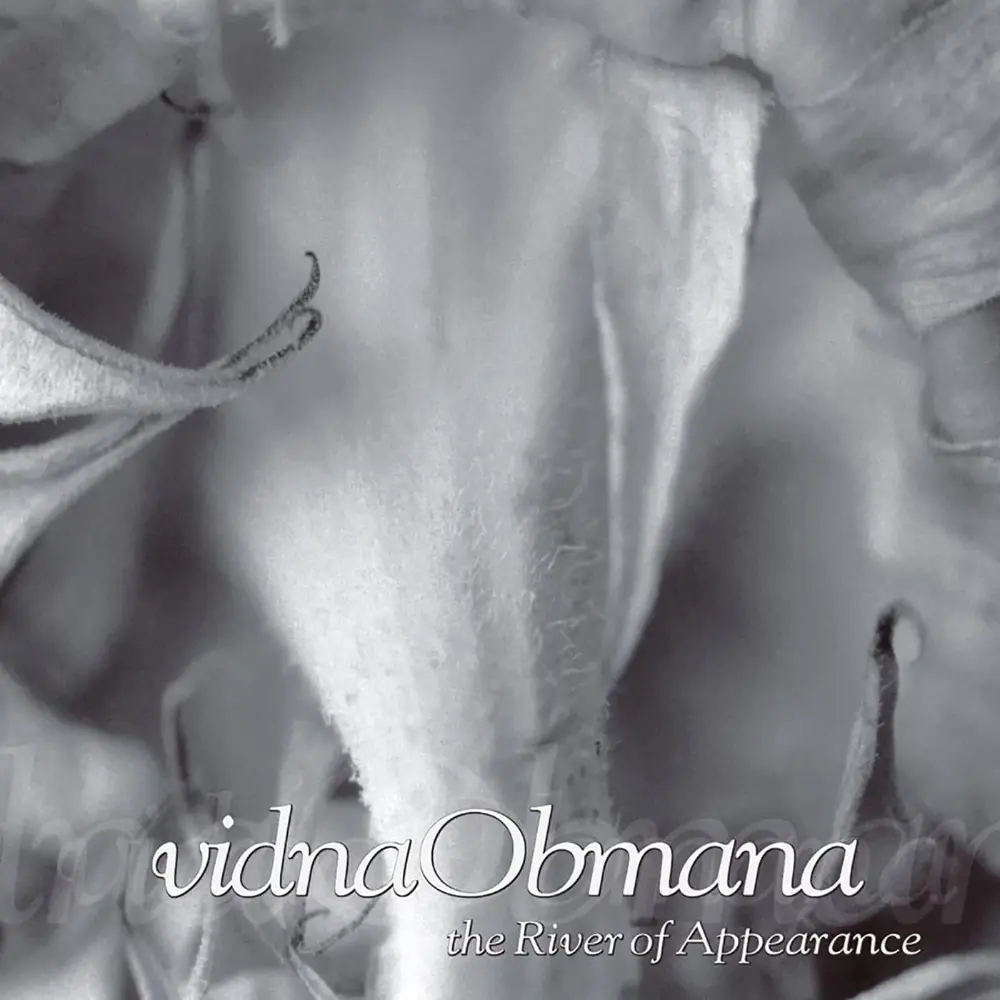
In 2006, Projekt released a 10th anniversary edition of The River of Appearance that included an acoustic recreation of the entire album by Dreams in Exile. Were you familiar with their music before Projekt’s reissue? What was it like to hear someone else’s interpretations of your music? Did you have any input in their renditions, or did you wait to see what they came up with?
Yes, I knew Corey and Kirk of Dreams in Exile prior to their recreation of River. I worked with them on producing their debut album and we clicked. And when they shared this brilliant idea with me, I immediately agreed. I have always been interested and mostly intrigued by how my music would sound when performed on acoustic instruments. So their proposal was a dream come true. I absolutely didn’t want any input and left it fully in their capable hands. And what they achieved was beyond my wildest expectations. Not only was each piece perfectly recreated on acoustic instruments but their choice of instruments and using the children’s choir was just brilliant. I still wish more came out of this exceptional work for them, showcasing their artistry. I do believe that, seeing all the modern classical cross-overs being made these last years, that Dreams in Exile was ahead of their time in making this masterpiece. Luckily, I got to work with them again on Echoes of Steel, the first chapter in my Opera For Four Fusion Works project for Hypnos, a few years later, which became another collaboration I still am very proud of.
Have you ever done any live performances of material from The River of Appearance? If so, what were some of the challenges in translating the album’s music into a live setting?
Most of the music was pretty hard to perform live due to its layering. The only piece which I was able to play more or less live was “A Scenic Fall” which I did a few times. I definitely used several different patches so the overall sound was different but the melody lines were similar.

In 2021, the Polish label Zoharum released a 25th anniversary edition of The River of Appearance that included some really unique packaging, including an elaborate flower box created by Karolina Zielińska. I always felt that Zielińska’s packaging was a nice counterpart to the album’s organic feel. Was that the goal? Did you have any input in the reissue’s artwork and design?
When I started to work with Zoharum for a series of vidnaObmana reissues, I knew they had a knack for beautiful packaging. They did my Trilogy in this beautiful wooden box and proposed a similar idea [for The River of Appearance]. Since I also had some outtakes in my archive, we decided to add a cassette with these unreleased pieces but we never discussed the brilliant idea of creating this flower box. When they proposed it, I just agreed instantly. I really liked the idea right away and especially because we were going to use new photography by Martina Verhoeven for this reissue. I immediately felt that this was the connection to photography and its new life The River of Appearance was given on Zoharum.
I always looked at a collaboration with a label as a full partnership in creating the best release possible, so I’ve always been open to ideas concerning the artwork, packaging, etc. Zoharum is a label that is generous with ideas and possibilities so that we can have something released we all can be 200% satisfied with. I do believe the result of this amazing series of vidnaObmana reissues proves that.
You self-release a lot of music via Bandcamp. But you also still work with labels like Projekt, which released your Infinite and Unbound album earlier this year, and Zoharum, which has released several of your Zonal Disturbances titles. What is the benefit for you to still work with labels, and how do you decide which compositions are self-released and which compositions go to labels?
Interesting question. The labels I work with have their own segment in the music industry and reach an audience that most of the time I don’t reach with my own self-released albums. I still have a large contact list and subscribers to my newsletter but you can only reach so many people you know or who have been following you for years. I feel that pro-active labels like Zoharum and Projekt do connect with other people.
It might sound like an ambitious approach but actually, it’s only in the realization that our kind of music can still reach a larger number of people. They just need to know of its existence and that’s why I still continue to be an advocate for persuading the official press to cover this kind of music. It’s not easy, which is a shame, as I believe way more people could be interested in listening to introspective and calm instrumental music.
The decision which album is a self-released physical or digital release and which one’s on a label is an organic one. I myself am old-school and still love a physical release, but the harsh reality of expensive life is catching up. The cost that postal or courier services charge these days is utterly ridiculous and scandalous, and on top of that, you do have the various import taxes some countries charge, making it almost impossible for a music devotee to afford. So I do realize that somewhere in the near future, more and more will be digital-only. Luckily I’m still able to work together with labels like Zoharum and Silentes who still consider a physical release an important factor in the creative process. Projekt, on the other hand, has found a brilliant way to release music digitally through their own channels.
Bandcamp is a fantastic platform I really love for its digital option. For instance, their subscription option is a really interesting possibility for sharing your ongoing creative process with your audience. No matter how many creative diversions I took in the past years, I continue to breathe ambient music. After dismissing my synths and focusing on the electric guitar, I managed to recreate the signature sound I once developed with vidnaObmana, and continues to be a line of studio performances.
Streams of Consciousness is a series under which I continue to work on my oeuvre as a pure ambient musician, while other releases, on the various labels, might just stir away from that classic style a bit too much. So this series functions perfectly as a digital-only one on Bandcamp, while others do need that physical element to highlight its importance or significance.
Either way I just love both sides.
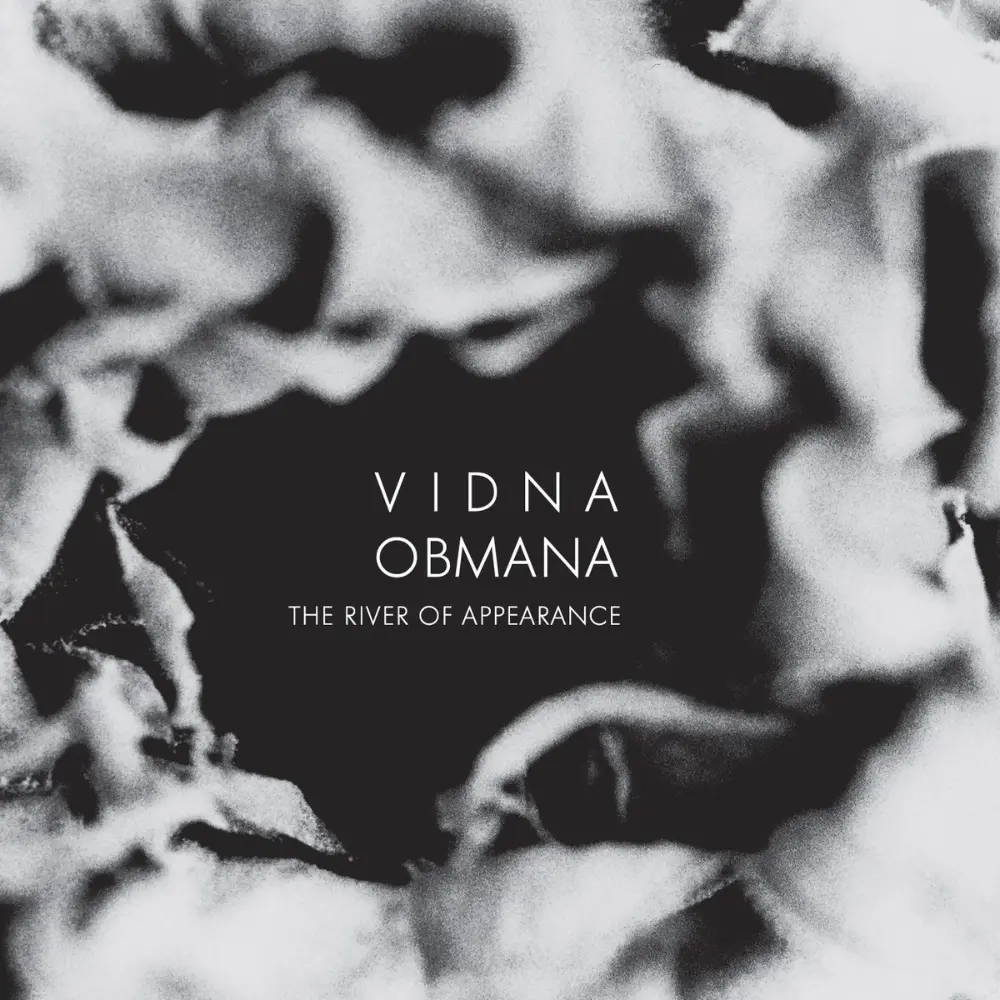
Earlier, you mentioned how you like to use photography to describe your music. Many of your albums feature Martina Verhoeven’s lovely photographs. I’m curious about the interplay between her photography and your music. Do you seek out specific images from her as you’re recording, or does she suggest photographs based on her own interpretations of your music?
It’s a bit both ways. Most of the time I do pick out the photos I really like from her extensive portfolio but there have been moments (for example, when I started my Fear Falls Burning project) when I asked her to shoot some close-ups of my guitars for several of the releases. But we’ve this kind of unspoken understanding where, somehow, she always seems to do the photography I need or can use in the future. For someone who just doesn’t like his music to be explained, having Martina there is luxurious and extremely comfortable as I know her photography is there waiting to be that perfect companion for the music I create.
Finally, reflecting on the last 30 years, what do you feel is The River of Appearance’s legacy? When you listen to it now, is there anything you’d do differently? What sort of responses and feedback have you received from listeners over the years?
Trust me, even after 30 years, The River of Appearance remains my most beloved album for most people. To this day, I still get a lot of praise for what I achieved on this album, so I can only be grateful for that respect and positive feedback. However, it’s also the album that somehow held me back from expanding and pushing further. The standard was set so rigorously that any musical diversion was received with critique and suspicion.
Please know that I’m very very proud of this album and over the years I really learned to love each recording I did, despite the flaws or things I could do way better now, but my urge to move forward and even alter my music style was too strong. I fully understand, of course, that people would have loved to have another River-type album, but I felt like I said everything I could at that point when I released it. And I’m really happy with what I did with one album, making it stand out and become such an important album for many of my listeners. A successor could only have diminished the quality of the original.