Stranger Things, Ten Years Later
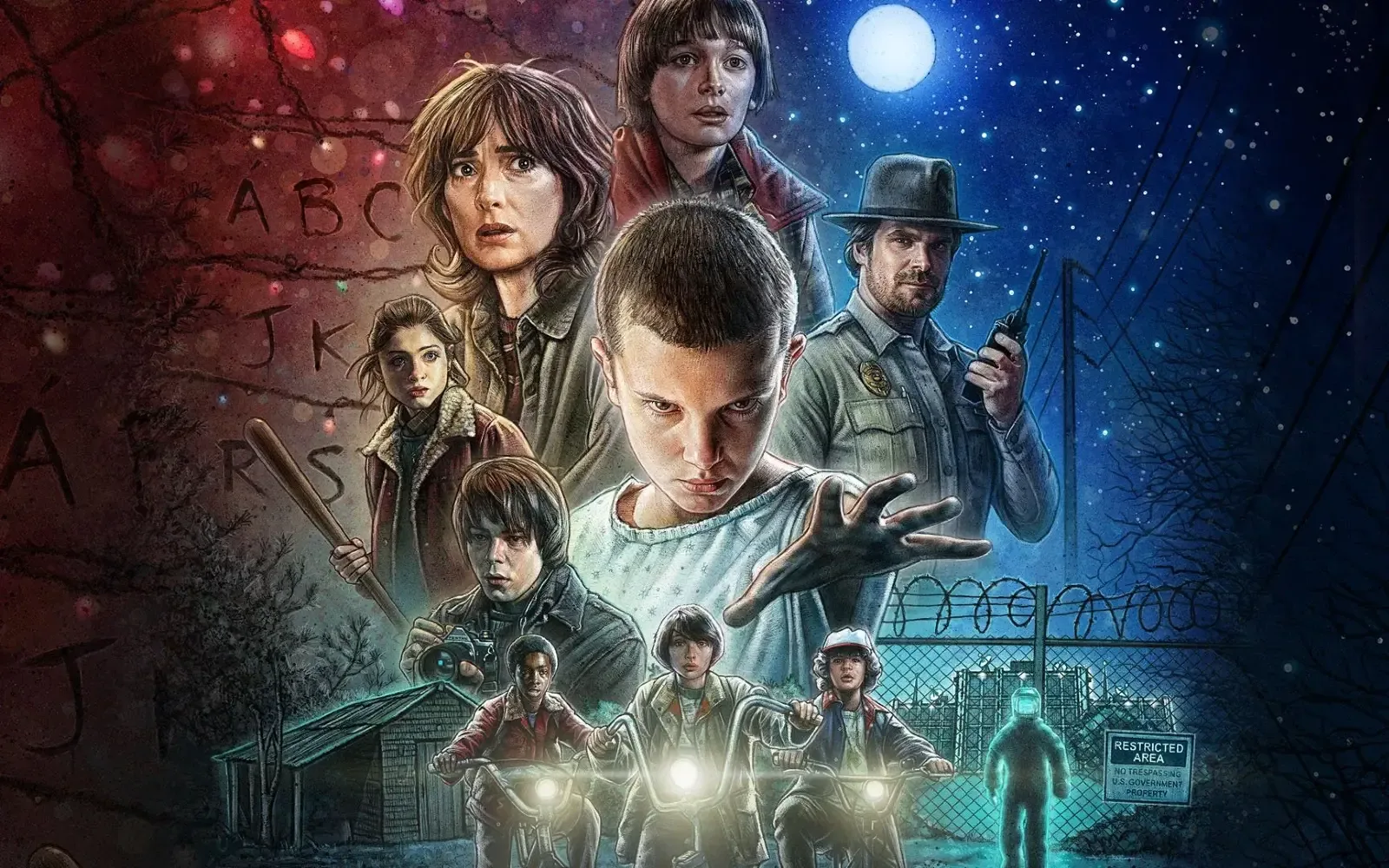
Ten years ago today, Netflix took us to Hawkins, a sleepy little Indiana town where stranger things were afoot. This story about a group of kids battling an unspeakable, otherworldly evil would ultimately span five seasons, create a cultural phenomenon, and become one of Netflix’s biggest hits.
The reasons for Stranger Things’ success are many: a deep and abiding sense of ’80s nostalgia; beloved characters and coming-of-age melodrama; a killer score by Survive’s Michael Stein and Kyle Dixon as well as the inclusion of classic era-appropriate tunes; incredible production design and eye-popping effects; and loads of nerdy callouts, most notably Dungeons & Dragons.
The ’80s nostalgia and nerdy callouts in particular were what resonated with me. Say what you want about the series as a whole, and it was certainly uneven at times (season three, I’m looking at you), but Stranger Things’ first season remains a near-perfect TV experience for me. This might sound strange (npi), but I’ve rarely felt so seen by a TV series. As I wrote in my review of the first season:
Not since Donnie Darko have I felt so strongly that some filmmakers had tapped directly into my subconscious with the express purpose of hitting all of my favorite tropes and narrative ideas (e.g., shadowy government experiments, role-playing games, scientists meddling where they shouldn’t be meddling, otherworldly monsters, coming-of-age stories, ’80s pop culture). Or, as my friend Jeremy put it, “It’s like the Duffer Brothers are us!”
But there’s another reason for the series’ success and broad cultural resonance, one that goes a little deeper than nostalgia. Stranger Things possessed a sincerity and lack of cynicism that, though occasionally awkward and on the nose, remained steadfast right up to its final, bittersweet scenes. And I think Emily St. James did a fantastic job of summing it up in her review of the series’ second season:
One of fiction’s most powerful functions is the way it allows us to tell stories about what we do and don’t value, the kinds of people we want to be and the kinds of people we want to see in the world. I don’t need to someone to explain to me that the best way to win somebody’s heart is to treat them like a human being, because I’m past that phase of my life. But many of those who watch Stranger Things do need to hear that, and I’m glad there’s a show willing to talk to them, too.
The world we live in might be complicated and full of bad choices, but some things remain easy to understand: Treat other people the way you would like to be treated. Remind yourself that other people are the authors of their own stories as surely as you are the author of your own. Don’t ever treat anybody as if they exist solely to help you get what you want.
Too many stories of the past several years have flirted with the idea that any or all of the above values might not be sound. Even if Stranger Things isn’t 100 percent to my taste, I like knowing that one of the most popular series of our time doesn’t just embrace said values, but shouts them from the rooftops.
Even in its weakest moments, Stranger Things never ceased wearing its heart on its sleeve. Sure, that occasionally led to some Big Emotional Moments™ that made you roll your eyes. At the same time, however, I was almost never not caught up in the characters and their stories, be it Eleven’s struggle to overcome her trauma even while battling extra-dimensional horrors, Steve’s maturation from bully and pretty boy to the best damn babysitter of all time, or Hopper battling his demons of grief and loss.
From my review of the fifth and final season: “Stranger Things’ emphasis on friendship above all else might’ve been too earnest for its own good at times, but it was also a welcome respite from the cynicism that floods our world these days.” I suspect I’ll eventually make a return trip to Hawkins some day, when I need to experience that respite again, and I highly doubt that I’ll be the only one making such a journey in the years to come.