Vine Returns as Divine
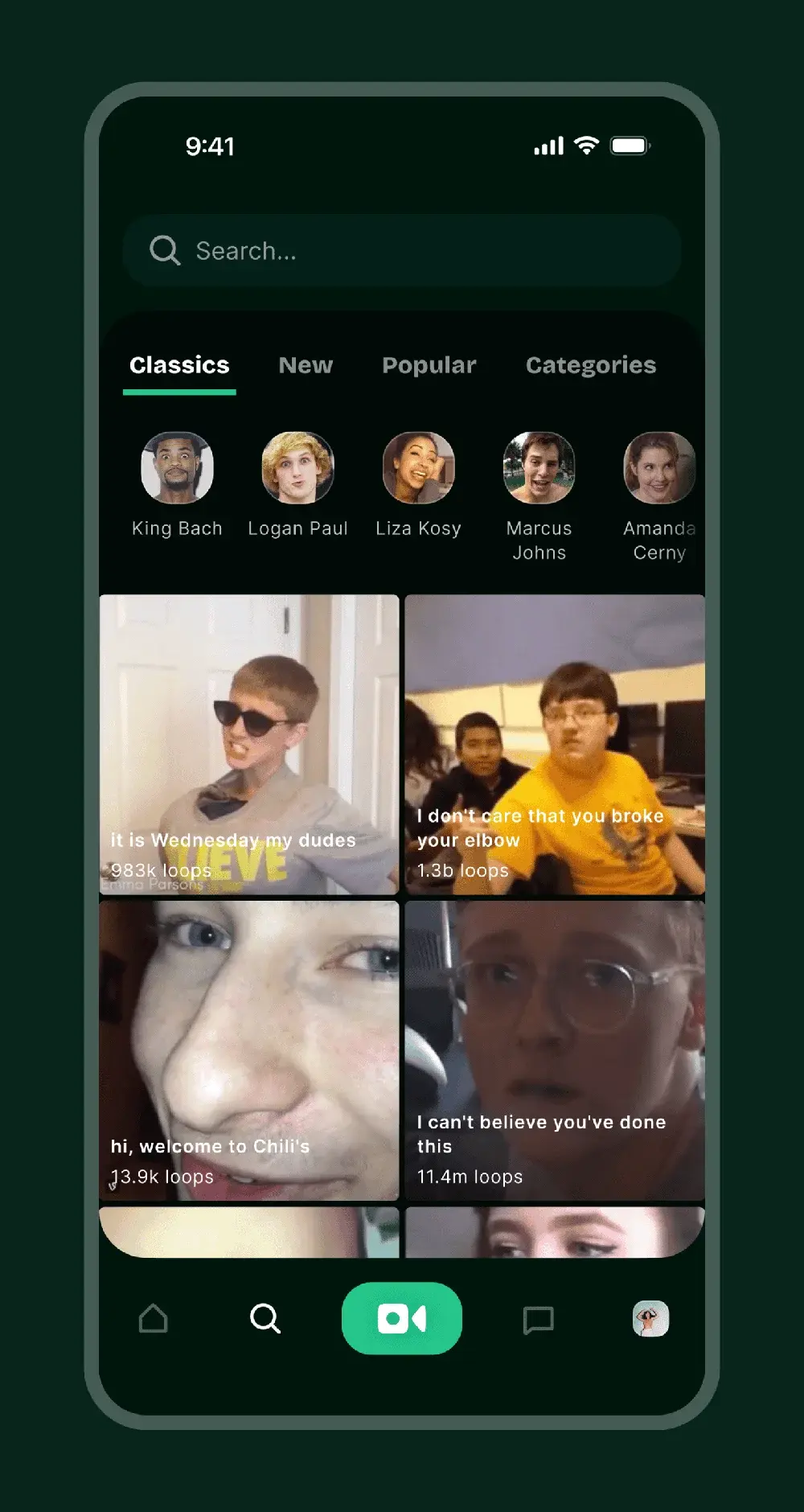
Nearly ten years after Twitter shut it down, Vine is back. The recently launched Divine aims to recapture the original Vine’s look and feel, including an archive of thousands of its most classic six-second videos from creators like King Bach, Zach King, Rudy Mancuso, Lele Pons, and Thomas Sanders.
Originally founded in 2012 and then acquired by Twitter, Vine grew in popularity as creators and influencers took advantage of its constraints to create infectious, meme-worthy content. In 2016, though, Twitter decided to shut down the Vine app in part due to rising competition from the likes of Facebook and Instagram, who rolled out their own versions of Vine’s short-form videos. The final nail in Vine’s coffin came in 2019, when Twitter shut down an archive of the platform’s videos (though many of those videos have since been uploaded to YouTube channels like “Funny Vines”).
Which brings us to Divine.
Divine’s launch was spearheaded by Evan “Rabble” Henshaw-Plath, a former Twitter employee, and funded by And Other Stuff, a nonprofit launched by Twitter co-founder (and former CEO) Jack Dorsey in order to fund the development of “open tools, protocols, and applications that strengthen human liberty.” Besides Divine, AOS has also funded projects like Shakespeare (an AI-powered app builder), Chorus (a tool for creating online communities), and White Noise (a secure private messaging app).
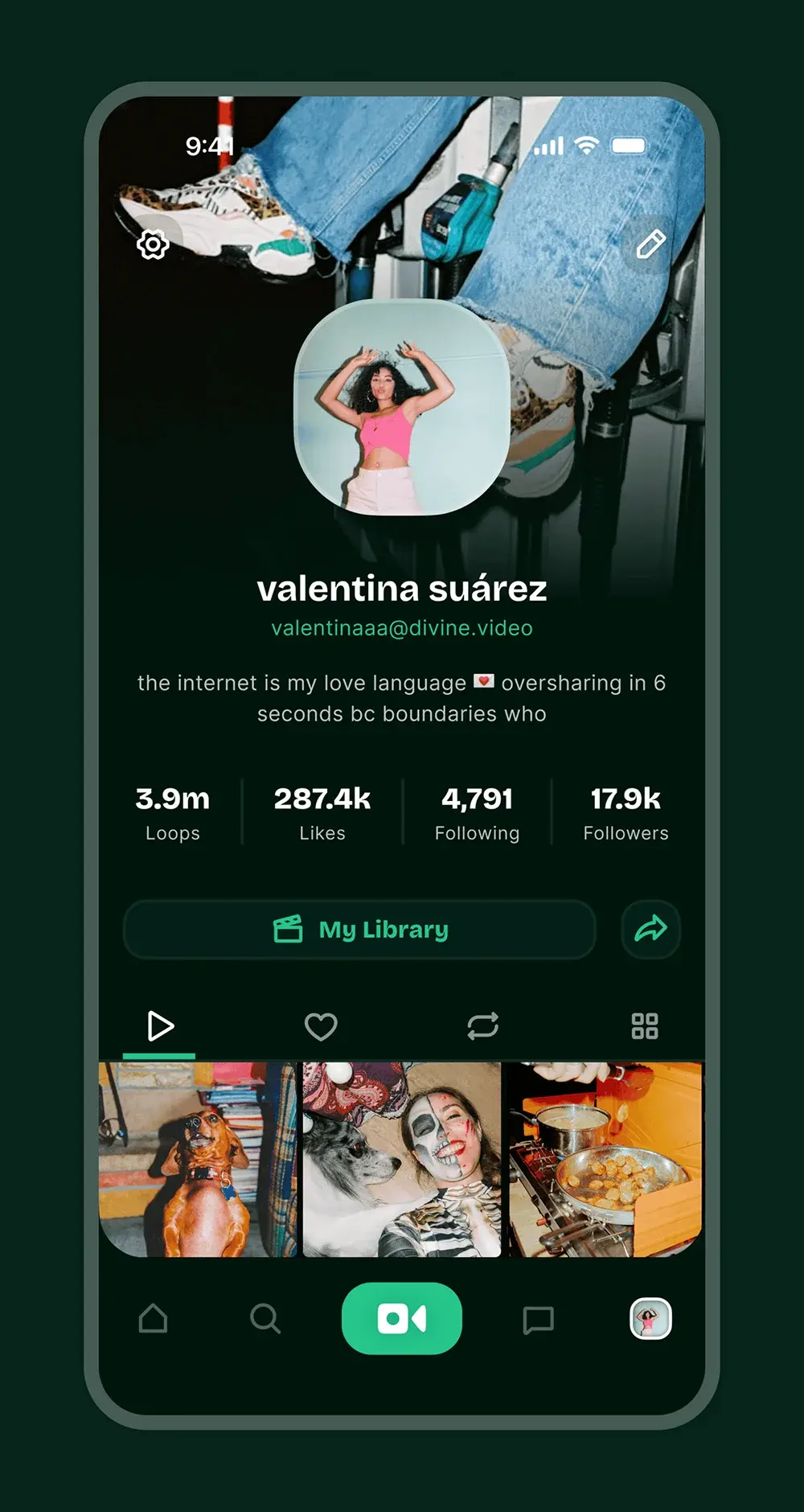
Techcrunch’s recent profile contains more information about Divine’s development and launch, as well as this interesting bit: Divine does not allow AI-generated content. Rabble explains: “I decided that I was going to filter out AI content because I personally don’t like seeing AI content. I don’t like feeling tricked. I don’t like the idea that tons of content can be made very quickly and with little humanity or thought.”
Furthermore, Divine is built on the open Nostr protocol and is experimenting with other protocols, including Bluesky’s AT Protocol. Which, in non-techie terms, means making it impossible for a single company to control Divine content, as opposed to “walled garden” platforms like Facebook, Instagram, and TikTok. (For more on this, read Rabble’s 2025 appeal for a new social media bill of rights that prioritizes privacy, security, transparency, and non-corporate control.)
Obviously, given Instagram and TikTok’s market dominance, Divine faces an uphill battle. For starters, do people really need yet another social media platform clamoring for their attention? And will Divine be able to survive and offer more than just a decade-old sense of nostalgia? Time will tell, I guess, though I certainly laud Rabble for prioritizing open protocols and pushing back against AI slop, two steps that feel nigh-revolutionary these days.