The Air Force Has Announced Its Next Generation Stealth Fighter
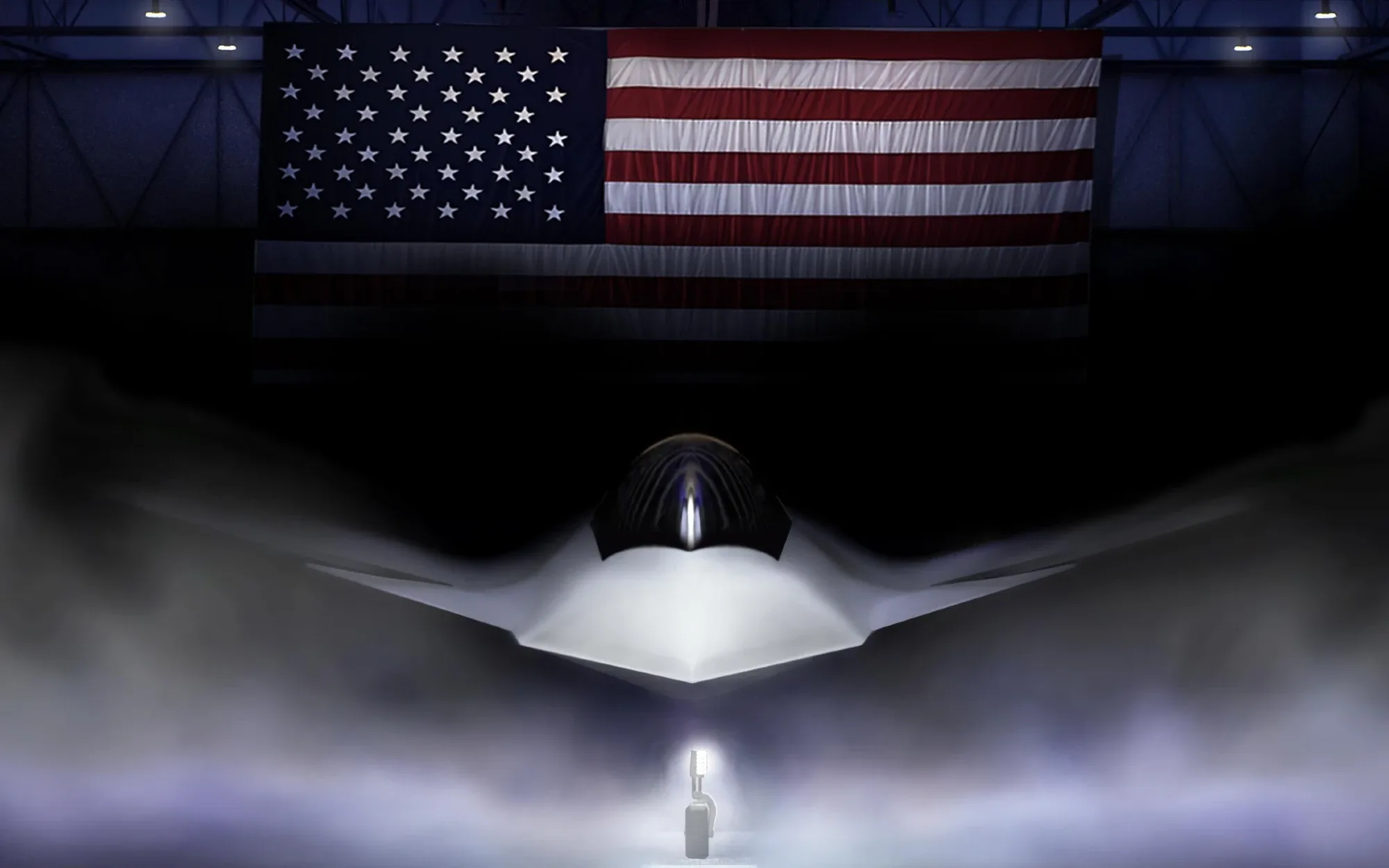
As something of a military aircraft aficionado, I was intrigued by the United States Air Force’s recent announcement that its next fighter jet would be Boeing’s F-47, billed as the world’s first sixth-generation fighter. Boeing beat out Lockheed Martin and Northrop Grumman for the contract, which will ultimately be worth hundreds of billions of dollars. (Each F-47 is estimated to cost at least $300 million, assuming its development goes according to plan.)
All of that money comes with the promise of some really unique features. The War Zone has published some extensive coverage of the F-47 and its intriguing design, which features upward-angled wings and canards (i.e., smaller wings positioned before the main wings). Canards are an interesting choice, as they can negatively impact a plane’s stealthiness (a major requirement for any sixth-generation fighter). But as The War Zone’s Tyler Rogoway notes, they may be necessary to ensure the plane’s maneuverability given another aspect of its design: the F-47 lacks a tail.
By most all assumptions, the F-47 remains a tailless design — a stealthy configuration that is challenging to impart stability upon, especially for a tactical jet designed to operate over a very wide performance envelope. This design challenge can be overcome, but, as with any aircraft design, sacrifices must be made. This would likely come in the form of maneuverability, above all else. Thrust vectoring can potentially solve some of this deficiency, but adding that feature increases weight and cost, and makes the aircraft more complex. Considering the presence of canards, it would seem that agility may have remained a primary design driver for Boeing’s F-47. If this is indeed the case, and the renders are not a misdirection, it would explain other interesting aspects of the design while also pointing to broader decisions that have been made in secret for the Next Generation Air Dominance (NGAD) ecosystem, of which the F-47 acts as a centerpiece.
Rogoway has also noted the apparent influence of previous aircraft designs on the F-47. These include the X-36 prototype and Bird of Prey demonstration aircraft, both of which Boeing developed in the ’90s in order to test stealth and high-maneuverability designs.
The F-47 — which currently does not have a name but does share the same designation number as the iconic P-47 Thunderbolt from World War II — won’t take flight for several years to come. But it’s intended to ultimately replace the F-22 Raptor, which entered service in 2005, and compete with rival Chinese aircraft like the Chengdu J-36 and Shenyang J-50.
In related news, the United States Navy is also developing its own sixth-generation fighter, currently called the F/A-XX, as a replacement for the F/A-18E/F Super Hornet. Like the F-47, the F/A-XX will compete with rival Chinese fighters in the Indo-Pacific theater, and the two aircraft will likely share some technologies, including the ability to interact with and control drones.