C.C. Gong, Suno, and the Empty Solipsism of AI-Generated Music
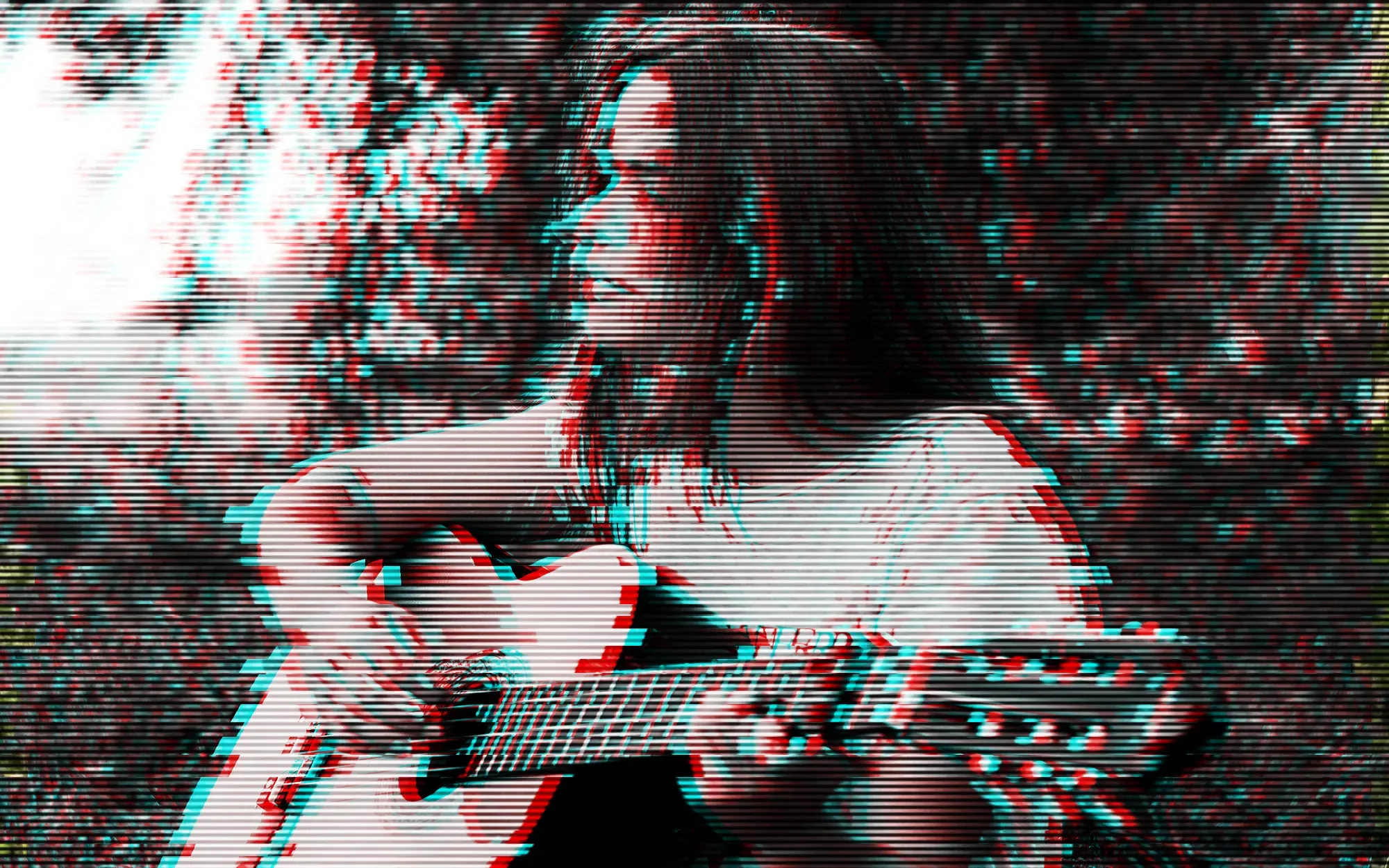
When he inducted The Cure into the Rock and Roll Hall of Fame, Nine Inch Nails’ Trent Reznor described what it was like to hear the goth icons’ music for the very first time:
Immediately, this band struck a deep chord with me. The first album I heard was The Head on the Door, and I hadn’t heard anything like it before. Now a lot of darkness I felt in my head was coming back at me through the speakers and it blew my mind. It was like this music was written just for me. Now I’ve struggled my whole life feeling like I don’t fit or belong anywhere… Hearing this, suddenly I felt connected and no longer quite so alone in the world. That’s one of the things I find so unique and special about the power of music.
My experience with The Cure is quite similar to Reznor’s. And over the years, Robert Smith and Co. — along with many other artists including Pedro the Lion, Damien Jurado, Low, Mogwai, The Violet Burning, and Soulwhirlingsomewhere — have provided solace and comfort during particularly dark times in my life. Their songs and lyrics became a mirror that reflected my own doubts and fears, enabling me to make sense of both the emotions swirling around inside me and the turbulent circumstances surrounding me. In those moments when I felt so isolated and alone, those artists made me feel seen and understood, and I can’t imagine what I would’ve done without their music.
When we describe music (and art in general) as “transcendent,” we’re often describing this ability to remind us that we’re not alone in the universe. Music can take us out of ourselves and our own limited perspectives to remind us that other souls exist. Souls who might be different from us in all sorts of ways, but with whom we can still identify, communicate, and commiserate. This can certainly help us get through life’s hard times, but it can also challenge us to consider new perspectives, teach us about other times and cultures, and increase our capacity for grace and compassion by revealing our shared humanity.
That’s a truly beautiful thing — and AI companies don’t give a crap about it, not if a recent (and since-deleted) tweet from C.C. Gong is any indication. As a principal at Menlo Ventures, Gong is one of the investors in Suno, an AI music generator. In her tweet, which has been screenshotted for posterity, Gong extols Suno’s ability to generate songs from a simple user prompt:
For decades, we listened to what artists (*record labels) released.
Now, anyone can create exactly what they want to hear instantly.
I’ve personally shifted most of my listening to Suno. I was so tired of Spotify giving me the same overplayed recommendations. When everyone can create, the catalog becomes infinite and music becomes more personalized.
Instead of competing for mainstream hits, Al unlocks an ever-expanding long tail, meaning everyone can find their song, not just a song.
She then goes on to write that “When I’m in a specific mood, I don’t search for a song, I create it.”
Setting aside that initial sentence, which seems to suggest that artists and record labels being the sole source of our music has been a decades-long oppression, Gong’s tweet betrays an incredible lack of curiosity for someone who seems to love music so much. If she’s really so tired of Spotify’s “overplayed recommendations,” then it’s trivial to dig a bit more deeply into Spotify’s vast catalog, which contains well over 100 million songs (with thousands more added every day).
She could also look outside Spotify to see what others — like music bloggers (ahem) — might recommend. And that’s to say nothing of other platforms like Bandcamp and Soundcloud that offer inconceivable amounts of new and original music just waiting to be discovered. Surely, with a little time, effort, and willingness to break out of comfort zones, Gong could find some new and interesting music that resonates with her.
Her tweet, however, is framed entirely by solipsism and convenience. Music is no longer about discovering connections with other humans and experiencing the world through their unique perspectives. It’s no longer about finding beauty, inspiration, and connection in someone else’s unique artistic expression. It’s no longer about experiencing something that takes you out of yourself. Rather, it’s about curving inwards and reinforcing your own tastes and preferences in as easy and convenient a manner as possible (e.g., “anyone can create exactly what they want to hear instantly”).
For all of Gong’s effusive marketingese about AI “[expanding] the surface area of human creativity,” there’s actually something quite sad and shallow about her tweet. As one commenter responded:
[Gong’s] tweet wants to be read as a triumph, but for me it’s a eulogy. It describes the total colonization of the last thing capitalism hadn’t fully captured yet, the involuntary self, the part of you that gets formed against your will by encountering art that wasn’t made for you.
I do sometimes wonder why AI companies and their supporters delight in imagining a future that seems so dehumanizing. Perhaps all they care about really is the insane amount of wealth that currently resides in the AI sphere, because once you strip that away, you’re left with something pretty hollow and dispiriting. It’s become a cliché to reference Dr. Malcolm’s monologue in Jurassic Park when critiquing AI, be it Suno-generated songs or those AI films that supposedly represent the death of Hollywood. But when Dr. Malcolm criticizes Hammond’s results as unearned because they didn’t require any effort or discipline to achieve, it’s not difficult to think similarly of the results spat out by generative AI.
Now, I can already hear AI proponents’ rebuttals claiming that I’m elitist and want to keep people from unlocking their creativity. Which is absurd because there’s never been a time in human history when it’s been easier to acquire an instrument (online marketplaces), learn how to play it (YouTube tutorials), record some music (music software), and publish and promote it to the entire world (social media). But we’re not talking about accessibility, are we? We’re really talking about time and effort, which those aforementioned steps require. It takes time to learn how to play an instrument satisfactorily, just as it takes time to find and develop your voice as an artist.
But in addition to time and effort, we’re also talking about intentionality. Ask yourself this: What would be more meaningful to receive from a friend, a text or a handwritten letter? Even if that text was heartfelt, you’d probably treasure a letter that said the same thing far more precisely because it required more from your friend. A text might take a minute or two to compose, but your friend would have to intentionally set aside a not-insignificant part of their day to sit down and write the letter, not to mention acquire its necessary material components and drop it off at the mailbox. You’re probably not going to cherish a text, but a letter? That might be something you save as a keepsake, something you pull out and re-read every so often in the coming years as a reminder of your friend and what they were willing to do for you.
Now apply that perspective to Suno’s AI-generated music. In researching this post, I used Suno to generate some songs to see just how well it worked. For my first song, I asked Suno to create a melancholy shoegaze tune with male and female vocals. The result, titled “Rain On Repeat,” is… OK. It’s not very shoegaze-y, though, especially when the generic “emotional” chorus comes in. Another song, titled “Glass Tongue Dream,” is supposed to be a Cocteaus-y dream pop ballad. While the lyrics are somewhat similar to what Elizabeth Fraser might write, the fact that you can understand what the fake vocalist is singing somewhat undermines the song. Also, nobody in a million years would ever mistake the song’s melodies for anything that came out of Robin Guthrie’s guitar.
None of those critiques matter, though, because here’s the real issue: Those songs didn’t cost me anything other than the time it took to write my prompts and wait for Suno to spit out its responses. They certainly didn’t require any emotion, imagination, or talent on my part, and they contain no true perspective of mine or anyone else’s. As such, these songs don’t communicate anything, such that were I to send them to a friend who might dig them, I wouldn’t really be sending my friend anything at all. I certainly wouldn’t be sending them anything of any lasting value. And even if my friend did like the songs, I suspect their enjoyment might be diminished somewhat upon learning that each song only took 30 seconds or so to generate.
To be fair, writing the actual AI prompts might require some creativity, but I stand by my assertion that at the day’s end, an AI-generated song is still not something you created. Rather, every song that a tool like Suno generates just represents its best attempt to match — in terms of melody, lyrics, vocal stylings, etc. — whatever it thinks the words in your prompt meant. In other words, each song is just a guess by a machine. That might be enough to keep you amused and entertained à la C.C. Gong’s tweet, but I don’t think that qualifies as an artistic work that communicates something of the human experience.
That sounds pretty bleak, but it’s what Gong and so much of the AI sphere really do seem to envision as a positive future for human artistry and creativity. A future where human effort is downplayed as gatekeeping; ease and convenience are more valued than talent, effort, and creativity; and placating your own tastes and preferences is more important than being curious about the world around you. A world that’s teeming with beauty and connection that’s just waiting to be experienced, but only if you’re willing to step outside your own limited perspective and allow yourself to be affected by other human beings.