Happy Public Domain Day 2026!
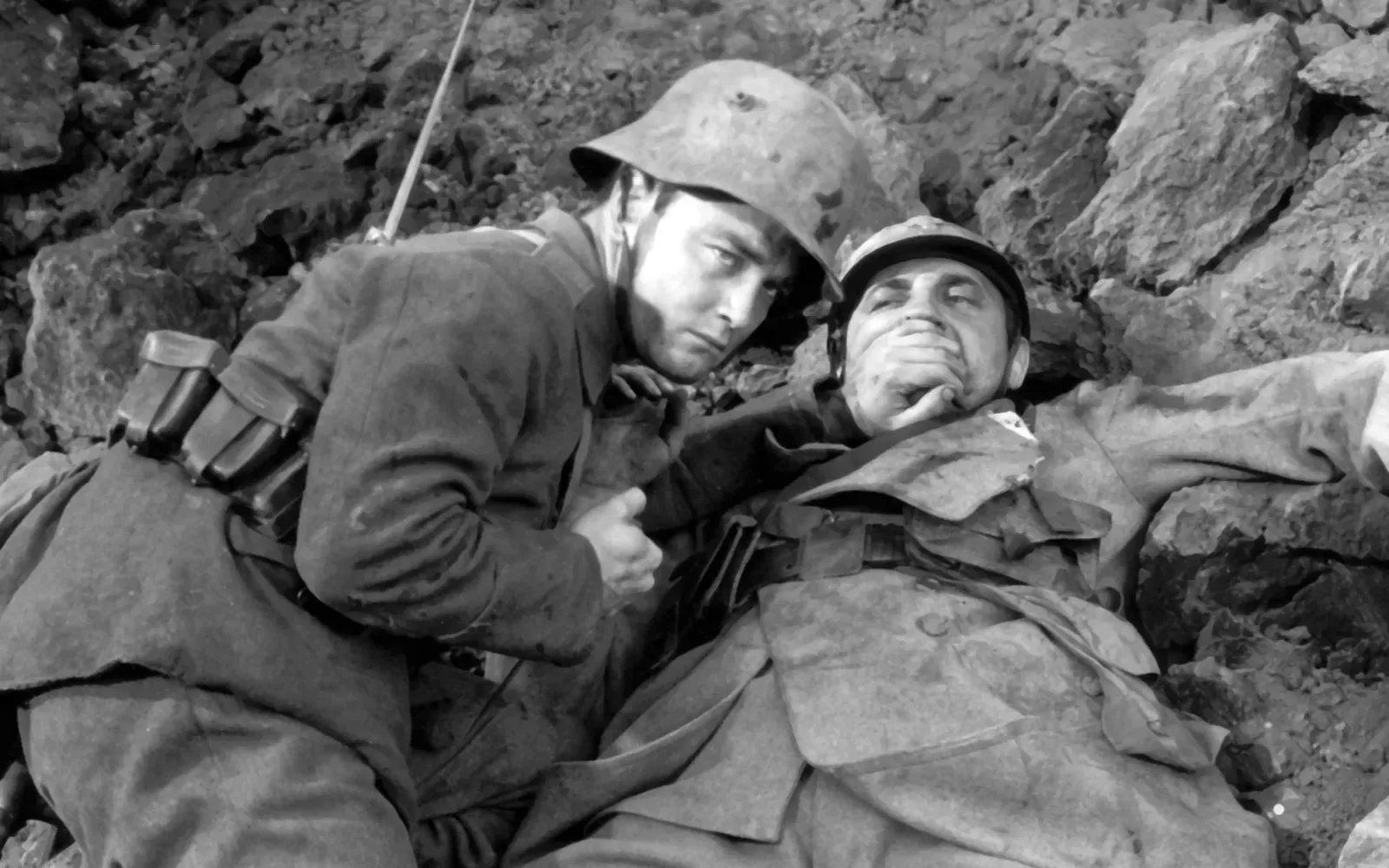
New Year’s Day is more than just the beginning of a new year full of fresh starts. It also represents the expansion of our culture in the form of Public Domain Day 2026. From Duke University’s Center for the Study of the Public Domain, “On January 1, 2026, thousands of copyrighted works from 1930 enter the US public domain, along with sound recordings from 1925. They will be free for all to copy, share, and build upon.” The Center’s article highlights just a few of the books, characters, films, recordings, and works of art that will be entering the public domain next year.
Featured books include William Faulkner’s As I Lay Dying, Dashiell Hammett’s The Maltese Falcon, Agatha Christie’s The Murder at the Vicarage (the first Miss Marple novel), Carolyn Keene’s The Secret of the Old Clock (the first Nancy Drew novel), and Watty Piper’s The Little Engine That Could. As for characters, Betty Boop, Pluto, and Blondie and Dagwood (from Chic Young’s Blondie comic strip) will also become public domain.
Featured films include Lewis Milestone’s All Quiet on the Western Front (which won the “Best Director” Oscar in 1930), John Murray Anderson’s King of Jazz (Bing Crosby’s first feature), Wesley Ruggles’ Cimarron (which won the “Best Picture” Oscar in 1931), Victor Heerman’s Animal Crackers (featuring the Marx Brothers), Alfred Hitchcock’s Murder!, and Luis Buñuel’s L’Âge d’or.
Featured compositions include “I’ve Got a Crush on You” by George and Ira Gershwin; “Georgia on My Mind” by Hoagy Carmichael and Stuart Gorrell; and “Dream a Little Dream of Me” by Fabian Andre, Wilbur Schwandt, and Gus Kahn. Also, the actual recordings of Marian Anderson performing “Nobody Knows the Trouble I’ve Seen,” Gene Austin performing “Yes Sir, That’s My Baby,” and Bessie Smith and Louis Armstrong’s performance of “Saint Louis Blues” will become public domain material.
Note: Wikipedia has a more comprehensive list of everything entering the public domain in 2026 around the world, and not just in the United States.
The importance of any such works entering the public domain might seem trivial, but as the Center explains:
When works go into the public domain, they can legally be shared, without permission or fee. Community theaters can screen the films. Youth orchestras can perform the music publicly, without paying licensing fees. Online repositories such as the Internet Archive, HathiTrust, Google Books, and the New York Public Library can make works fully available online. This helps enable both access to and preservation of cultural materials that might otherwise be lost to history. 1930 was a long time ago and the vast majority of works from that year are not commercially available. You couldn’t buy them, or even find them, if you wanted. When they enter the public domain in 2026, anyone can rescue them from obscurity and make them available, where we can all discover, enjoy, and breathe new life into them.
The public domain is also a wellspring for creativity. You could think of it as the yin to copyright’s yang. Copyright law gives authors important rights that encourage creativity and distribution — this is a very good thing. But the United States Constitution requires that those rights last only for a “limited time,” so that when they expire, works go into the public domain, where future authors can legally build on the past — reimagining the books, making them into films, adapting the songs and movies. That’s a good thing too! It is part of copyright’s ecosystem. The point of copyright is to promote creativity, and the public domain plays a central role in doing so.
As the Center points out, Guillermo del Toro’s movie adaptation of Frankenstein and Jon Chu’s Wicked: For Good are just two recent examples that were made possible in part by the fact that their source material — Mary Shelley and L. Frank Baum’s original novels, respectively — exists in the public domain.
True, public domain items have inspired some outrageous adaptations, like the various Popeye horror films that were released earlier this year. (The Popeye character entered the public domain on January 1, 2025.) But by and large, public domain has made possible so many new and transformative works — just think of all of the noteworthy Shakespeare adaptations over the years — all of which help to ensure that the original works continue to live on in new and enduring forms.