Review Roundup: Bong Joon-ho’s Mickey 17
Thanks to films like Memories of Murder, The Host, and Parasite, South Korea’s Bong Joon-ho has become one of the world’s most acclaimed directors. And he’s done so while combining black comedy, down-on-their-luck protagonists, social awareness, and class struggle.
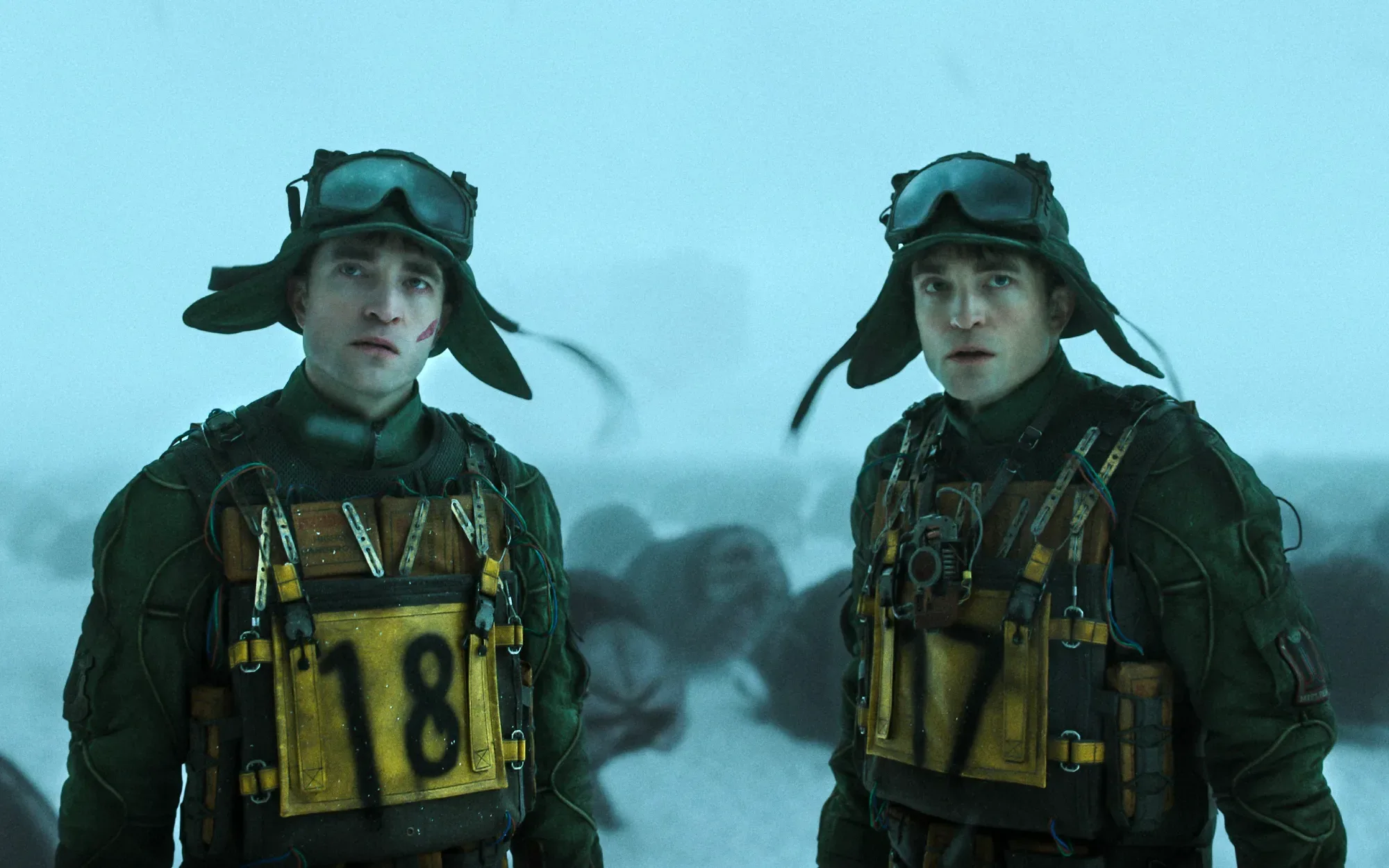
Bong’s protagonists are often folks on the periphery of society who must use their wits and guile to navigate class power structures, corporate bureaucracy, and late-stage capitalism to eke out an existence. His latest film, Mickey 17, appears to takes those themes to new heights. Based on Edward Ashton’s 2022 novel Mickey7, the film stars Robert Pattinson as a man who signs up to become an expendable clone in order to get off Earth. But when one of his clones unexpectedly survives, he must team up with his “replacement” in order to find a way to survive. The film also stars Naomi Ackie, Steven Yeun, Mark Ruffalo, and Toni Collette.
So does Bong’s latest film measure up to his previous films, including the Oscar-winning Parasite? Or does Mickey 17 drown under all of its themes and social commentary? Read on for a selection of critics’ reviews and reactions.
Studios and streamers typically release their films vying for Oscar contention in the late fall or early winter just ahead of voting, but if there’s any justice in the world, Mickey 17 will follow in the footsteps of Everything Everywhere All at Once and persevere despite being released early in the year. Director Bong should absolutely be in contention for Best Director, Best Adapted Screenplay, and Best Picture, but if Robert Pattinson doesn’t walk away with a Best Actor nomination for his performances as multiple Mickeys, something is very, very wrong.
For all the film’s recycled themes — from condemning the chasm between social classes to espousing compassion for all creatures — it’s not clear that any useful allegories are to be drawn from Bong’s darkly comedic parable. A single viewing should suffice.
For all the novelty of its characters and the uniqueness of their circumstances, Mickey 17 is such an obvious composite of Okja and Snowpiercer that it occasionally threatens to feel as if Bong is repeating himself. But this film is such a vital addition to his body of work — as different from those previous efforts as the various Mickeys are from each other, despite their outward similarities — because it invites Bong to reframe socioeconomic inequality as an existential crisis with material consequences rather than as a material crisis with existential consequences.
The greatest threat to humanity is the atomization of our existence under late-stage capitalism. People want us to be individualized so we cannot unionize or bring about the necessary changes for a stronger future. Mickey sacrifices his life to be an expendable but no longer has any autonomy. Bong succinctly riffs on old Hollywood to maintain his legacy of class-conscious films that challenge the status quo appealingly and refreshingly.
The Korean auteur, off the back of his 2020 Best Picture win for Parasite, has taken $80m (£63m) of Warner Bros’s money and, four release date changes aside, secured final cut on a giddy genre epic that answers the existential query at the very heart of our current existence: what’s the point of living in a world built to make us feel worthless?
With a reported budget of $150m, it would certainly be a surprise if this curio can find the kind of audience it needs to succeed. In these risk-averse times, it’s good to see an expensive studio film that is at least deeply idiosyncratic — but you have to hope such a folly doesn’t make the money men even more cautious in future.
Robert Pattinson is a blast to watch as he plays different characters in Mickey 17, and there is fun to be had watching a human colony trying to survive a hostile world. However, it was a lost opportunity with the film switching up the third act instead of seeing the drama of the Mickeys play out.
The journey Mickey goes on is winding and wild, bucking the conventional flow of a sci-fi action movie, by being only gently sci-fi and barely action. Instead, Mickey 17 plays as a political comedy with cross-genre flare, ultimately urging the audience to see the similarities, and perhaps find our own inner Mickey 17.
Following a perfectly paced and plotted project like Parasite was always going to be tough, but this busy and noisy work reveals even more loose threads than Snowpiercer or Okja as it barrels its way toward a climactic showdown between the forces of humanity and barbarism. The depth and dimensionality Bong gives his many ideas help the film overcome some of its less engaging action sequences. Yet even if the plot can’t contain all the bigness of this premise, the committed performers — Pattinson especially — prove they can.
In addition to 2013’s Snowpiercer, set on a train carrying the remnants of humanity on a never-ending loop around a ruined Earth, he made Okja in 2017, a sprawling satirical romp that spanned languages and continents as limberly as the ruthless megacorporation its young protagonist runs afoul of. But Mickey 17 is his first film to feel explicitly about America, even as it takes place in outer space. Bong specializes in crushing capitalist dystopias, whether he’s skewering present-day South Korea or an even more stratified post-apocalyptic society, and the near-future in which Mickey 17 takes place is perverse enough for each detail to constitute its own dark joke.
Mickey 17 arrives in theaters on March 7, 2025. Watch the trailer below.
