Review Roundup: Jake Schreier’s Thunderbolts*
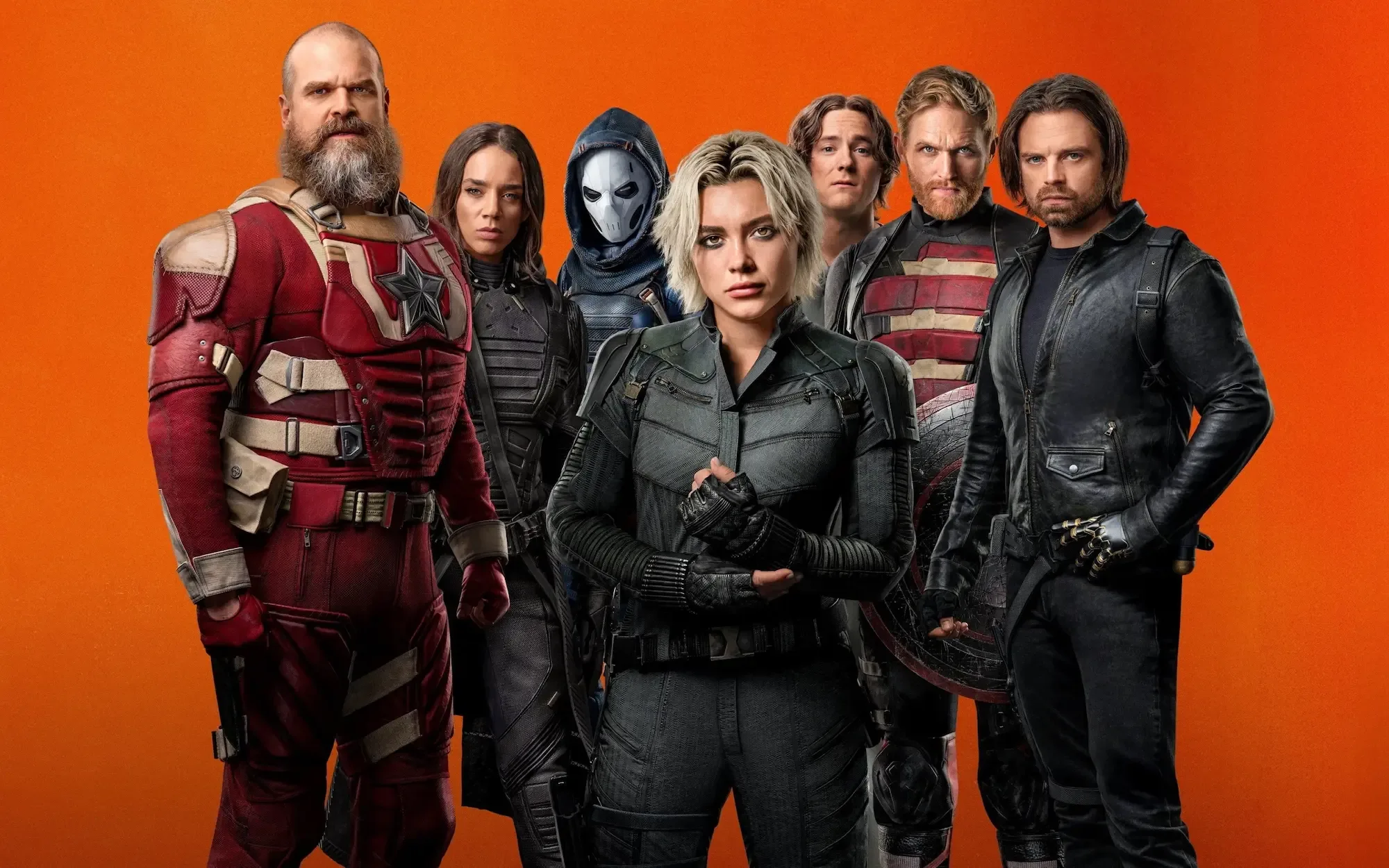
Cards on the table, Thunderbolts* — yes, the asterisk is part of the title — is the first MCU film that I’ve been genuinely excited about in years. Maybe it’s because the film seems to have a smaller scope, or maybe because of its motley-yet-colorful cast of anti-heroes — many of whom are second-tier at best but have made a splash in other Marvel titles.
Jake Schreier’s film features a group of colorful ne’er-do-wells brought together for what’s almost certainly a suicide mission, and lets them knock heads for a bit — a classic movie trope that’s always ripe for cinematic gold. Additionally, the film’s marketing has really pushed the idea that this is not your typical Marvel movie. Indeed, it almost seems like they want you to think it’s an A24-esque indie flick.
So, does Thunderbolts* live up to the hype and breathe some new life into the MCU? Or is it just more proof that the post-Endgame MCU can’t find its way? Read on to see what critics are saying.
Cynically, you could say that Thunderbolts simply picks up ideas that other Marvel projects like WandaVision and Moon Knight have offered before, remixing them and honing them after they were previously flubbed. And cynically, you can say that Thunderbolts* is just another stopgap until the real heavy hitters like Fantastic Four and Avengers take the spotlight. And yet, despite everything it’s got going against it, Thunderbolts* is, surprisingly, really good.
Alas, the film quickly follows its own schnozz down the superheroism-as-mental-health-allegory rabbit hole, which means that saving the world — or at least New York — involves a lot of muttering about trauma in between flashbacks to various formative miseries. Despite its notionally spiky tone, moroseness is the film’s root chord.
Marvel has lost any sense of purpose in the aimless years since Avengers: Endgame, and Thunderbolts* is determined to get some of it back. To restore the swaggering confidence of those early movies. To return to their focus on (relatively) tactile action, clear emotional stakes, and — eventually — the kind of reluctant team-building that forges strength out of the same differences that threaten to tear our world apart.
It’s been a long time since a Marvel movie has felt like a Marvel movie. Sure, the characters are still recognizable, but recently, it has felt like each new entry in the Marvel Cinematic Universe is more interested in introducing us to the franchise’s future than in showing us the latest adventures of the characters we love, let alone giving us new heroes worth caring about. But Marvel’s latest theatrical release, Thunderbolts*, feels like a return to the good old days. It features no multiverses and hardly any CGI nonsense, just exceptionally charming actors playing lovable characters in a story that’s actually about something.
The movie as a whole could be accused of belaboring its points about trauma and depression and, perhaps worse, doing that thing where the writers expect massive laughs from repetition of the name “Bob.” Yet all this feels so much more forgivable when the movie sticks its landing, which in this case means the actual ending, and the two credits scenes that both feel locked into the characters, even as one rolls out the standard teaser routine. Turns out, that stuff isn’t so annoying when it happens in the company of characters like Yelena and Red Guardian. Thunderbolts* is the first Marvel movie in a couple of years to make a good-faith effort to live in its characters’ heads, rather than just their Wiki pages.
And, so, Thunderbolts* is good. Not “singlehandedly save the Marvel cinematic universe” good, but enough to make those self-declared victims of “superhero fatigue” reconsider that it might not be the genre itself that’s tapped out, but merely the focus on telling stories versus marketing future sequels and the sickly shimmer of nostalgia.
Thunderbolts* has all the right ingredients for success, including an interesting assemblage of talent in front of and behind the camera, but it’s squandered on yet another MCU entry that fails to offer any passion or momentum. Superhero team-ups movies are often greater than the sum of its parts, the opposite proves true here.
Some of the best movies in the history of the MCU have thrived off bouncing interesting characters and performances off each other in projects like The Avengers and Guardians of the Galaxy. I don’t expect Thunderbolts* to have the same culture-shaping legacy as those projects. Still, I could easily see it bringing fans back to this universe who felt burned after misfires like The Marvels, Brave New World, and the truly dismal Quantumania.
The cynical might say Thunderbolts* is just a stepping stone to tee-up its post-credit scene — arguably more influential on the Marvel Cinematic Universe than any one scene in the movie — and while this may be true to an extent, that’s not the point. Thunderbolts* may combine many incongruent outcasts from the MCU, but it’s a consequential story about them, as humans, as people, their traumas, their doubts, and not how they impact the world.
[A]t a time when Marvel fatigue has taken a bite out of more than one fizzled blockbuster, it’s a relief to watch a comic-book movie in which the smug wisecracking is dialed way down and the characters are given interior dimensions beyond their powers, including a certain emotional fragility. That doesn’t mean there’s any less physical action or threatened destruction, but there’s a kind of back-to-basics innocence here that makes the stakes feel more real.
Thunderbolts* arrives in theaters on May 2, 2025. Watch the trailer below.
