TIFF 2025 Review Roundup: A Useful Ghost, Dust Bunny, Frankenstein, The Furious, No Other Choice, Rental Family
The 2025 Toronto International Film Festival wrapped up this weekend, so I thought I’d revisit the list of my most anticipated films that premiered at the festival, and see what the critics had to say about some of them.
A Useful Ghost by Ratchapoom Boonbunchachoke
On the surface, it’s the tale — well, tales — of ghosts who have possessed vacuum cleaners to reconnect to the people they’ve left behind. But incredibly, writer/director Ratchapoom Boonbunchachoke builds within this undeniably silly premise interwoven stories of love, yearning, and political rebellion.
The problem with A Useful Ghost is that it changes tone in the final 30 minutes to make an underlying story about ghosts haunting politicians and forces it to the main. This eliminates most of the dark and sometimes scathing humor to almost nothing as it tries to drive a dramatic message home, with middling effect.
The film morphs into a revenge story of sorts, a yearning for justice that the dead couldn’t get in this life. The film’s tonal shifts made me wish I was watching Mati Diop’s Atlantics, which takes its characters’ plight seriously; A Useful Ghost is comedic to the point that I had a difficult time finding a toehold.

Dust Bunny by Bryan Fuller
Childhood fears are often extremely personal in how they manifest internally, but many are universal in the outward shape they take; fear of darkness and the monsters lurking within that unknown void being one of the most common. Dust Bunny, the debut feature film from prolific television creator Bryan Fuller (Wonder Falls, Pushing Daisies, Hannibal) takes a simple question: “What if the monster under the bed is real?” and crafts a thrilling and heartfelt action-horror-comedy that brings his trademark mixture of whimsical maximalism and macabre humor effortlessly to the big screen.
Designed as a horror movie for the entire family, the film has its scares, but it’s just too wacky and too much fun to be disturbing. With a bold musical score by Isabella Summers that keeps circling back to the liturgical doom of the “Dies Irae,” it’s macabre but wacky, though it doesn’t shrink from some dark issues and moral dilemmas.
Dust Bunny will certainly appeal to fans of Fuller’s television work, given how it straddles the line between whimsy and gruesomeness. It’s a highly enjoyable tale with an adorable kid and an adorable curmudgeon who learn to have each other’s backs.

Frankenstein by Guillermo del Toro
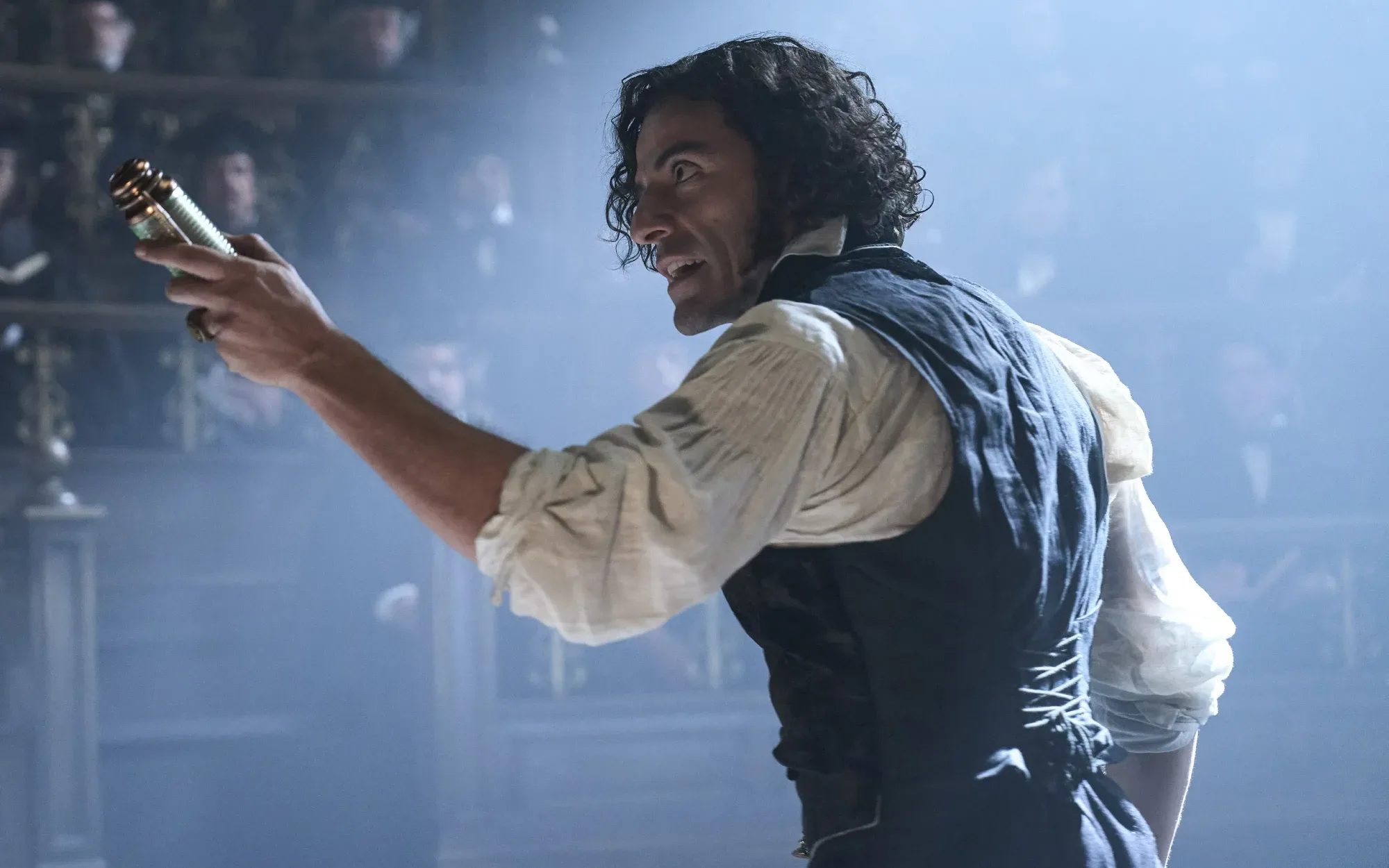
Overall, I found this film to be a beautiful interpretation of the classic novel, maintaining the core of the novel without many modifications, while adding to del Toro’s brilliant and artistic vision, bringing the audience on a journey that joins thriller, drama, comedy, science fiction, and much more.
Nobody spends money on a movie like Guillermo del Toro; Frankenstein reportedly cost $120 million to make, and it looks like it. Aesthetically, the film is just about perfect, a Gothic memento mori — Elizabeth is introduced contemplating a human skull — as lush and romantic as we’ve come to expect from the filmmaker.
A tortured saga of fathers and sons, hubris and humility, and enslavement and free will, the Oscar-winning filmmaker’s horror epic is as visually opulent as it is emotionally rich, a nightmare drenched in fury and sorrow. With an excellent Oscar Isaac as the fanatical doctor and an outstanding Jacob Elordi as his unholy handiwork, it’s a reimagining… that’s thrillingly, monstrously alive.

The Furious by Kenji Tanigaki
As I walked out of the screening of The Furious, which made its world premiere at TIFF, I felt… well, exhausted. I say that in a good way, as acclaimed action choreographer-turned-director Kenji Tanigaki has not only put together some incredible action scenes, but tied them in with a heart-wrenching story, making this an emotionally thrilling ride. Coming in at just shy of two hours, it’s incredible how much action Tanijaki managed to fit into this film, while still weaving it well into a potent story.
From the first punch to the last slow-motion split-screen closeup, The Furious knows exactly what it is and delivers on that promise with swagger. It’s not pretending to be deep. It’s not aiming for some high-minded commentary on revenge or politics. It’s a good old-fashioned “bad guys kidnap the wrong person” movie that becomes a playground for Kenji Tanigaki to show off decades of stunt and fight design experience. And my God, does he deliver.
The dialogue is atrocious, the plotting is goofy, and no one will care because Tanigaki has conceived, choreographed, and executed some of the most impressive fight scenes in years. Employing the expertise of veterans from some of your favorite Asian action movies of all time, The Furious should be an action hit for the studio smart enough to release it. Someone should get on that fast.

No Other Choice by Park Chan-wook
This is a story about sustenance of a different sort; it’s a Looney Tunes-like fable about how capitalism exerts itself by feeding our self-images as it fattens our wallets, and by conflating what we do with who we are to the point that one becomes dependent upon the other.
Park directs with thrilling rage — no surprise coming from the director of the legendary Oldboy. What’s different this time, though, is a “ripped from the headlines” feel that is oh-so-2025. The failure of employers to properly protect and compensate workers, the threat of AI, and the erasure of the individual are clearly issues as pressing in South Korea as they are in North America. It’s doubtful any filmmaker has tackled these matters quite like Park.
Park is a master of the tonal shifts that drive South Korean cinema, and his camerawork here is downright exuberant… The whole movie feels drunk with anger about the state of the world under capitalism, but the ending, which comes twenty minutes past the point of being welcome, feels like a hangover.
Rental Family by HIKARI
If anything, Rental Family reminds us what Fraser was doing — or not doing — in the long stretch before his 2023 Oscar win, when the ’90s heartthrob who’d been so great in Gods and Monsters was waiting for another role with even a fraction of that complexity to come along. Self-pitying existential crisis seems to be his new brand, and while that worked for The Whale, it’s a bit of a downer in a movie like this, which would have really benefited from a less mopey interpretation of the part.
This is a gentle film, the kind of lower-key humane comedy we don’t see often these days. Its timing is perfect in a divided world where social media for many has replaced simple one-on-one human connection, where the simple act of having someone to talk to in person, to share time with, isn’t as easy as it once was.
Hikari and company mostly skim over the tension in a movie seemingly built out of highlight reels and lacking connective tissue. They only briefly acknowledge the heavy complications their scenario entails because their film would much rather indulge in calculated and aggressively cute moments and trite monologues, all set against postcard-ready shots of Tokyo’s scenery and culture.
