Iron & Silk by Shirley Sun (Review)
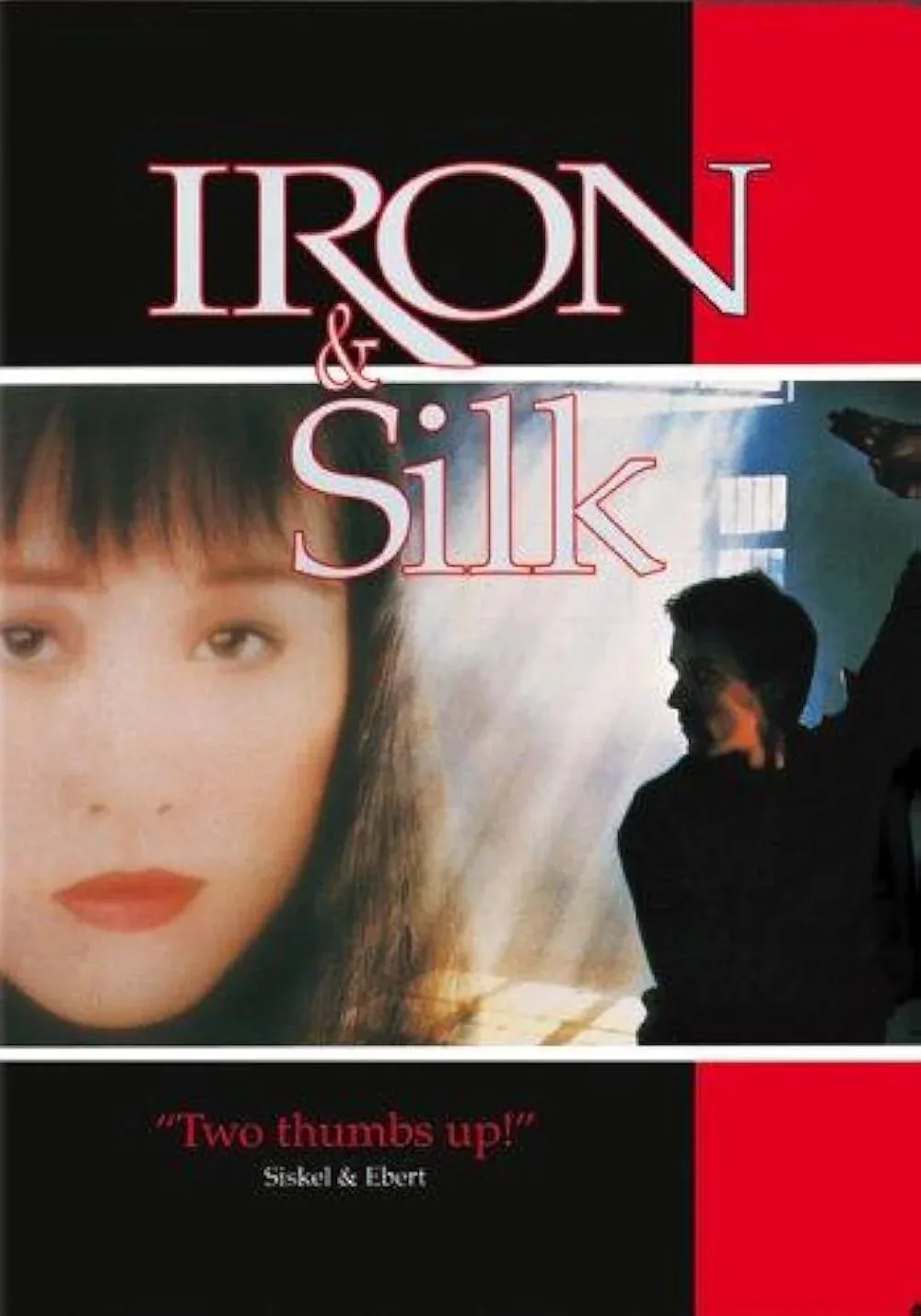
I like kung-fu films. A lot. That’s a fairly obvious fact if you’ve glimpsed over the moview reviews here on Opus, or if you’ve ever been in a discussion with me concerning movies. Sooner or later, Jackie Chan and Co. are bound to pop up. But my love of kung-fu films is based on more than just a fetish for insane stunts and intricate fight sequences. While I love their physical side (the grace and strength of the movements, the physical feats), I also harbor a fascination for the less tangible properties of the martial arts. I think that many Westerners fail to realize the spiritual and cultural significance of the martial arts in the Eastern world, that they are far more than just breaking bones and kicking butt.
From that viewpoint, I think I share a certain kinship with Mark Salzman, the protagonist of Iron & Silk. Based on a true story, the movie chronicles Salzman’s two-year stint as an English professor at a Chinese university. During his stay, he becomes enveloped in Chinese culture, meets and develops an attraction with a Chinese student named Ming (Vivian Wu), and studies under a martial arts master (real life master Pan Qingfu). But despite his growing acclimation, he still faces cultural differences and opposition to his being there.
Now I know you may be thinking, “This doesn’t sound like a kung fu movie. It sounds more like a documentary.” You wouldn’t be too far off there. And to be honest, I first heard about this movie from watching martial arts documentaries. But Iron & Silk serves more as a video diary, as Salzman recounts his experiences of slowly growing accustomed to Chinese culture while always being reminded of his foreign-ness. It’s just all done within the framework of martial arts training.
It would be quite easy for this picture to sink to comedic lows, a sort of “fish out of water” or “look at the dumb American make a fool out of himself” movie. Thankfully, it doesn’t do that. Salzman’s cultural faux pas and foibles are never played for yucks, but rather go to show how difficult it can be for two cultures to truly come together. The point is reiterated time and time again throughout the film, as Salzman learns more and more about his adopted culture. No matter how much openness may exist between two cultures, there will always be mistakes and errors made. But that doesn’t mean that relationships still can’t exist.
I really appreciated the movie’s sensitivity when it came to the relationship between Salzman and Ming. Although Salzman sees nothing wrong with their deepening relationship, Ming faces growing persecution for her association with a “foreign devil.” Eventually, he runs afoul of the Communist authorities, who stress that he should teach English and do nothing else. Thankfully, there is never any grand scene of the two lovers surmounting all odds to be with each other. Instead, their relationship ends with both realizing their feelings, but also knowing the reality of their situation. The movie’s approach doesn’t downplay their feelings, nor does it cheapen them.
I mentioned earlier that the entire movie takes place within a martial arts framework. Throughout the film, Salzman trains under Pan Qingfu, a real martial arts master. If you’re looking for thrilling fights and stunts à la Jackie Chan, you won’t get those here. Instead, you’ll get an impressive and very cool look at real martial arts training. Even though these are training exercises, they’re still fascinating to watch, and Qingfu dominates the screen with his presence. The man moves like a tiger, flowing from one move to the next, and the film captures each step beautifully. Surprisingly, it’s the relationship between Salzman and Qingfu that is perhaps the most nuanced and tenuous of all the relationships in the movie.
A kung fu movie, a documentary, a social commentary, and an autobiography. Iron & Silk is all of these things. The movie briefly heads into political waters towards the end, as the Chinese authorities become worried about Salzman’s “influence.” But the movie is not a political film. It’s not about Captialism versus Communism. Iron & Silk is about cultures and the differences between them. It’s about the ways that humans, being the relational creatures we are, seek to overcome those barriers. In this case, it’s kung fu.