Samurai X: Betrayal by Kazuhiro Furuhashi (Review)
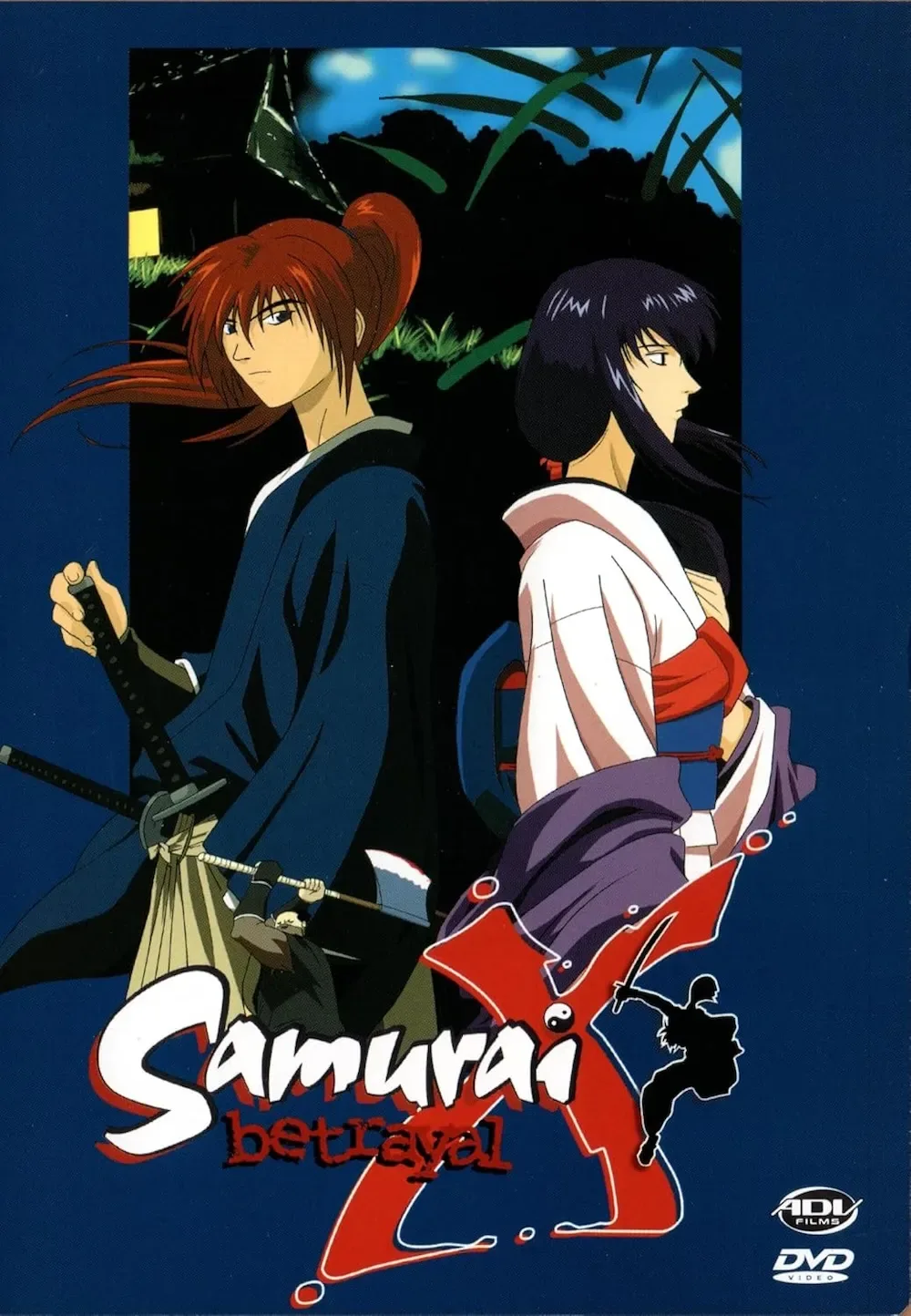
By the time Samurai X: Trust had ended, the lives of Kenshin and Tomoe had been thrown into complete chaos. With their clan all but destroyed by the vengeful Shogun, the two have been forced to hide out as husband and wife in a neighboring village. As the political situation worsens, the two withdraw from the outside world, content with living in peace. Removed from the constant bloodshed, the feared assassin Kenshin begins to rediscover his humanity and see the error of his ways. But things can’t remain that way forever, and soon the nation’s unrest and ghosts from their past threaten to ruin the new life they’ve begun together.
Although Samurai X’s tagline is “Romantic Tales from the Meiji Era,” it’s a safe bet to say that the series won’t end with “and they lived happily ever after.” The first two episodes that make up Trust focus on Kenshin, his role as the Choshu Clan’s greatest assassin, and the clan’s attempts to overthrown the corrupt Shogun. But Betrayal focuses more on the burgeoning relationship between Kenshin and Tomoe, a mysterious woman who knows more about Kenshin’s past than she lets on.
We learn more about Tomoe’s past, and the pain and heartache that she is suffering. On one hand, she hates Kenshin for all of the pain that he has caused her. But she begins to see the nobility that lies just below the surface, and as Kenshin begins to renounce his violent past, she finds herself falling in love with him.
If Trust was more action-oriented, then Betrayal delves more into the psychology of the characters, especially in the final episode. Here, the guilt and pain that both Kenshin and Tomoe have experienced bursts to the surface. At best, it adds a greater depth and tragedy to their love. At worst, it makes for a confusing finale, as the character’s internal dialog bleeds over into what is really happening. And even by the series’ end, there seems to be little resolution. Kenshin is torn between his love for Tomoe and his desire to repent and atone for his deeds, and his duty and obligation to the Choshu Clan.
Stylistically, Betrayal still contains the same reserved, grim feel of Trust. Unlike a lot of anime, which seem to leaven some of the heavier material with little bouts of silliness, there is no humor to be found anywhere in Samurai X. Sometimes it makes for a very melodramatic series, but it remains far more faithful to the inherent tragedy. And like the first volume, the animation is of pretty high quality. Colors are muted, and there’s very little wild movement in the scenes. That just enhances the seriousness of the series.
One thing to note is that there are times when the animators incorporate live video and CGI into the animation. At times, it’s painfully obvious and feels out of place. I can’t tell you how bothered I was by the fire in the couple’s house. The flames stuck out like a sore thumb from the rest of the animated background. But at other times, the effect does work. There’s one scene when Tomoe is walking, and we see the countryside from her viewpoint, rendered in blurred video. It’s fairly subtle, and adds a dreamlike quality to the film.
Compared to much of the frantic pace of Trust, much of Betrayal does feel a little stilted. Many of the scenes between Tomoe and Kenshin are painfully slow and reserved, sometimes unbearably so. At times, I was left wanting more knowledge about the political machinations, or anything that might add a little more dynamism to the series. But overall, Samurai X is a quality series if you’re looking for anime that’s driven more by characters and plot (as tragic as it may be) than by simple fan service.