World Theatre by World Theatre (Review)
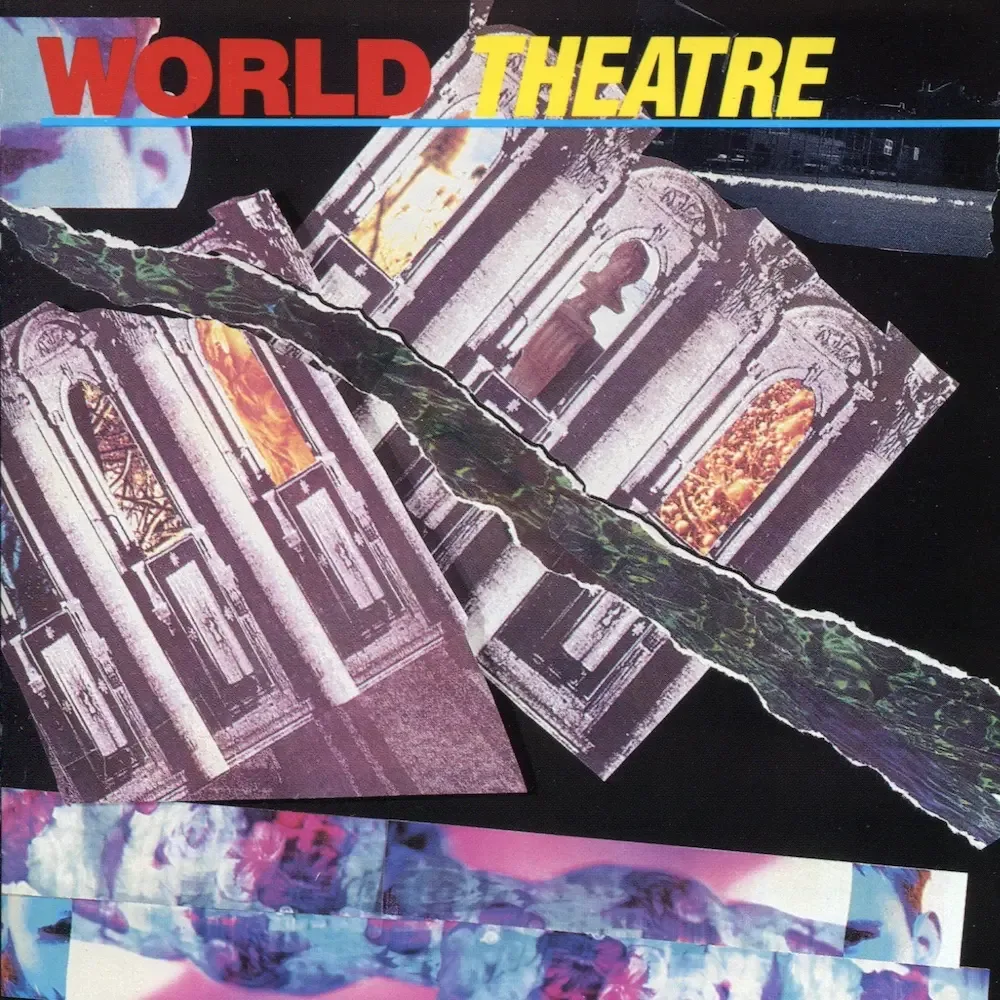
Here’s what I love about Christian music, and specifically, indie/alternative Christian music from the ’80s and ’90s: There are always new albums to discover. People fail to realize just how underground so much of this music was, existing in its own unique culture that ran parallel to both the secular music industry as well as the broader contemporary Christian music (CCM) industry. As a result, a good deal of this music flew well under the radar even for those of us who grew up in the Church during those decades.
Case in point, the music of Tim McAllister. Earlier this month, a friend randomly introduced me to Flock 14’s Brave New World, a 1987 album that I was wholly unfamiliar with, but instantly caught my ear with its rich ’80s sound of synths and chiming guitars. Attempts to dig up more information on Flock 14 led me to Frontline Records’ website, where World Theatre was listed as a related artist.
Although World Theatre’s self-titled debut is cut from the same cloth as Flock 14, the sound is more eclectic and polished, due no doubt to the talent that McAllister assembled in the studio. Additional guitar-work was provided by Jimmy Abegg (a collaborator of Rich Mullins, Charlie Peacock, Steve Scott, and Margaret Becker) and Gary Egger (who released solid synth pop as Human Condition). Over the Rhine’s Linford Detweiler played piano, keys, and bass while the late, great Gene Eugene mixed the whole affair.
Musically, David Sylvian and Japan’s “New Romantic” art rock is a clear reference, as is The Blue Nile’s soulful pop (particularly on “This Talk” and album closer “Pain, Desire, Faith”), and in a rare interview, McAllister also referenced Tears for Fears, The Cure, The Durutti Column, and The Dream Academy. And just because this is the way my brain works, the first thing that came to mind when hearing the funk-lite bass lines and coruscating riffs on “If I Stumble” and “Water Spill” was Yoichiro Yoshikawa’s work on the Iria soundtrack (though Iria was released five years after World Theatre).
Despite the album’s glossy sound, McAllister still injects plenty of emotion into the album’s nine songs. “Gently Down (Last Thursday)” draws on childhood memories to lament his sister’s untimely death while “This Talk” and “Dream It’s Safe” express anxiety concerning the state of the world. It might seem a little thing nowadays, but I imagine McAllister repeating “It’s breaking me down” over and over again on “Dream It’s Safe” or admitting that “I cannot see the answers and I hardly see the light” on “Pain, Desire, Faith” probably raised some eyebrows in Christian bookstores. “Triumphant” Christian living, this most certainly is not.
Primarily a studio project, World Theatre only played a handful of shows before disbanding. McAllister would go on to help produce and mix Over the Rhine’s first two albums (1990’s ‘Til We Have Faces and 1992’s Patience) before self-releasing 2007’s Strong Tower under his own name. World Theatre thus remains a curio, a fascinating if sadly unsung artifact from an era of Christian music that far too few know anything about, but was nevertheless brimming with talent, artistry, and creativity.
