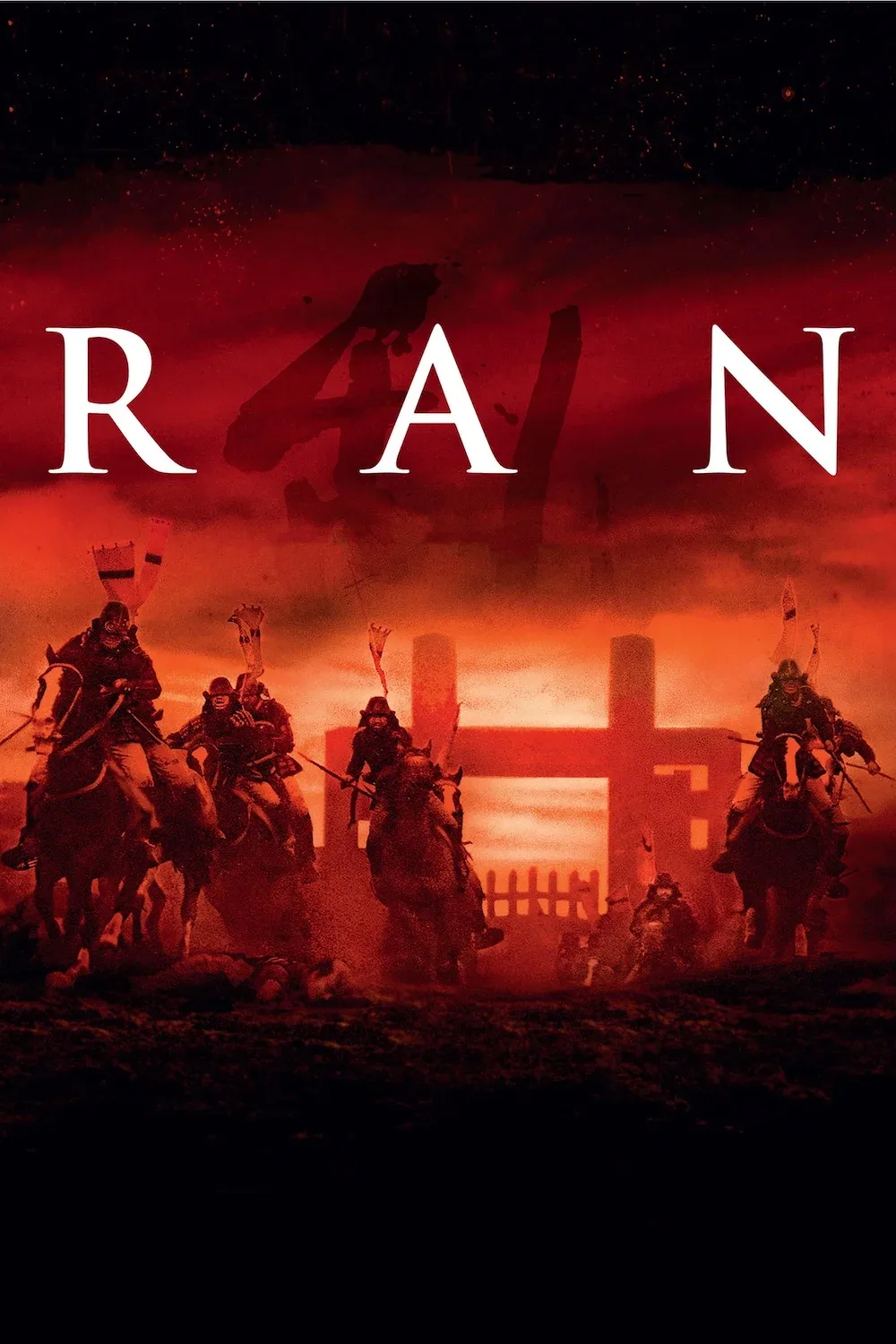
Ran by Akira Kurosawa (1985)
Akira Kurosawa spent ten years storyboarding every shot in this, his final historical epic, as a series of paintings — and it shows. Ran is packed, start to finish, with indelible and perfectly framed images. The scene where Tatsuya Nakadai’s old warlord, his face contorted by grief and madness, descends the stairs of a burning castle is one of cinema’s most iconic images, and the very epitome of “nobody makes ‘em like this anymore.” (Even more impressive, that scene was done with an actual castle built specifically for the movie, and shot in a single take because they didn’t have a backup castle.) The same is true of the preceding battle sequence, during which the only sound is Toru Takemitsu’s mournful score, or the shot of cloud shadows drifting over an open field lined with colorfully armored soldiers, presaging the carnage that is to come. As for Ran’s story of family betrayal, squabbling sons, and conniving wives, which was partly inspired by Japanese history and partly inspired by Shakespeare’s King Lear, Kurosawa lays on thick his observations of human greed, selfishness, and cruelty. I’d never call Ran a cynical film — it’s too grandiose for that — but it certainly lacks Seven Samurai’s warm-yet-bittersweet humanism, and ends with a desolate shot that fully drives home its despairing themes.
I may earn an affiliate commission on items you buy through Opus. These commissions will go directly to supporting the site and my blogging.