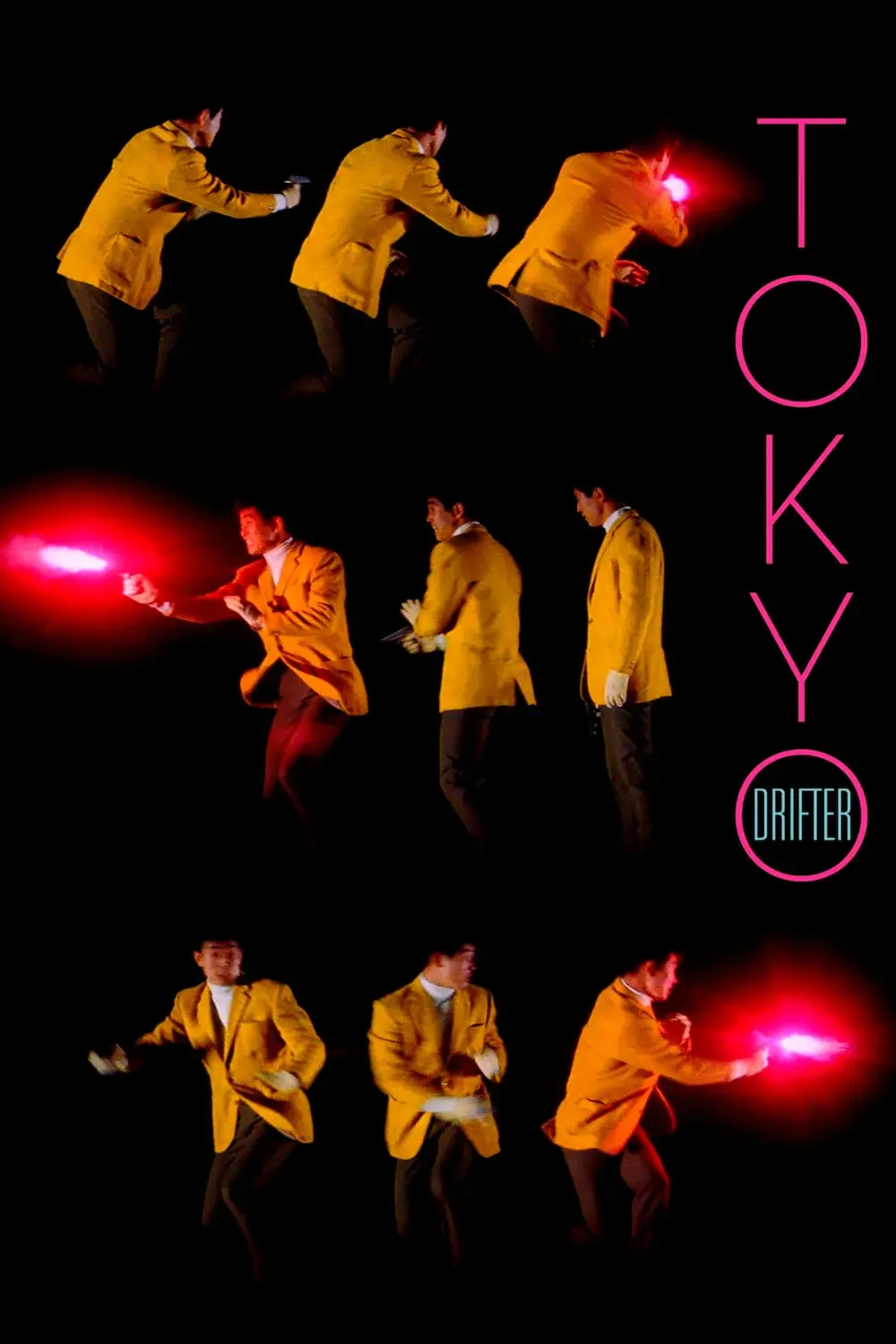
Tokyo Drifter by Seijun Suzuki (1966)
Tetsuya is fiercely loyal to his former yakuza boss Kurata, who has gone straight and left the criminal life behind. But that doesn’t mean the criminal life has left them behind, and Tetsuya — who is infamous for both his toughness and ability to get out tight scrapes — soon finds his notions of loyalty tested when he leaves Tokyo to protect Kurata. To call director Seijun Suzuki “unorthodox” would be an understatement. When the studio heads at Nikkatsu saw the finished Tokyo Drifter, with its surreal and psychedelic flourishes — Suzuki utilizes garish color schemes and in one bizarre sequence, films an all-out brawl in a club stylized after an Old West saloon — they forced Suzuki to make his next two films in black-and-white before ultimately firing and effectively blacklisting him. It probably didn’t help that Tokyo Drifter also pokes fun at, and frequently deconstructs, the yakuza genre even when it seems to be playing things straight.
I may earn an affiliate commission on items you buy through Opus. These commissions will go directly to supporting the site and my blogging.