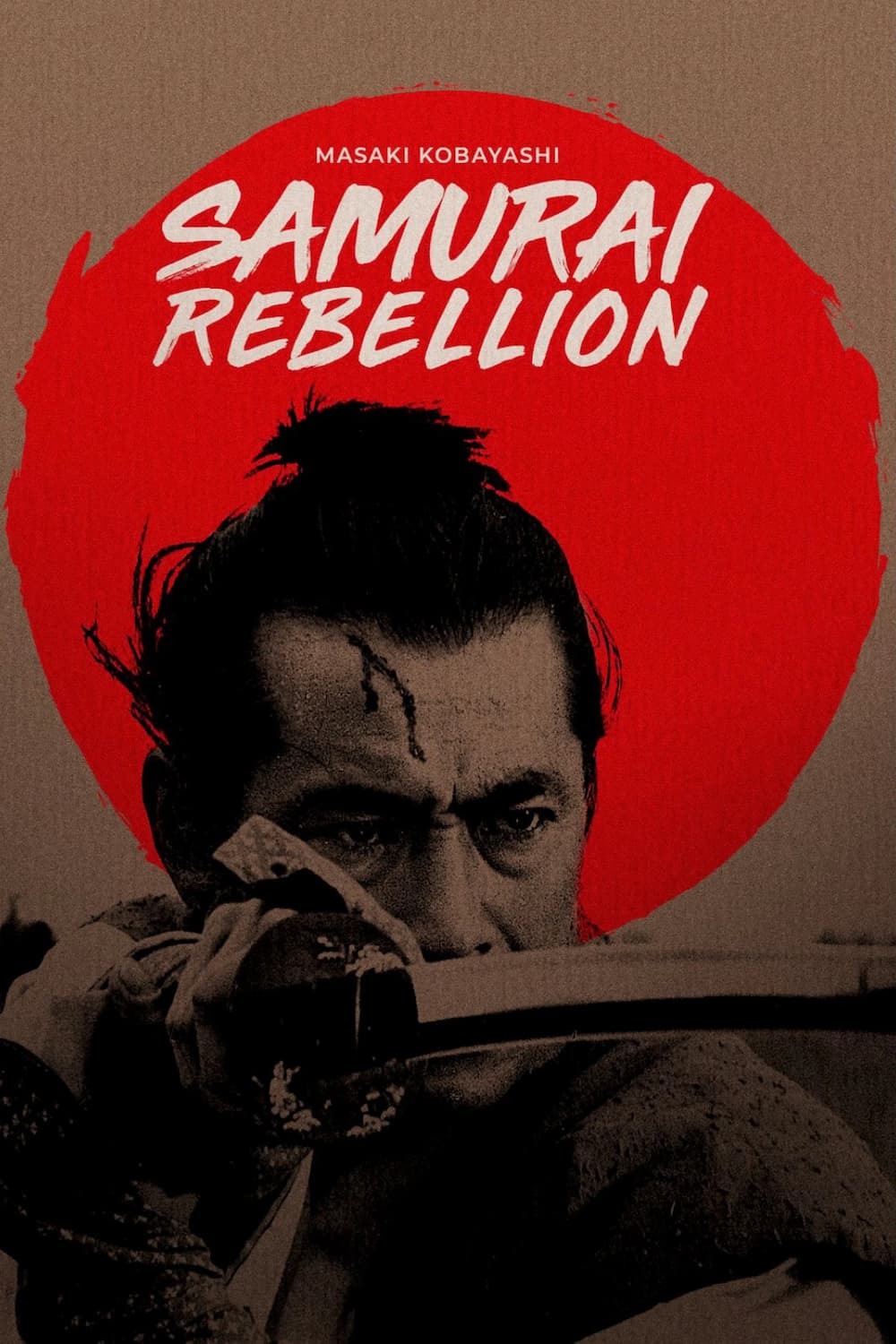
Samurai Rebellion by Masaki Kobayashi (1967)
Isaburo Sasahara is one of his clan’s best swordsmen, though he spends his days testing his lord’s katana or managing the clan’s arsenal. He’d much rather retire and let his son Yogoro take over, but first he must find Yogoro a wife. Much to the family’s chagrin, however, Yogoro is ordered to marry their lord’s ex-concubine, a decision they consider disgraceful. Nevertheless, Yogoro complies and starts a happy little family of his own, only for the order to be rescinded when their lord wants his concubine back. Outraged, Isaburo and Yogoro intend to fight the unlawful order, even if that means destroying their clan. While less bleak than 1962’s Harakiri, Samurai Rebellion nevertheless exposes the dark side of the samurai era, where lords could command their vassals to do outrageous things with near impunity. Though less well-known than his collaborations with Akira Kurosawa, Samurai Rebellion is nevertheless a fine showcase for the great Toshiro Mifune. (Real talk, few things in cinema are as entertaining to watch as Mifune’s expressions when he tries to rein in his emotions.) Although its title suggests an action film, Samurai Rebellion is very much a slow burn, as Isaburo tries to outthink his superiors. Rest assured, though, the film does culminate in a clash of katanas, including a climactic duel with that other great samurai actor, Tatsuya Nakadai.
I may earn an affiliate commission on items you buy through Opus. These commissions will go directly to supporting the site and my blogging.