12 More of My Favorite Songs by The Cure
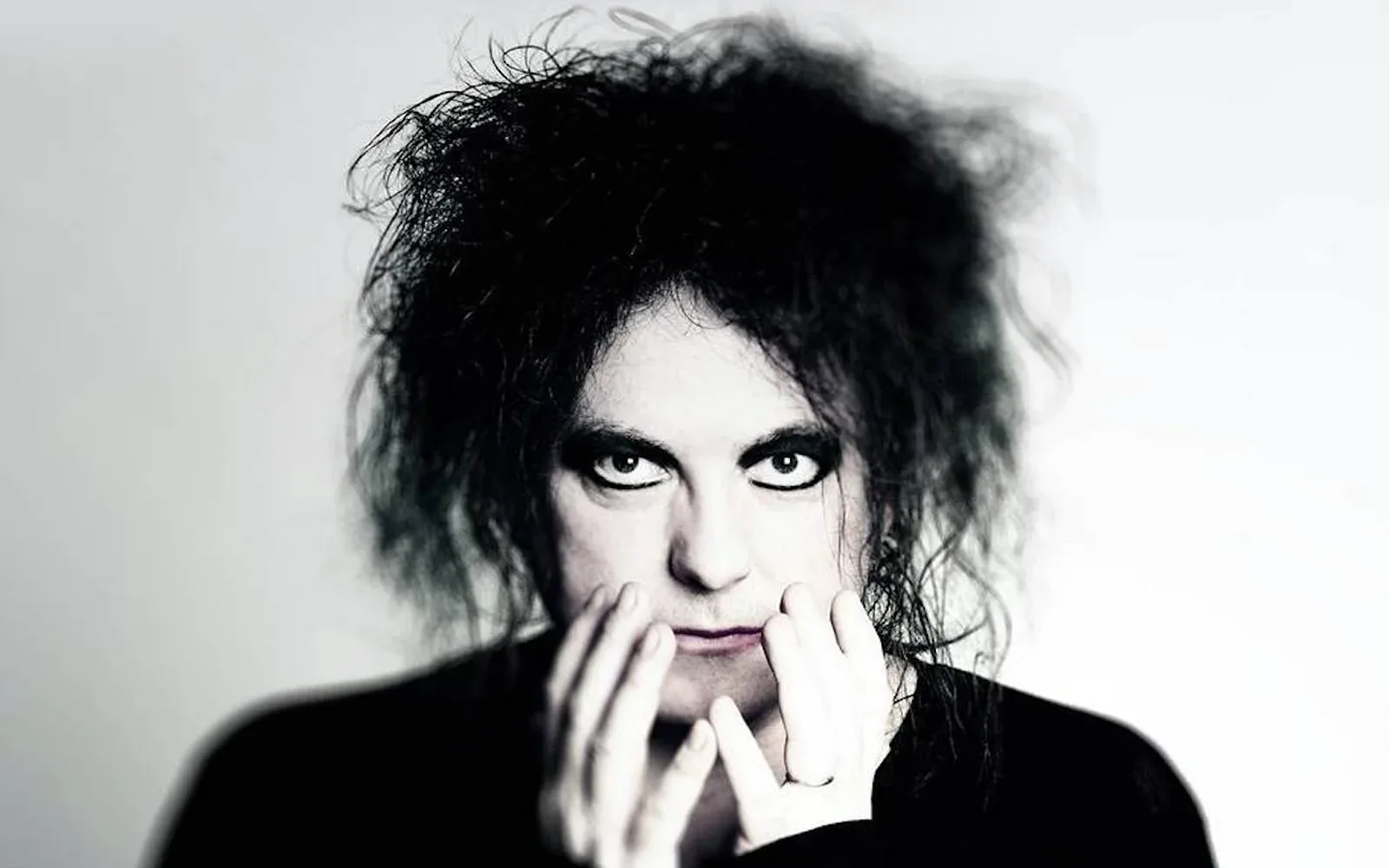
Back in 2010, I shared a dozen of my favorite Cure songs to celebrate the “deluxe” reissue of Disintegration, widely considered the band’s best album. Fourteen years later, The Cure is on the verge of releasing their first album in sixteen(!) years: the long-awaited Songs of a Lost World.
That seems like a pretty momentous occasion, as well, so here are twelve more of my favorite songs from Robert Smith and Co. that span their extensive discography, listed in order of release date.
1) “Play for Today” (Seventeen Seconds, 1980)
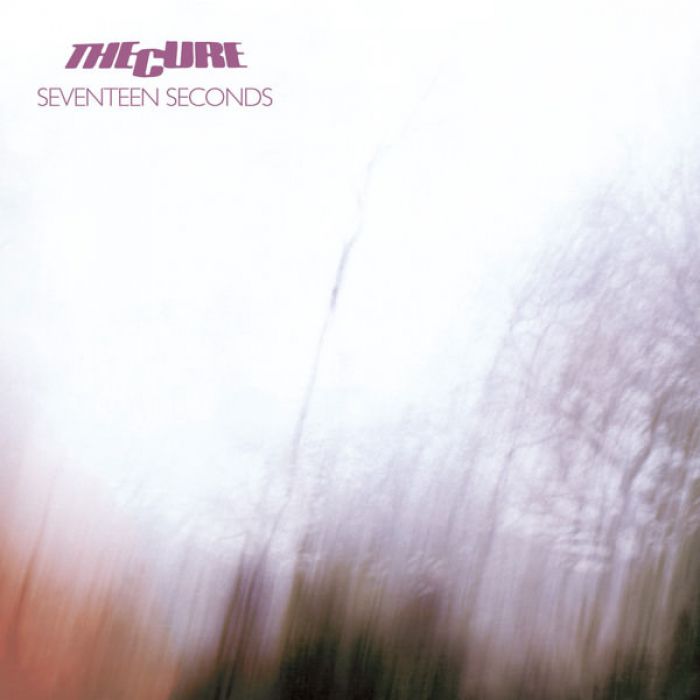
With its motorik beat, bouncy bass line, and sparkling harmonics, “Play for Today” initially sounds like a fairly upbeat pop number. But leave it to The Cure to bring things down as Smith sings from the perspective of a raging narcissist.
Although the song was released over forty years ago, Lol Tolhurst’s lyrics — e.g., “It’s not a case of doing what’s right/It’s just the way I feel that matters/Tell me I’m wrong, I don’t really care” and “It’s not a case of telling the truth/Some lines just fit the situation” — still feel relevant in today’s political landscape and celebrity-obsessed culture.
Between “Play for Today” and its brooding opening track “A Reflection,” as well as songs like “A Forest” — the prototypical Cure song — Seventeen Seconds quickly set itself apart from the pop-punk of the band’s 1979 debut, Three Imaginary Boys, and hinted at the darkness to come.
2) “Other Voices” (Faith, 1981)
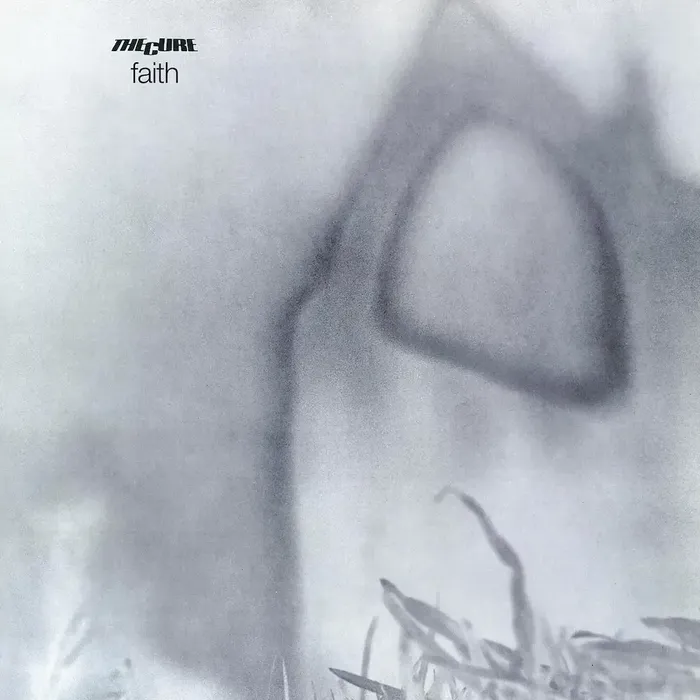
Throughout his tenure in the band, Lol Tolhurst was often the target of his bandmates’ frustrations and bullying, with criticisms frequently leveled at his musical talent. But his rolling beat on “Other Voices” remains one of my favorite beats of all time, and its unrelenting nature pairs perfectly with Simon Gallup’s prowling bassline and Robert Smith’s anguished wail.
Inspired by the rigors and isolation of touring, “Other Voices” is an ode to alienation in keeping with Faith’s dolorous tone, as Smith agonizes “I live with desertion and eight million people” — a lyric to which any angst-ridden teen can relate, regardless of the decade.
The song’s washed out music video on the Staring at the Sea video compilation — which I watched repeatedly in high school — also left an impression on me, with Smith, Gallup, and Tolhurst appearing like made-up specters in a smoke-filled room.
3) “The Funeral Party” (Faith, 1981)
1981’s Faith is arguably The Cure’s most melancholy album, and filled with songs about loss. Loss of faith as implied by its title, but also loss of loved ones. “All Cats Are Grey” — one of my top five Cure songs — was inspired by the impending death of Lol Tolhurst’s mother while “The Funeral Party” finds Robert Smith mourning his grandparents.
The latter is marked by a solemn procession of drums and bass and some of the most sorrowful synths in the band’s entire catalog. As for the lyrics, they’re deeply evocative; “Two pale figures ache in silence/Timeless in the quiet ground/Side by side in age and sadness,” Smith sings. Later, he reflects on “memories of children’s dreams” that “lie lifeless, fading lifeless.”
Sometimes it’s easy to poke fun at The Cure’s bleakness; not so with “The Funeral Party.” From start to finish, it’s a pure and haunting expression of grief as only The Cure could compose. Fittingly, the band performed the song at the funeral service for Tolhurst’s mother.
4) “The Hanging Garden” (Pornography, 1982)
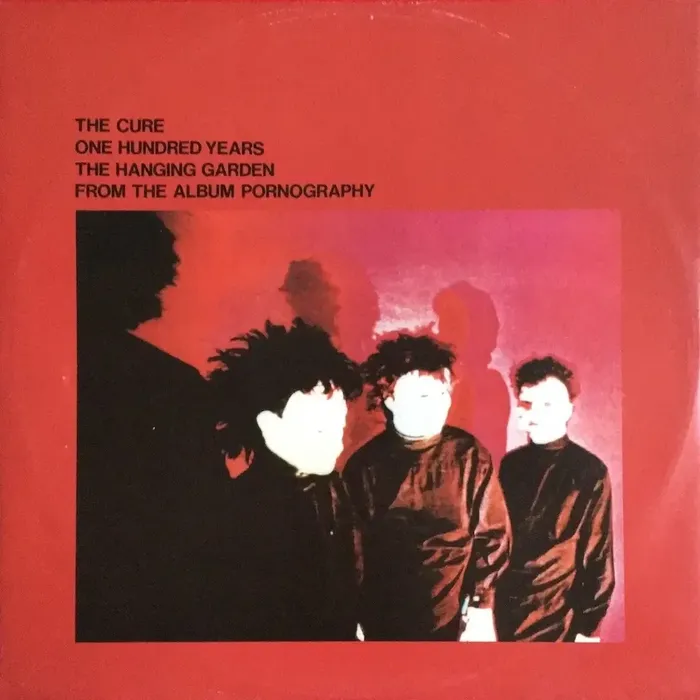
I first heard “The Hanging Garden” on the excellent Standing on a Beach compilation, and the song’s tribal rhythms instantly caught my ear, paving the way for a darkly atmospheric and psychedelic journey as depicted in the song’s music video.
Despite being one of Pornography’s most accessible songs, “The Hanging Garden” is still suffused with a miasma of despair and madness as befitting a song that’s about, in Robert Smith’s words, “the purity and hate of animals fucking.” But that descriptive summary feels rather simplistic in light of impressionistic lyrics like “Catching halos on the moon/Gives my hands the shapes of angels” and “Fall, fall, fall, fall out of the sky/Cover my face as the animals die” — lyrics that take on added urgency thanks to Smith’s inimitable yowl.
In addition to Pornography, “The Hanging Garden” was released as a B-side to “One Hundred Years,” which is a clear front-runner for The Cure’s most nihilistic song. (It begins with the line “It doesn’t matter if we all die” and goes downhill from there.)
5) “A Strange Day” (Pornography, 1982)
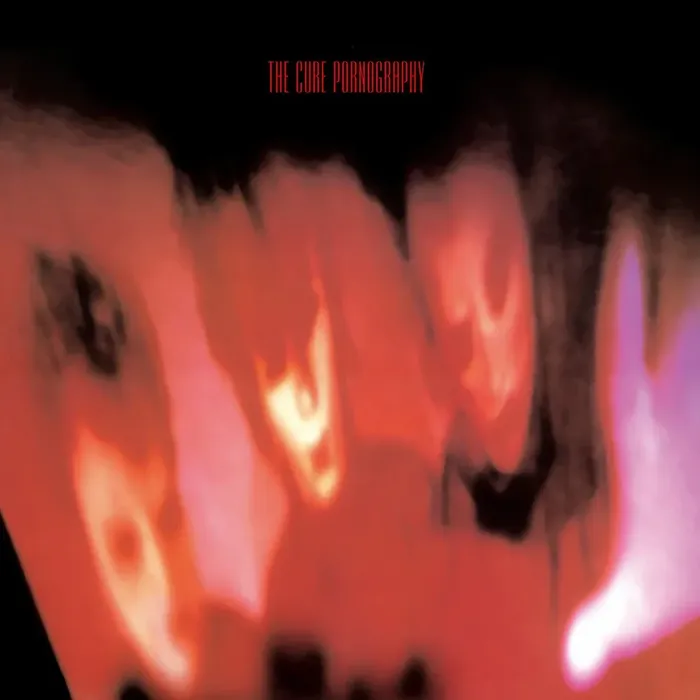
Robert Smith himself has described Pornography as “one of the most miserable albums ever made” and “a diary of one of my blackest times.” Thus, it makes sense that the album culminates in a fantasy about the end of the world.
Ironically, “A Strange Day” almost feels triumphant at times, thanks to Tolhurst’s determined drumming and Smith’s stirring guitar riffs. But the lyrics find Smith swirling about in nihilistic expectancy: “And I laugh as I drift in the wind/Blind dancing on a beach of stone/Cherish the faces as they wait for the end.” Then, at the song’s climax, he cries out “My head falls back and the walls crash down/And the sky and the impossible explode” before simply noting “Then everything is gone forever.”
Bleak? Absolutely. But “A Strange Day” perfectly captures the ambivalence of the Cold War and living under the cloud of “mutual assured destruction.” As Simon Price wrote in Curepedia, “we all knew we were going to die in an atomic apocalypse, it was just a matter of when, not if.”
6) “Just One Kiss” (“Let’s Go To Bed” Single, 1982)
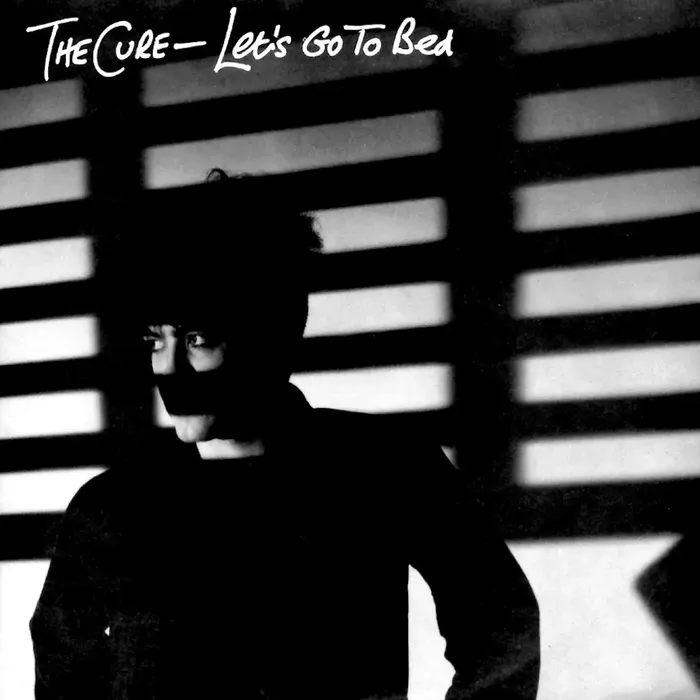
The singles that The Cure released immediately post-Pornography are some of my favorite Cure songs. That’s partly because they were some of the very first Cure songs I ever heard, courtesy of 1983’s Japanese Whispers. But also because their dance-friendly nature felt like a total rejection of Pornography’s bleakness even as they possessed much of the same strange-ness.
“Just One Kiss” — which, because I’m a nerd, reminds me of the Doctor Who theme — finds Smith singing about the Queen of Siam (a possible Lydia Lunch reference), “the sound that could wake the dead,” and “the time that the sky went black” while intoning “Somebody died for just one kiss.” Meanwhile, his tremulous guitar shivers its way through the song’s background, adding to the alluring-yet-uneasy air.
Smith has played coy about the song’s meaning, saying only that it was “about a night I once had.” But there’s something darkly seductive about the song, suggesting a bizarre, otherworldly night of passion and/or longing. There’s still some of Pornography’s tone, but it’s muted and more melancholy than straight out despairing — which makes it more intriguing to my ears, especially when combined with the mirage-like sonics.
7) “In Between Days” (The Head on the Door, 1985)
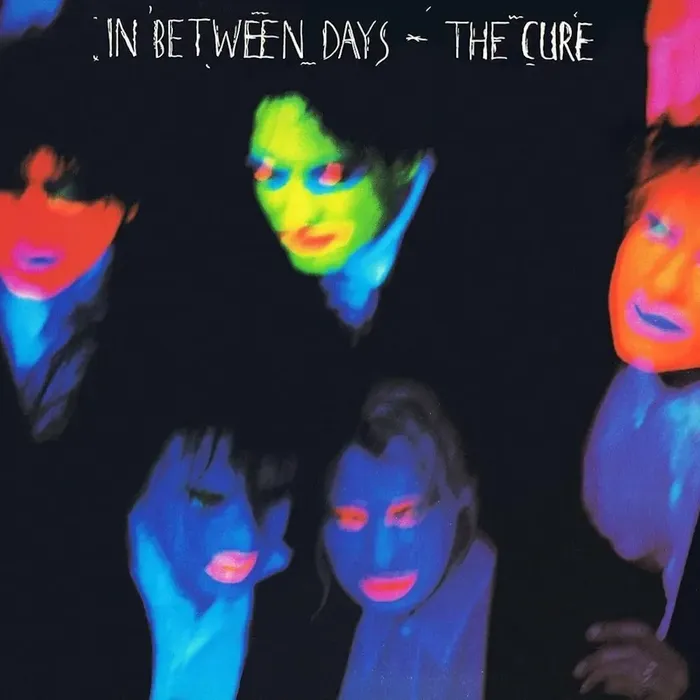
After several albums’ worth of unrelenting gloom and doom, it was time for The Cure to kick out the jams, so to speak, and that’s precisely what they did with “In Between Days.” With its explosive drums, bouncy melodies, and acoustic guitar strumming, “In Between Days” feels like the product of an entirely different band than the one that wrote songs like “The Holy Hour,” “All Cats Are Grey,” and “One Hundred Years.”
Indeed, the song is almost goofy, an impression reinforced by its delirious music video, in which the band cavorts around on a sound stage in bright neon colors whilst animated socks fly around (and in one scene, kick Robert Smith in the butt). But this is still The Cure, so the video is still a little creepy thanks to neon Robert.
As you might expect, the song’s lyrics — which kick off with “Yesterday I got so old/I felt like I could die” — find Smith lamenting a failed love triangle and breakup. But that mix of irrepressible pop sensibilities and morose, mopey subject matter is precisely what makes the song so memorable.
8) “Catch” (Kiss Me, Kiss Me, Kiss Me, 1987)
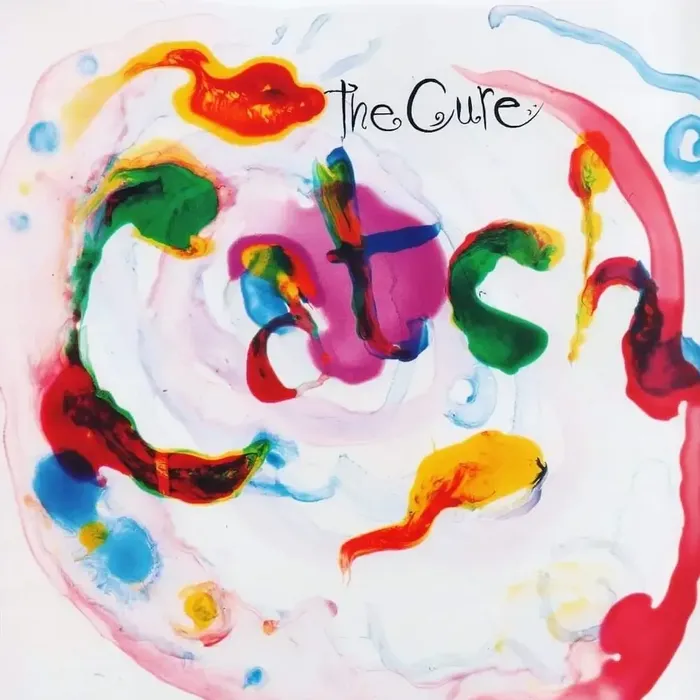
This might seem heretical, but Kiss Me, Kiss Me, Kiss Me has always been underwhelming for me. It’s far too excessive and directionless for its own good. That said, it features what is arguably The Cure’s most popular song (“Just Like Heaven”) as well as fun romps like “Why Can’t I Be You?” and “Hot Hot Hot!!!” And then there’s “Catch.”
I first heard “Catch” on 1993’s Paris live album, and was immediately struck by the song’s breezy tone, which is full of jazzy drumming, Robert Smith’s sleepy do-do-dos, and even some whimsical violin. But in keeping with The Cure’s fine tradition, the seemingly playful tune is shot through with regret and longing as Smith reminisces about an old flame: “She used to just stand there and stare/And roll her eyes right up to heaven/And make like I just wasn’t there.”
The song’s delightful little double entendres — “Sometimes we would spend the night/Just rolling about on the floor/And I remember even though it felt soft at the time/I always used to wake up sore” — only add to the playful yet ultimately regretful tone. The song’s final line — “I sometimes even tried to catch her/But never even caught her name” — is one of Smith’s best closers: short and sweet and oh so wistful. Not too bad for a song inspired, in part, by concussion-induced hallucinations.
9) “Fascination Street” (Disintegration, 1989)
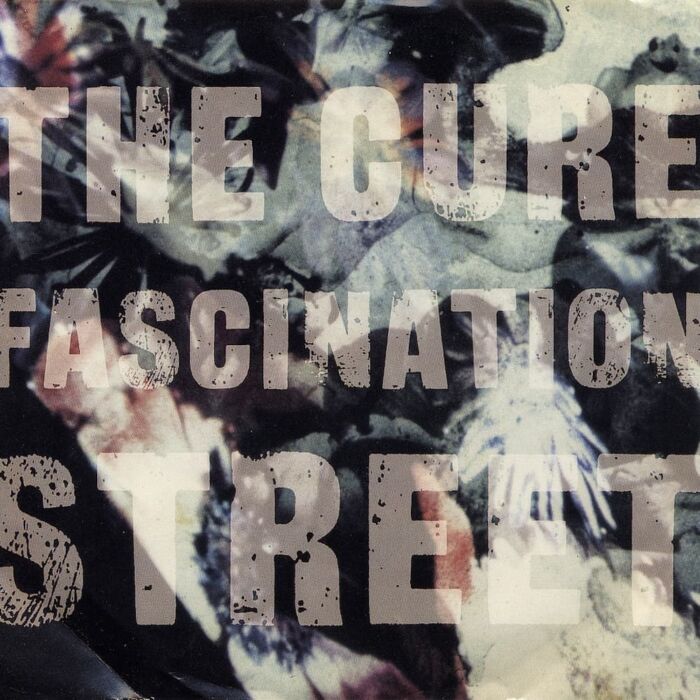
Even a cursory reading of The Cure’s history will reveal that Robert Smith and the boys have imbibed a lot of substances over the years, which explains the often surreal and even nightmarish aspects of their music. It seems that many Cure songs are basically about Smith confronting the consequences of his own (inebriated) actions — which brings us to “Fascination Street.”
Inspired by a “band adventure” on New Orleans’s Bourbon Street circa 1985, “Fascination Street” is ultimately about the futility of “looking for a perfect moment,” as Smith once put it. Hence the song’s desperation-laced lyrics, e.g., “I feel it all fading and paling, and I’m begging/To drag you down with me/To kick the last nail in” and “I like you in that like I like you to scream.”
As for the music, it’s all crashing drums, eerie feedback, shadowy guitar tones, and — most importantly — one of Simon Gallup’s all-time best bass lines. The resulting song feels dangerous, like the exploration of a shadowy world that you’re not sure you should be visiting. At the same time, the swirling sonics make for an intoxicating listen. Not surprisingly, “Fascination Street” is an absolute monster live.
10) “Fear of Ghosts” (“Lovesong” CD Single, 1989)
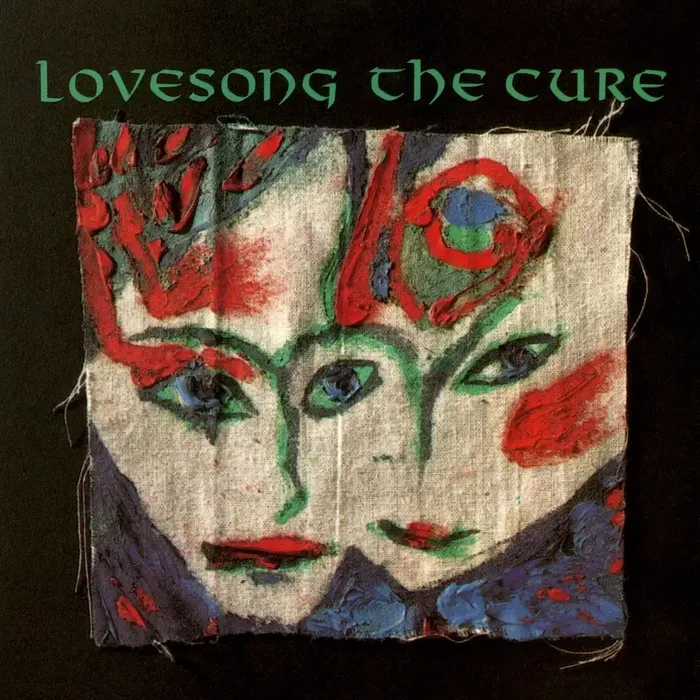
“Lovesong” is arguably The Cure’s most romantic song. After all, Robert Smith did write it as a wedding gift for his wife Mary. But this is The Cure we’re talking about, so it’s no shock that “Lovesong”’s B-sides are of a darker tone. I included “2 Late” in my previous list of favorite Cure songs, a two-and-a-half-minute blast of pure pop laced with melancholy. But “Fear of Ghosts” is darker still, hearkening back to the band’s Pornography era.
Backed by ghostly synths, icy guitar riffs, and meandering piano keys, and driven by a cold, mechanical beat, Robert Smith’s voice barely rises above a whisper as he sings about “splitting blood red windows in my heart” and “the fear that always clawing/Pulls me clawing down alone.” The song’s chorus is one of my favorite Smith laments (“And the further I get from the things that I care about/The less I care about how much further away I get”) and by the song’s conclusion, Smith finds himself in one of the darkest spots in the Cure catalog: “I am lost again with everything gone/And more alone than I have ever been.”
The fact that a song this bleak and harrowing was released as a B-side to one of Smith’s most straightforward and romantic songs is all part of why I love The Cure so much.
11) “To Wish Impossible Things” (Wish, 1992)
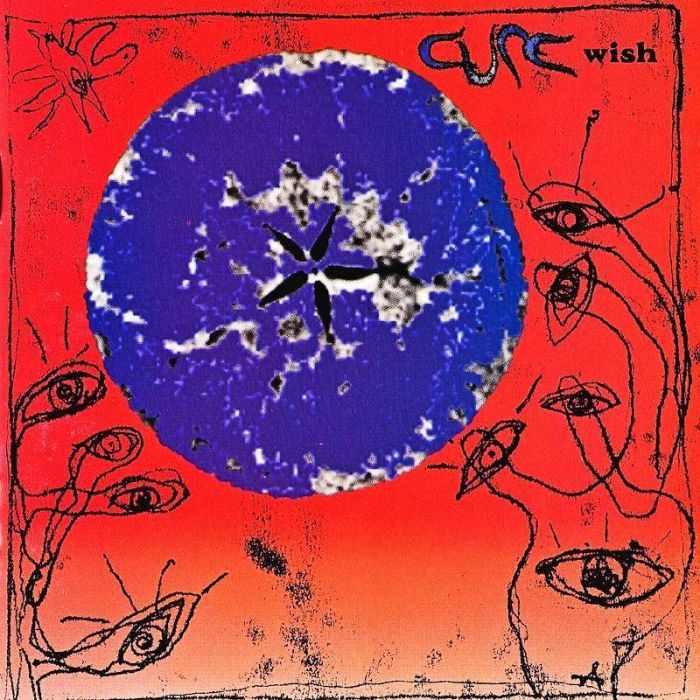
Historically, The Cure have never featured too many guest musicians on their albums, the band being quite adept at creating their richly layered music all by themselves. But when they do bring on a guest, the results are noteworthy and extraordinary.
The Head on the Door’s “A Night Like This” wouldn’t be nearly as good sans Ron Howe’s soulful saxophone, for example. Likewise, Kate Wilkinson’s sorrowful-yet-soaring viola provides a suitable counterpoint to Robert Smith’s voice on this, the dreamiest and most melancholy song on 1992’s Wish.
Robert Smith is at his most reflective as he pines after yet another lost love. “Remember how it used to be/When the stars would fill the sky/Remember how we used to dream/Those nights would never end,” he sings before concluding that “the stars are dimmed by clouds and tears” and “all I wish is gone away.” It’s mopey as all get-out, to be sure, but Wilkinson’s arrangement elevates the song’s sorrow into something nigh-transcendent.
12) “Jupiter Crash” (Wild Mood Swings, 1996)
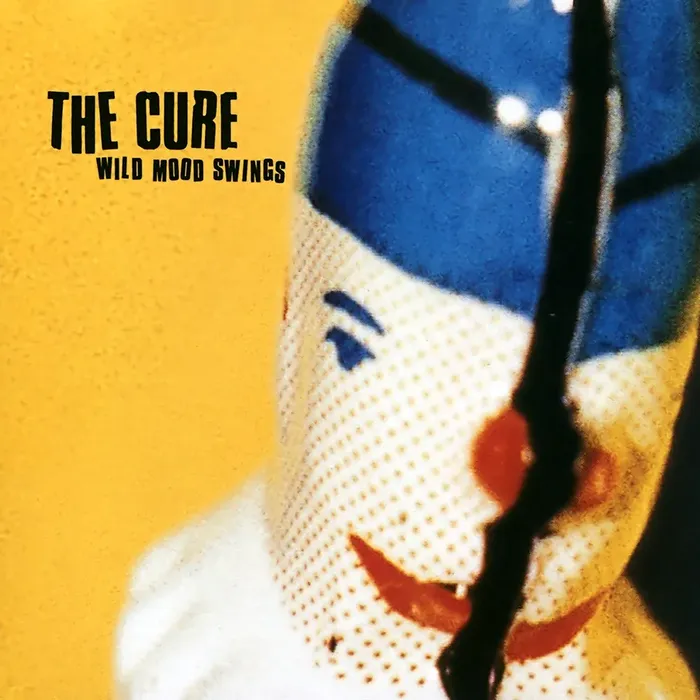
As its title suggests, Wild Mood Swings is a mess of an album. It’s meandering and unfocused, the result, no doubt, of some significant changes in the band’s lineup as well as a larger-than-usual number of folks involved in its production — including four drummers. But like all Cure albums, it does possess some real gems, specifically the Latin-influenced “The 13th” and the effervescent “Strange Attraction” and “Mint Car.”
“Jupiter Crash,” however, is the album’s highlight, an astronomically minded ballad that uses comet Shoemaker-Levy 9’s 1994 collision with Jupiter as an extended metaphor for a failing relationship. As metaphors go, it’s a bit on the nose, but thanks to Smith’s evocative lyrics (e.g., “The night turns as I try to explain/Irresistible attraction and orbital plane/Or maybe it’s more like a moth to a flame?”) and the band’s subdued playing, “Jupiter Crash” is a welcome moment of intimacy and introspection on an otherwise indulgent album.