Companies Like Palantir and Sauron Co-Opt Tolkien’s Writings for Their Misguided Branding
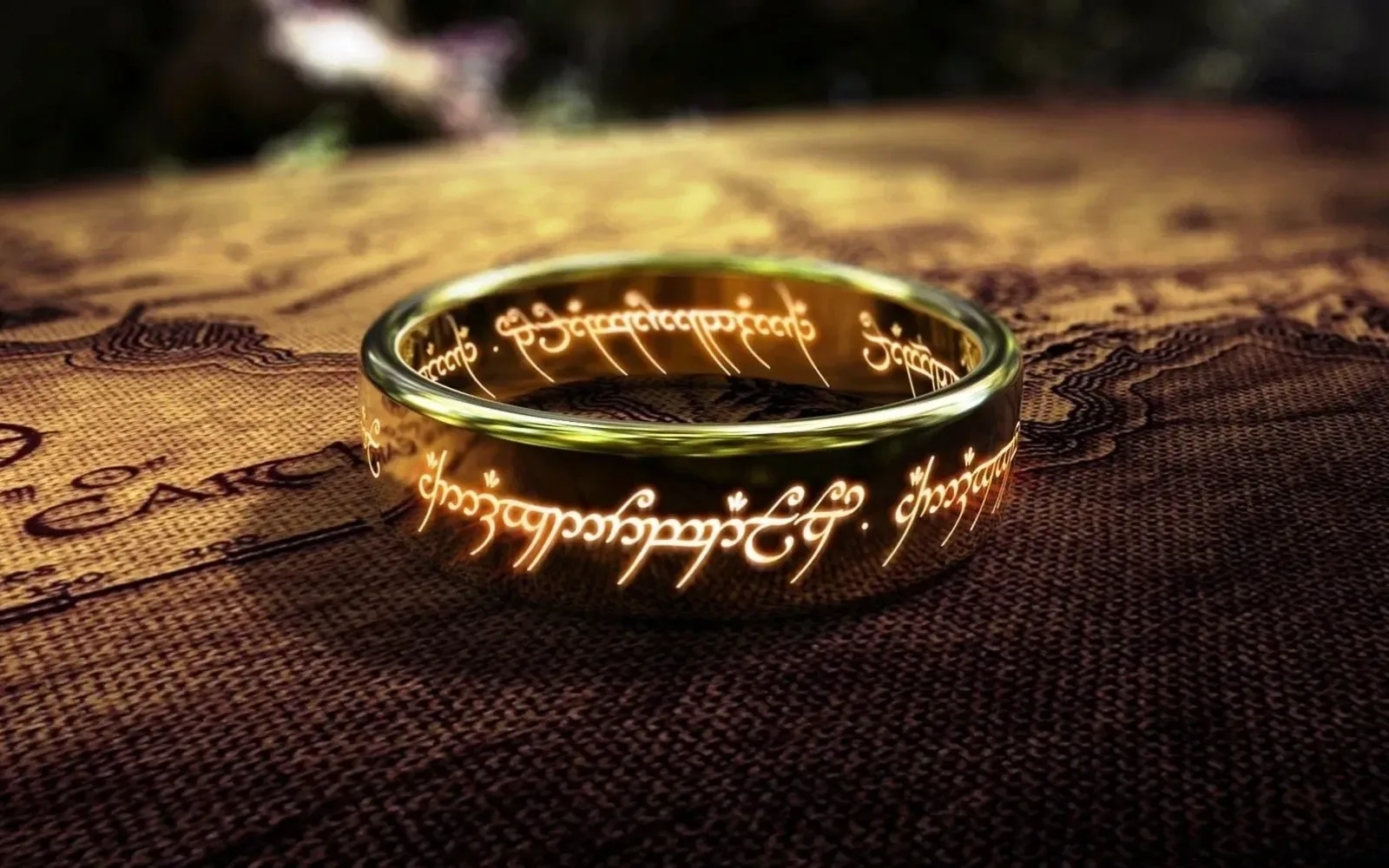
In August 1964, J. R. R. Tolkien sent a letter to his friend Rayner Unwin in which he expressed his disgust that a “monstrous” Dutch-built hydrofoil had been named Shadowfax by its inventors. Tolkien was perturbed by people using names from his novels in a willy-nilly fashion with no regard for the extensive time or care required to create those names in the first place. And given his skepticism towards technology and industrialization — consider his description of Saruman as having a “mind of metal and wheels” — the thought of a noisy machine taking the name of the finest horse in all of Middle-earth almost certainly added to Tolkien’s annoyance.
Given his sentiments in that letter, I can’t help but wonder what Tolkien would make of today’s entrepreneurs, billionaires, and tech bros digging into his legendarium to find names for their companies. For example:
- Anduril Industries: A defense tech company developing “advanced autonomous systems” (e.g., cruise missiles, AI-powered drones). Named after Andúril, the re-forged sword that proved Aragorn’s status as Isildur’s heir and Gondor’s rightful king.
- Durin: A mining startup developing autonomous drilling rigs. Named after the dwarven kings who ruled over the underground city of Moria.
- Lembas: A “food-as-medicine company” that uses AI to “create food and supplement ingredients that actually help your body manage weight, naturally.” Named after the elven waybread given to Frodo and the Fellowship when they left Lothlórien.
- Palantir: A software company developing surveillance tools for government agencies and the military. Named after the elven seeing stones that allowed individuals to see and communicate over vast distances.
- Valar Atomics: An energy startup developing a newer, more efficient type of nuclear reactor. Named after the divine entities who were created by Ilúvatar to shape and sustain his creation, including Middle-earth.
So why, exactly, are companies and startups across a myriad of industries — defense tech, nutritional supplements, nuclear energy — so fascinated with Tolkien’s names? To be fair, companies have often used made-up words for their branding, as evidenced by the nonsensical names of the Web 2.0 era. (Thoof or Jiglu, anyone?) But Tolkien’s names are different.
Words like “Anduril” and “Palantir” sound epic, and given Tolkien’s inimitable skill at languages and world-building, ancient and authentic. As branding expert Scott Milano explains, “In a world obsessed with clean, efficient names… [t]hink Stripe, Slack, Snap… [Tolkien] names sound heavy. Mythic. Inevitable… Powerful companies don’t want to feel accessible. They want to come off as ordained.”
I have no doubt that many who work at companies like Anduril and Palantir consider themselves Tolkien fans. They’ve read The Hobbit, The Lord of the Rings, The Silmarillion, etc., probably multiple times even. But it’s one thing to read and even obsess over Tolkien’s rich, imaginative stories. It’s quite another to appreciate them and understand what Tolkien was trying to say through them — which is where things get tricky, amusing, and even a bit disturbing.
Would you name your company “Satan”?
Consider the name Palantir. On the one hand, naming your surveillance software company after magical devices that allowed individuals to see what was happening around the world makes some sense. But what do we know of the palantíri in Tolkien’s writings? Though originally created as tools for communication and observation, they were ultimately used by Sauron to corrupt and deceive even such powerful individuals as the wizard Saruman and Denethor, Steward of Gondor. As The Informed Alarmist writes:
For a nerd such as myself, the Palantiri are a sinister symbol of hubris and a tool of manipulation. So a red flag went up as soon as I heard about a company called Palantir Technologies, a data analytics and surveillance company that primarily works with the military, immigration control and intelligence communities. I was incredulous that anyone would name their data mining company after a tool that promises foresight but ultimately leads to ruin.
Something similar could be said of mining startup Durin. Sure, it seems quite fitting to name your mining company after the king of a mythical folk renown for their skill at finding precious things in the deep places of the earth. But does anyone remember what happened to Durin’s people? Consumed by their lust for the precious mithril, they became greedy and dug too deeply under the Misty Mountains. There, they awoke Durin’s Bane, the evil Balrog who ultimately destroyed their civilization.
But arguably the most egregious offender out of all of these companies is Sauron, a high-end “autonomous home security” company specifically geared towards “super premium” (i.e., wealthy) customers. Sauron is, of course, the main villain of The Lord of the Rings, a fallen angel (of sorts) whose desire for power leads him to forge the One Ring in order to subjugate all of Middle-earth under his dominion.
But set aside, for a moment, the fact that naming your company “Sauron” is therefore tantamount to naming your company “Satan.” (Yes, I know that Morgoth, who was second only to Ilúvatar before rebelling against his creator, is a truer Satan analog in Tolkien’s mythos, but you get my point.) “Sauron” is a questionable name for a security company for another, more ironic — and yes, hilarious — reason: Even with his all-seeing eye, the Dark Lord was unable to detect, much less prevent, Frodo and Sam from “breaking into” the kingdom of Mordor and destroying his priceless property. Which makes the name “Sauron” something of a self-own for a security company, if you really stop and think about it.
And therein lies the rub. It’s pretty clear that the folks behind these companies aren’t really thinking about the names they pick. And they don’t really care. Not about good, thoughtful branding or about Tolkien and his values.
Bad Cultural Hermeneutics Strike Again
This past September, English professor Howard Schaap published an excellent essay titled “The Dangers of (Mis)Reading: Tolkien, Naming, and Abstraction” that examines the empty Tolkien fascination amongst those who look to the Oxford professor for corporate branding. He writes:
These names come from some of Tolkien’s biggest purported fans, among them J.D. Vance and Peter Thiel. These are men who have read Tolkien’s books, who cite them as being formative and important to shaping the men they have become. And so they have given names from Tolkien’s books to their companies.
What’s the problem?
As the Times article explains, Tolkien was at best ambivalent toward technology, which in his lifetime always seemed to be bent toward power and beyond, to war. So a company named Palantir that “builds technology to bring the United States and partners quantum leaps ahead in capability” and one called Narya that uses “technology and science to solve for the future” do not seem to be paying attention.
Boys, what books were you reading?
Schaap highlights several potential reasons for such misguided branding, including “dissociating” (ignoring that the themes in a fictional work might actually have relevance in the real world) and even Orwellian doublespeak (attaching names and terms from Tolkien’s writings to companies that stand for very different values than those espoused by Tolkien in those very same writings).
That second point is particularly interesting given just how many of these Tolkien-named companies bank on the promise of artificial intelligence, be it Anduril Industries’ “advanced autonomous systems” or Sauron’s “autonomous home security” systems. If anything could be said to be diametrically opposed to Tolkien’s values, it would be AI, a technology that parasitically leeches from human artistry and creativity, threatens real human livelihoods, traffics in deception and hallucination, undermines our very notions of what is real and true, and — just to top it all off — devours natural resources faster than a wizard trying to create a new breed of super orcs.
A lack of solid and consistent cultural hermeneutics is certainly not unique to tech bros and Silicon Valley entrepreneurs. We’ve seen it before when conservatives use memes in bizarre ways, “Fortunate Son” plays during Donald Trump’s military parade, Republicans try to twist pop culture to their own ends, and Trump supporters rock out to Rage Against the Machine. But it feels particularly wrongheaded here.
Some of that’s because we’re talking about geeks and nerds (on paper, anyway) who claim to love Tolkien, and part of me wants to believe that my fellow geeks and nerds will know better. But it’s mostly because, as Alex Skopic writes:
[They] don’t understand the first thing about Tolkien. They’ve taken an author who — although capable of racism and a little too fond of kings — was inherently suspicious of wealth, power, and those who seek them, and they’ve turned his words and symbols into celebrations of those very things. “Palantir Technologies” is a bad joke, except it’s real. But this shouldn’t be surprising, because these kinds of right-wing tech and finance people have a notoriously hard time understanding art or really anything that isn’t a profit-maximizing algorithm. After all, understanding art and literature requires a certain amount of empathy, and they don’t really believe in that.
Skopic’s article specifically talks about people like Palantir co-founder Peter Thiel, who praised Mordor as a “technological civilization based on reason and science” in a 2011 interview (talk about missing the point!), and has since become something of a kingmaker given his support of JD Vance (who once had his own Tolkien-branded company, Narya Capital). The cluelessness exhibited by Thiel et al. affords us a glimpse into how they perceive the world and believe it should operate, a glimpse that would be less alarming if they didn’t already possess so much power and weren’t so bold in using it.
More Than Just a Branding Fail
In both his novels and personal letters, Tolkien constantly warned of the dangerous allure of power, even if it were used to fight an entirely just war against a truly fearsome enemy. In contrast, he praised humble living (for him, the Shire was preferable to any great city or castle), celebrated the beauty of nature over the hum of industry, and reveled in the simple goodness of community, friendship, and loyalty.
As for his books’ heroes, they certainly included cunning wizards, great warriors, and mighty kings. But Tolkien’s greatest heroes were those who were completely disregarded by the mighty and had nothing to offer in the eyes of the world. Nevertheless, they sacrificed comfort for duty, and in the end, triumphed precisely because they failed.
When companies like Anduril and Palantir — and yes, Sauron — appropriate Tolkien’s names for their own ends, they’re committing more than just branding fails. They reveal a fundamental misunderstanding of the very texts that supposedly inspire them and instead, reveal certain dehumanizing power fantasies — fantasies that Tolkien would almost certainly reject as anathema to Middle-earth and all that it represents.