The Cure’s Albums, Ranked

The Cure is my favorite band. And not just because they formed in Crawley, West Sussex the same year I was born. I discovered their music during the tumultuous, angst-ridden years of high school — scientifically proven to be the best time to discover The Cure — and it has stayed with me, more than three decades after the fact. But even after all that time, I still struggle to fully explain why The Cure’s music means so much, though I suspect that the reasons I can highlight will be familiar to many other fans.
For all of its obvious darkness, melancholy, and occasional nihilism — or perhaps more accurately, because of those very things — The Cure’s music can be a comforting soundtrack for difficult times: death, broken relationships, unrequited love, and yes, even high school. Robert Smith’s florid and colorful lyrics express the deepest emotions in unique ways, making it possible for listeners to understand and express those emotions in their own lives.
The band’s richly layered and exotic soundscapes offer an escape into fantastical and dream-like other-worlds. And finally, the band’s permanent outsider status — which they’ve maintained even while selling out stadiums, amphitheaters, and other venues around the world — make it easier to feel a little less alone in a world that’s often too big and too scary, even for middle-aged adults.
Nine Inch Nails’ Trent Reznor said it best when he inducted The Cure into the Rock n’ Roll Hall of Fame:
Immediately this band struck a chord. The first album I heard was The Head on the Door. I hadn’t heard anything like it before. I felt a lot of the darkness that I felt in my head coming back at me through the speakers, and it blew my mind. It was like this music was written just for me. I struggled my whole life feeling that I don’t fit in or belong anywhere…Hearing this, suddenly I felt connected, no longer quite so alone.
[…]
Despite making challenging music that deals with the biggest themes, their impact has been gigantic. They’ve sold the best part of who gives a shit how many million records and been an essential touchstone in the genres of post-punk, New Wave, goth, alternative, shoegaze, and post-rock. They’ve been in and out of fashion so many times in the last four decades that they ended up transcending fashion itself. Though they might be a hip name to drop in 2019, this wasn’t always the case. Their dedication to pushing sonic and artistic boundaries while making music for the ages wasn’t always rewarded with glowing reviews in the press. But they never failed to attract a passionate, intelligent, and loyal fanbase who always knew the truth: The Cure are one of the most unique, most brilliant, most heartbreakingly excellent rock bands the world has ever known.
He then went on to describe The Cure’s music as “a sound, it’s a look, it’s a vibe, it’s an aesthetic that the fans get to visit and immerse themselves in whenever they like. It’s a custom world for anyone who has ever dreamed of escape.”
Over the course of fourteen albums, as well as numerous singles and compilations, The Cure has established one of the most iconic and influential catalogs of music in the annals of alternative, goth, and post-punk. Their songs can be beautiful, ominous, heart-breaking, and harrowing — and sometimes, all at once. So to celebrate the impending release of their fourteenth album, the long-awaited Songs of a Lost World, I dove into their catalog to determine where each album stands.
Of course, the following ranking is completely subjective, based on my own experiences with The Cure and how their music has impacted and shaped my life over the course of 30+ years. Your ranking might look totally different than mine, which is a beautiful thing, and ultimately speaks to the diversity and range found in their music.
14) The Top (1984)
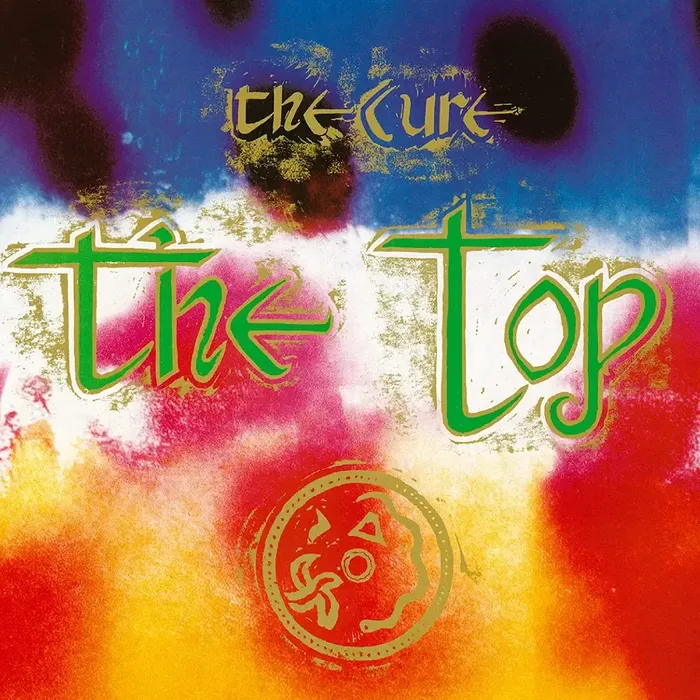
After Pornography, The Cure — now just Robert Smith and Lol Tolhurst after Simon Gallup’s departure — set out to reinvent themselves as a pop group. The resulting singles, like “Just One Kiss” and “The Upstairs Room,” were compiled on 1983’s Japanese Whispers, and represented a definite change in direction. With 1984’s The Top, Smith sought to build on Japanese Whispers’ eclecticism, hence the Middle-Eastern melodies, Latin guitar flourishes, and unconventional (for The Cure, anyway) instrumentation like flutes, violins, and saxophone.
There’s no beating around the bush, though: The Top is a mess. Although it has the occasional delight (e.g., “Bird Mad Girl” and “Dressing Up”’s slinky playfulness) and gave us “The Caterpillar,” The Top is the sound of a band just going through the motions. That can probably be chalked up to Smith’s burnout at the time. He was pulling double duty as guitarist for Siouxsie and the Banshees, who were in the middle of recording 1984’s Hyæna, and thus had limited time to work on Cure songs.
But it probably didn’t help matters that Smith et al. were also living above a pub that gave them unlimited access to alcohol after hours. The resulting all-night drinking sessions, combined with their frequent enjoyment of new drummer Andy Anderson’s “magic mushroom” tea, certainly explain the album’s trippy, psychedelic nature. But the band’s excessive inebriation also explains why said psychedelia is so dull and mundane.
At best, The Top could be considered a “transitional” album; you can hear the seeds of what the band would explore on later albums like The Head on the Door and Kiss Me, Kiss Me, Kiss Me. But even Smith has admitted that The Top is a self-indulgent album, calling it the “the most difficult [album] to talk/write about.”
Highlights: “Bird Mad Girl,” “Dressing Up,” “The Caterpillar”

13) The Cure (2004)
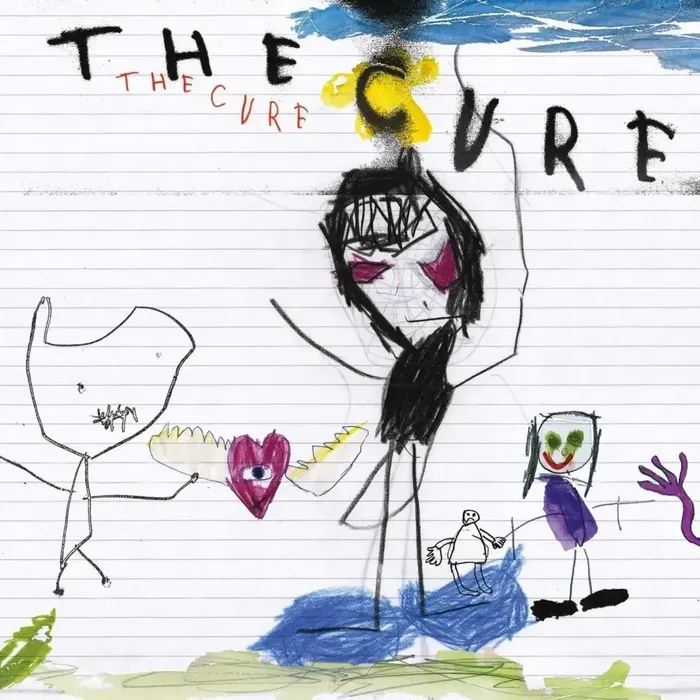
Despite its title, The Cure sounds less like a Cure album, and more like an album by a band desperately trying to sound like The Cure — something that even some of the band members have come to admit. Some of that is almost certainly due to producer Ross Robinson, called the “godfather of nu metal” for his work with Korn, Limp Bizkit, Cold, Slipknot, and — checks notes — Vanilla Ice.
To his credit, Robinson does bring out some heaviness and intensity in the band that made for a nice change of pace after the brooding Bloodflowers, as heard on album opener “Lost.” However, the sound is ultimately ill-fitting; the band sounds like they’re trying way too hard on songs like “Us or Them,” “Never,” and “The Promise,” the latter of which finds Robert Smith moaning and caterwauling over a densely psychedelic backdrop for ten minutes.
I was much more sanguine when I originally reviewed the album back in 2004, writing that “Robinson’s production has given the band a nice kick in the butt, and the leaner Cure is much nicer than the mopey-with-no-point band that existed beforehand.” Listening to it now, however, The Cure hasn’t aged nearly as well as in the last two decades as its predecessors, Wild Mood Swings and Bloodflowers.
Highlights: “Lost,” “Before Three,” “Taking Off”
12) 4:13 Dream (2008)
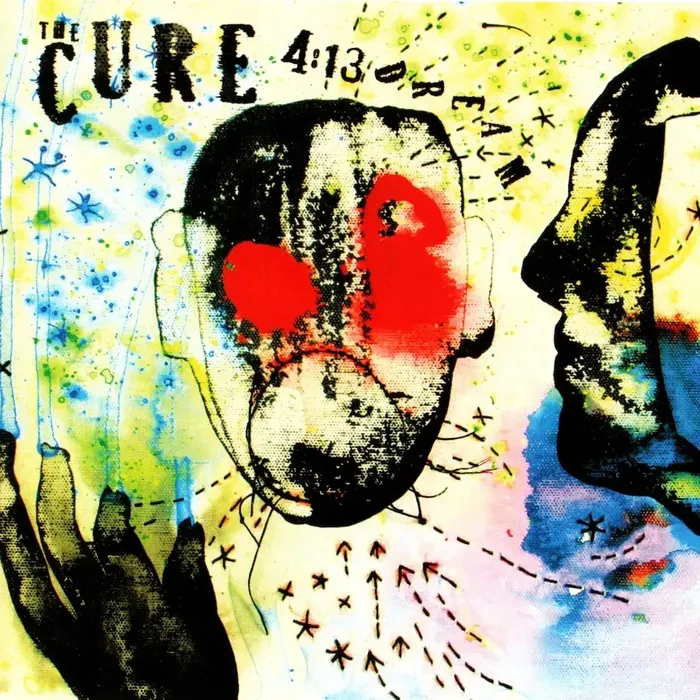
Robert Smith originally envisioned 4:13 Dream as a double album, but with his record label less than impressed with the success of 2004’s The Cure, he was forced to cut over half of the 33 songs that he’d written. Listening to the finished album now, I’m not sure he picked all of the right ones.
As is the case with every Cure album, there are some definite gems here. The album kicks off with the dreamy “Underneath the Stars” (which finds Smith in a particularly romantic mood with such lyrics as “The kiss is infinite and ours alone tonight”), the woozy “Sirensong” (which also finds Smith in a romantic mood as he sings about a girl with golden hair and silver skin), and “The Real Snow White” (which starts off poorly, but moves in some surprising and unpredictable directions).
But much of the album feels pretty mediocre. There’s nothing really terrible or godawful — with the possible exceptions of “The Reasons Why,” an overblown song inspired by a suicide note — but rather, it’s mostly just kind of there and half-baked. According to Simon Price’s Curepedia, the recording sessions were tense — Smith has called 4:13 Dream “the most fraught album I’ve ever been involved in” — which, when combined with the aforementioned label woes, might explain a few things.
In 2014, Smith announced plans to release two new albums: a companion piece to 4:13 Dream titled 4:14 Scream that would feature darker material, and 4:26 Dream, an expanded 26-song version of 4:13 Dream that would match his original vision for the album. As is the case with many of Smith’s announcements, though, neither of these releases have seen the light of day, and with the impending release of Songs of a Lost World and Smith’s other plans for The Cure, that probably won’t change — ultimately leaving 4:13 Dream in a weird state of unfinished limbo.
Highlights: “Underneath the Stars,” “Sirensong,” “The Hungry Ghost”

11) Three Imaginary Boys (1979)
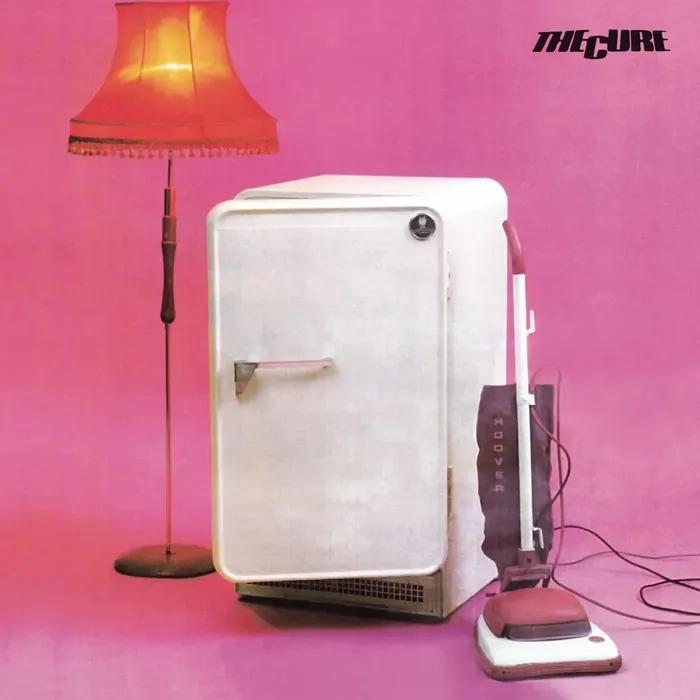
Here’s where it all began… Recorded before any of the band members had even hit their twentieth birthday, Three Imaginary Boys is — as you might expect for a debut album — pretty uneven. It contains some distinctly un-Cure moments like a cover of Jimi Hendrix’s “Foxy Lady” (which was sung by bassist Michael Dempsey) and the just plain goofy “Weedy Burton” instrumental (widely considered one of the worst Cure songs of all time).
But that’s not entirely The Cure’s fault. Given their youth and inexperience, they were frequently overruled by producer Chris Parry, and Fiction Records ultimately picked the album’s cover art and track listing, which included several songs against the band’s wishes. (Subsequently, Smith would demand complete control over such things on all future Cure albums, and wisely so.)
Three Imaginary Boys has often been dismissed by The Cure, with Smith bemoaning its lack of focus (and its cover art). Despite having some strikes against it, the album does begin with “10:15 Saturday Night,” a stark and stripped down single that hints at the darkness in the band’s most well-known work, as does “Three Imaginary Boys.” Meanwhile, “Fire in Cairo” is a bouncy number that has one of the band’s most infectious choruses.
Interestingly, the band’s debut album lacks some of their most well-known early singles: the Albert Camus-inspired “Killing an Arab”; the Mod Revival critique that is “Jumping Someone Else’s Train”; and of course, the iconic “Boys Don’t Cry.” Those songs were later included on Boys Don’t Cry, a repackaged version of Three Imaginary Boys that was released in Australia, Canada, and the United States in 1980.
Highlights: “10:15 Saturday Night,” “Fire in Cairo,” “Three Imaginary Boys”

10) Wild Mood Swings (1996)
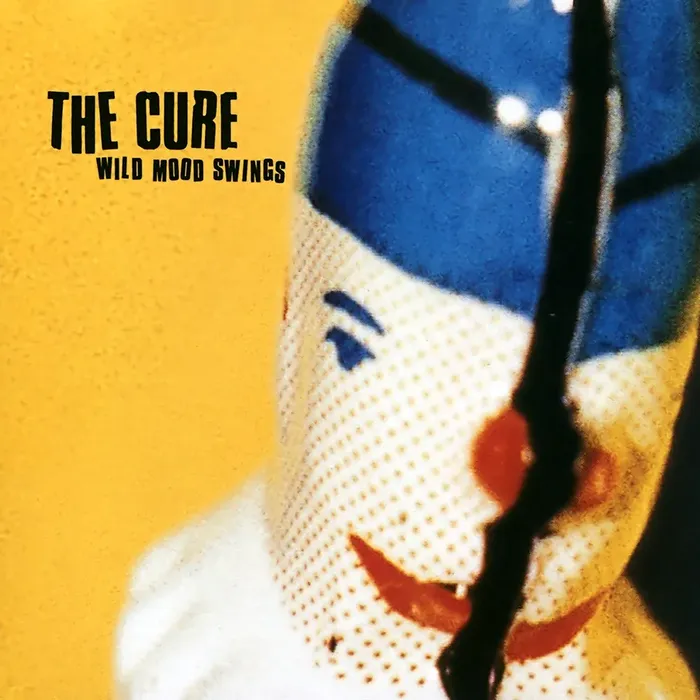
For the longest time, I considered Wild Mood Swings the worst Cure album, an opinion held by many fans and critics. After listening to it again for the first time in several years, though, my opinion of the album has markedly improved. Even so, it’s still uneven and messy, as indicated by its title, though much of that can be attributed to the circumstances surrounding its recording.
For starters, the album represented some pretty significant changes in the band’s camp. Porl Thompson and Boris Williams had both left, and Williams’ replacement hadn’t yet been found before recording started. As a result, four different drummers played on Wild Mood Swings, including Jason Cooper, who officially joined the band after the album’s release. The Cure also parted ways with longtime producer David M. Allen, who had worked with them since 1984’s The Top, and they began experimenting with different recording styles and techniques. That’s reflected in the album’s credits, which contain the largest number of collaborators of any Cure album, including numerous session musicians and multiple engineers and mixers.
Wild Mood Swings also found Smith exploring multiple musical styles, as if he was trying to recapture Kiss Me, Kiss Me, Kiss Me’s diversity. There are some straightforward (for The Cure, anyway) pop songs like “Mint Car,” “Round & Round & Round,” and “Strange Attraction” as well as a few moody ballads like the waltzing “This Is a Lie” and the excellent “Jupiter Crash.” The band even toyed with Latin sounds on the bossa nova-influenced “The 13th” while the swaggering “Gone!” taps into the same quirky vibe as “Why Can’t I Be You?” and “Hot Hot Hot!!!” But the album is not without some real misfires, including “Club America”’s misguided psychedelia, the Britpop-esque “Return,” and the aggressive, almost grunge-y “Trap” — all of which feel like the band was grasping as straws for ideas.
The Cure’s members were in a good place while making Wild Mood Swings. Smith has described the year leading up to the album as one of the best times of his life while keyboardist Roger O’Donnell noted the relaxed nature of the album’s recording. Those good vibes carried over to the album, with Smith initially proclaiming Wild Mood Swings as one of the band’s best. That rosy assessment soon faded, however. Within a few years’ time, Smith was much more dismissive of album, admitting that he was too “unfocused and incoherent” while making it.
Wild Mood Swings has probably been unfairly maligned by many folks, coming as it did after the one-two punch of Disintegration and Wish. At the same time, even its best songs can often feel like second-tier Cure material while the rest — e.g., “Club America” — have only worsened with age.
Highlights: “The 13th,” “Mint Car,” “Jupiter Crash”
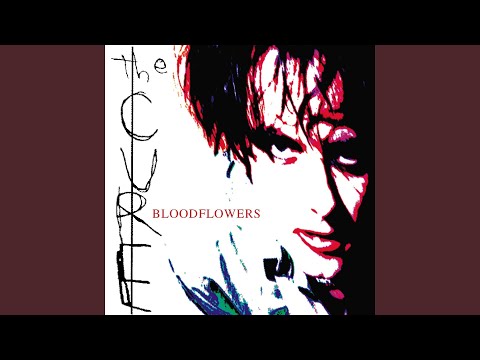
9) Bloodflowers (2000)
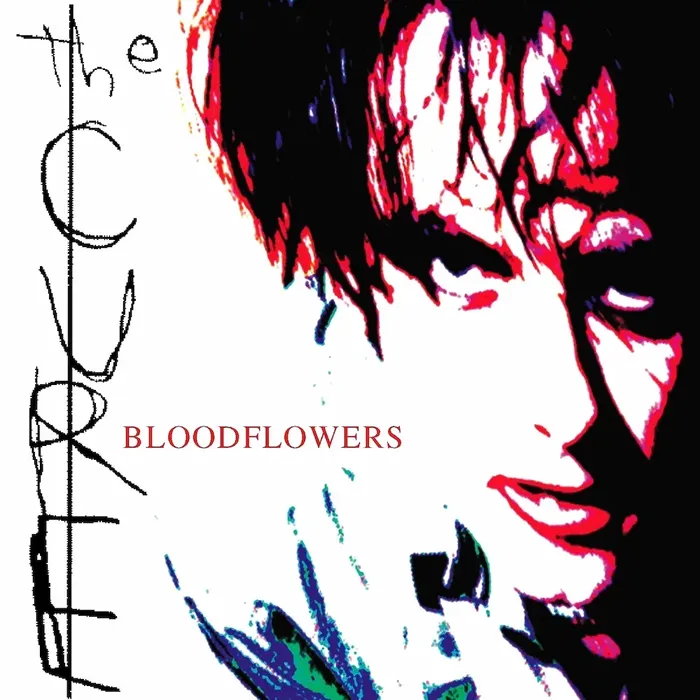
Much like Wild Mood Swings, I really disliked Bloodflowers upon its release. Bloodflowers was conceived as the final album in an unofficial trilogy with Pornography and Disintegration, but the effort to evoke and recapture the dark majesty of those earlier albums felt tired — almost as if Robert Smith himself was exhausted of being in The Cure. But like Wild Mood Swings, my opinion of the album has shifted considerably in recent years.
Some of that’s due to learning more about Robert Smith’s intentions with the album. More than simply completing a trilogy, he wanted to create a thematic companion to Disintegration. That album had been recorded as Smith neared his 30th birthday, while Bloodflowers was recorded as he neared his 40th; both albums were efforts to reflect on his achievements with The Cure, and to record something meaningful if it turned out to be the end.
The album’s unrelenting attempts at darkness do get, well, unrelenting at times, and nowhere more so than on the album’s second track. “Watching Me Fall” rails on and on for a turgid eleven minutes, effectively killing the album’s momentum after it begins so well with the gorgeous “Out of This World,” which finds Smith in a reflective mood about being in The Cure and possibly ending the band. Fortunately, things get back on track with “Where the Birds Always Sing,” a haunting ballad in which Smith outlines the ramifications of his atheism (“But the world is neither just nor unjust/It’s just us trying to feel that there’s some sense in it”).
The rest of Bloodflowers is pretty strong for the most part thanks to the mopeyness of “The Last Day of Summer” and “There Is No If…” (which Smith originally wrote back in 1983). Meanwhile, “39” is an exercise in self-excoriation, as Smith bemoans his mortality and critiques his accomplishments (“Half my life I’ve been here/Half my life in flames/Using all I ever had”). The album closes with its title track, which comes full circle with Pornography thanks to its cavernous drumming, dreary melodies, and a searing guitar solo.
Truth be told, Bloodflowers is this close to being a classic Cure album on par with Disintegration, Pornography, and Faith. Its bad moments, like “Watching Me Fall,” are nigh-dreadful, while some its best moments (“39,” “Bloodflowers”) can occasionally feel like the band is trying too hard to sound like The Cure of old.
Highlights: “Out of This World,” “Where the Birds Always Sing,” “The Last Day of Summer”
8) Kiss Me, Kiss Me, Kiss Me (1987)
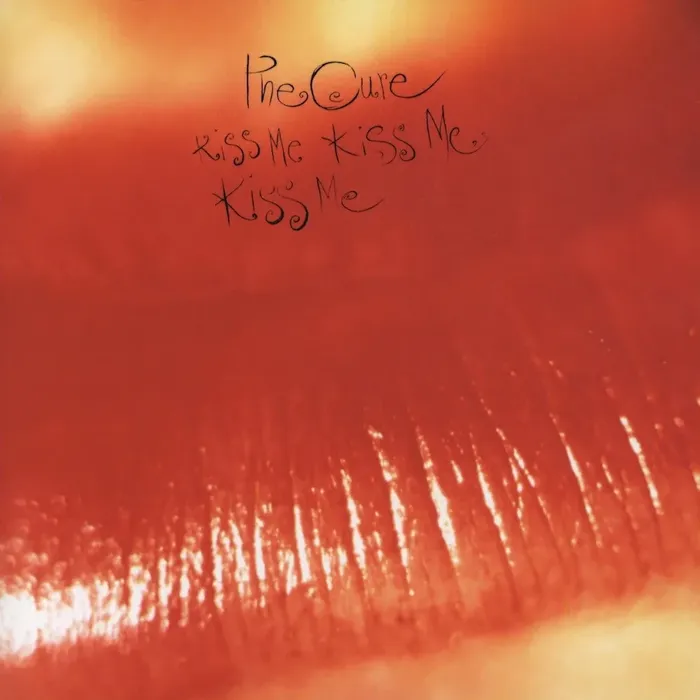
I know some Cure fans might consider it nigh-blasphemous that Kiss Me, Kiss Me, Kiss Me isn’t ranked higher on this list. After all, it’s the album with “Just Like Heaven,” arguably The Cure’s most popular and beloved song. (Smith himself has described it as the best thing he’s ever written.) Beyond “Just Like Heaven,” you also have great songs like “Catch,” “Why Can’t I Be You?,” and even “Hot Hot Hot!!!” (which is the perfect example of a song that only The Cure could get away with).
But focusing on those songs means overlooking songs like “The Kiss,” “Torture,” “The Snakepit,” and “Like Cockatoos,” in which the band gives themselves over to excess time and again. Given that the album clocks in at 74 minutes, Kiss Me, Kiss Me, Kiss Me requires listeners to wade through an awful lot in order to make it to those aforementioned highlights.
Perhaps the best thing that I can say about Kiss Me, Kiss Me, Kiss Me — beyond “Just Like Heaven,” that is — is that it laid the foundation for Disintegration in a couple of ways. First, as a double album, it proved The Cure had the creativity and stamina necessary to make big musical statements. And second, the album’s wild experimentation allowed Smith et al. to get some things out of their system so that they could have the focus necessary to bring Disintegration’s magisterial beauty into being.
Highlights: “Catch,” “Why Can’t I Be You?,” “Just Like Heaven”
7) Songs of a Lost World (2024)
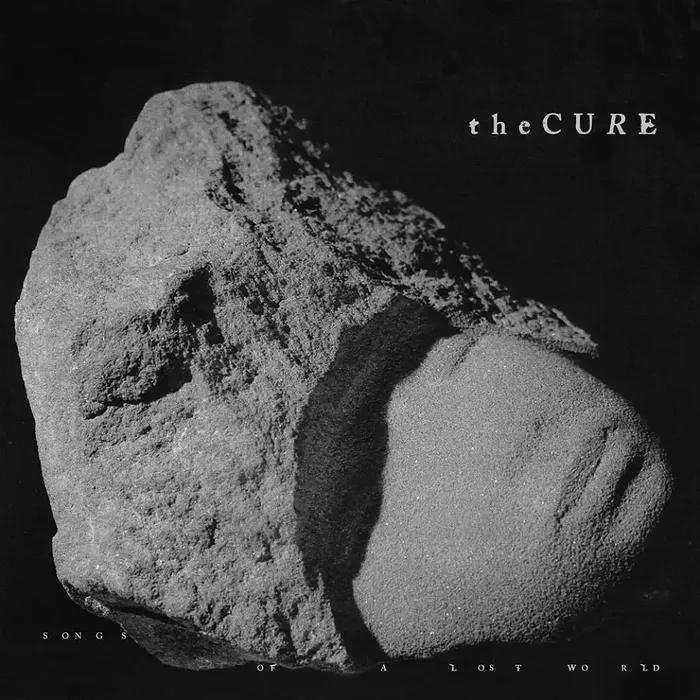
Robert Smith first teased The Cure’s fourteenth album all the way back in July 2012, four years after the release of 4:13 Dream. The following years were filled with more announcements, including plans to release three new albums. Of course, Cure fans know they should take anything Robert Smith says with a grain of salt, but when keyboardist Roger O’Donnell started claiming that The Cure was working on “the most intense, saddest, most dramatic, and most emotional record we’ve ever made,” well, that certainly piqued my curiosity.
Now, I don’t know if I’d go so far as O’Donnell, but there’s no denying that Songs of a Lost World represents a stunning return to form for the goth icons. The 49-minute-long album opens and closes with “Alone” and “Endsong,” both of which are epic brooders whose stately pace and dense, swirling atmospherics hearken back to Disintegration’s majesty. But Songs of a Lost World is more than just gloomy tunes; it’s arguably The Cure’s most personal album since 1981’s Faith.
These eight songs resound with death, grief, and regret. Smith — now firmly in his 60s, as evidenced by his thinning tousle of hair — sings about lost innocence, childhood memories, and loved ones who’ve passed. “And Nothing Is Forever” is about a promise that Smith made to someone on their deathbed while “I Can Never Say Goodbye” was inspired by his brother’s death. That event, combined with the deaths of Smith’s parents, shape the album’s perpetually solemn mood. Fortunately, Smith’s inimitable voice is more than up to the task; he’s still as expressive as ever, even after all these decades.
Unfortunately, Songs of a Lost World is hindered somewhat by a mix that’s surprisingly flat at times. Jason Cooper’s drums sound thin and compressed while interesting sonic details are often buried and barely audible. Even so, Songs of a Lost World still feels like a gift. It’s not often that a band can return after nearly two decades with an album that stands up to some of their most beloved material.
Highlights: “Alone,” “A Fragile Thing,” “Endsong”

6) Seventeen Seconds (1980)
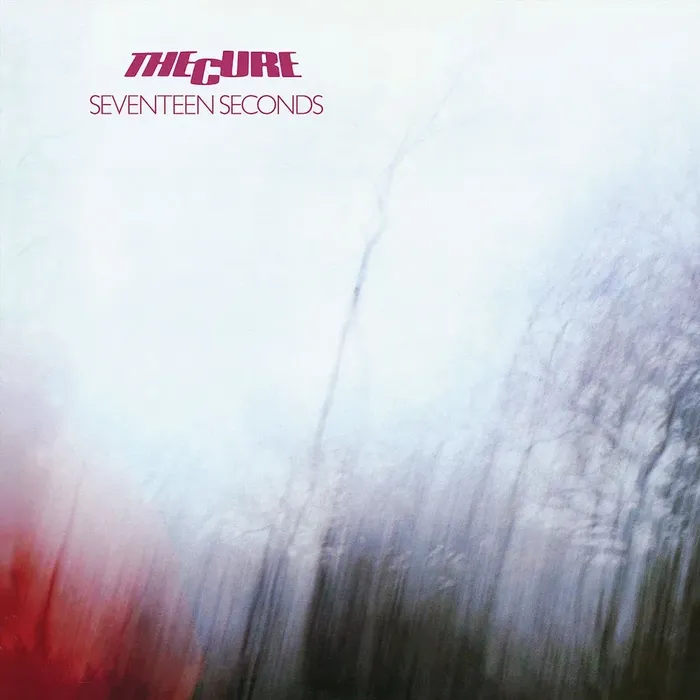
Although it was released less than a year after Three Imaginary Boys, Seventeen Seconds sounds like the work of a much more mature and assured band even within its first few minutes, thanks to a haunting instrumental opening (“A Reflection”) and the motorik beat of “Play for Today.” But the band’s musical growth didn’t come without a price.
At the time, Smith was spending more time with Siouxsie and the Banshees — The Cure had toured with the Banshees in 1979 — and their sound and style were proving influential. But founding member Michael Dempsey was disillusioned with the band’s new direction. As Robert Smith put it, “I played Michael the demos for the next album and he hated them. He wanted us to be XTC part 2 and — if anything — I wanted us to be the Banshees part 2. So he left.”
Replacing Dempsey on bass was The Magazine Spies’ Simon Gallup, who would become the second longest tenured member of The Cure after Smith. Gallup’s bandmate Matthieu Hartley also joined The Cure on keyboards, though he would leave shortly after the Seventeen Seconds tour. Along with the Banshees, Smith was also influenced by David Bowie’s Low, and Hartley’s keys added a similarly brooding quality to the album, particularly on songs like “In Your House,” “M,” “At Night,” and of course, “A Forest.” The latter is arguably the THE Cure song, and has since become a concert mainstay.
With its sparse-yet-haunting sound and ominous lyrics, Seventeen Seconds represented a major change from the band’s punk and post-punk roots to the gothic rock sound with which they’re most often identified. In hindsight, subsequent albums like Faith and Pornography seemed like logical next steps from what Smith et al. had achieved here. But that does nothing to diminish Seventeen Seconds’ status as a solid album in its own right.
Highlights: “Play for Today,” “In Your House,” “A Forest”

5) Pornography (1982)
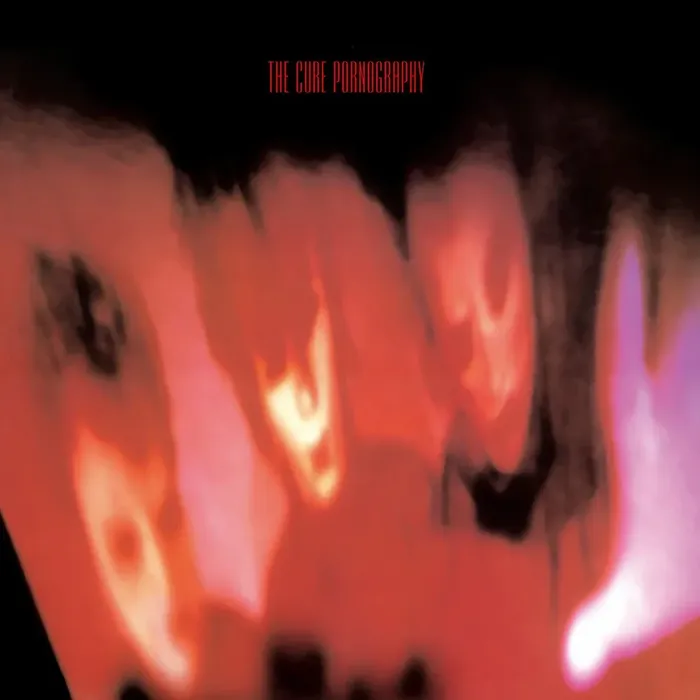
Even for diehard Cure fans, Pornography can be a lot to take in. After all, it begins with Robert Smith crying out “It doesn’t matter if we all die” and goes downhill from there. Put simply, Pornography is nihilism distilled into its purest essence, its eight songs filled with ominous soundscapes and nightmarish imagery (e.g., “A noise, a scream tears my clothes as the figurines tighten/With spiders inside them/And dust on the lips of a vision of hell,” “The Figurehead”), with only the barest traces of light piercing the gloom in its final seconds.
Pornography is the sound of a man who hates himself and sees little point in going on. (Prior to recording, Smith felt like he had only two choices before him: make the album or commit suicide.) It’s also the sound of a band that hates themselves. Indeed, The Cure broke up in the middle of the Pornography tour, and then again once it was done, with the members all going their separate ways. (Smith took a month-long vacation to clean himself up while Lol Tolhurst decamped to Paris.)
Not surprisingly, Smith has called Pornography “one of the most miserable albums ever made.” Ironically, though, the album’s uncompromising and unflinching nature can actually make it a strangely comforting experience. In Goth: A History, Tolhurst calls Pornography “the most authentic and honest record The Cure ever created.” He continues:
Yes, most of the music is uncompromisingly bleak. Even the cover is like a Francis Bacon painting. Life imitates art. The first line… revels in nihilism and negation galore, but then consider the last line’s determination to fight. Underneath it all, as much as death swam by, I found hope.
When you feel overwhelmed and despairing about the current state of things, you don’t necessarily want platitudes and encouragement. Sometimes, you just want someone to climb down into the pit with you, acknowledge the gloom, and affirm that yes, the world can be a shitty place, but maybe, the only way out is through. That’s precisely was Pornography offers, if you’re willing to brave its tumult and listen. But I wouldn’t make it a regular habit.
Highlights: “One Hundred Years,” “The Hanging Garden,” “A Strange Day”
4) The Head on the Door (1985)
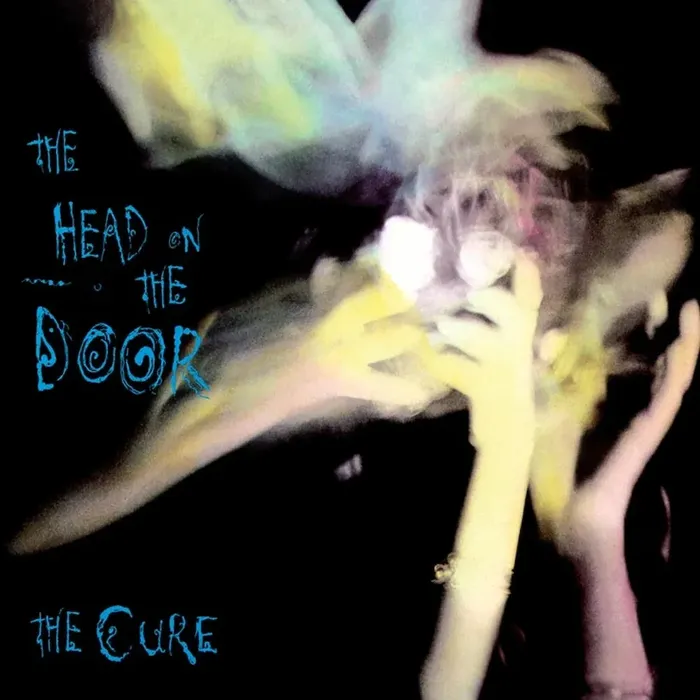
After several albums’ worth of gloom and doom, Robert Smith set out to challenge himself. With 1985’s The Head on the Door, he wrote an entire album’s worth of material — and supposedly, all of it within the span of two weeks. It marked the first time that Smith received sole songwriting credits on a Cure album, meaning that this is unfiltered Robert Smith that we get to hear.
At the same time, it’s very much a cohesive band effort. Bassist Simon Gallup had returned to the fold along with guitarist/keyboardist Porl Thompson — who had been a member of the pre-Cure outfit Easy Cure — and the album was also the debut of drummer Boris Williams. According to Smith, The Cure began to feel less like a band during this period of time, and more like a family (though sadly, Lol Tolhurst’s drinking had grown increasingly out of control).
The resulting album is delirious in all of the best ways. Right from get go, the bouncy rhythms and acoustic guitar on “In Between Days” signify that this is a different band altogether than on albums past. That impression is only enhanced by songs like “Six Different Ways,” “Close to Me,” and the epic power ballad-y “A Night Like This.” Even those songs that hearken back to the band’s darker days, like the otherworldly “Kyoto Song” and album closer “Sinking,” feel like something fresh from the band.
Listeners responded quite favorably to the reinvigorated Cure; The Head on the Door was a massive success, charting well around the world and going gold in France, the UK, and the USA. Although the band had developed a cult following well before The Head on the Door, this was the album that really helped them achieve international stardom and turned them into one of the biggest alternative music acts of all time.
Highlights: “In Between Days,” “Six Different Ways,” “A Night Like This”
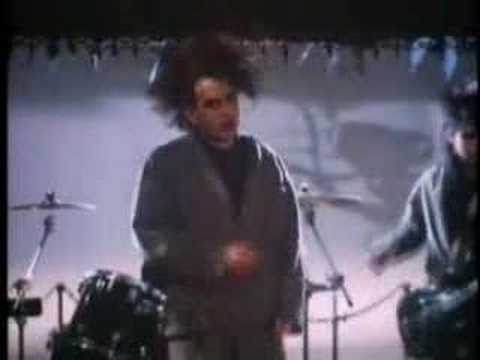
3) Wish (1992)
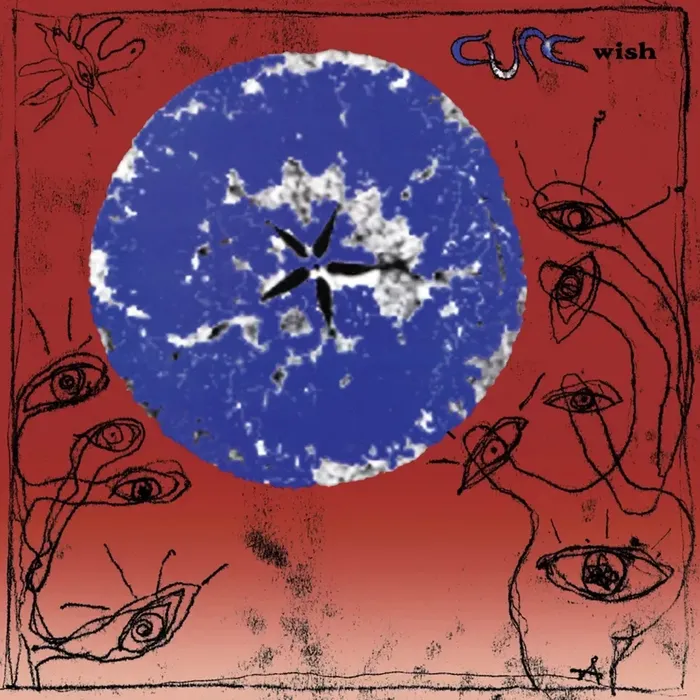
Wish occupies a special place in my heart because it was my very first Cure album, and is probably the Cure album I know best. For my 16th birthday, my friend Leah gave me a battered old black cassette onto which she’d dubbed Wish along with several of its B-sides. I listened to that cassette nonstop for a good portion of my junior and senior years of high school, so much so that I’m surprised it didn’t melt in my Walkman.
I still have that cassette on a shelf in my office. I obviously don’t listen to it anymore, but it remains a precious memento from my youth, and more importantly, a reminder of a good friend who died at far too young an age — my first encounter, in fact, with the death of someone close to me. So no, I can’t possibly separate nostalgia from The Cure’s ninth album, nor do I want to.
But even after setting any nostalgia aside, Wish remains an incredibly solid album that includes some of The Cure’s biggest hits (e.g., “High,” “Friday I’m in Love,” “A Letter to Elise”). The influence of shoegaze can be heard in the thickly layered sonics of “Open” and “From the Edge of the Deep Green Sea” while “Doing the Unstuck” and “Wendy Time” are delirious pop songs in their own right. It wouldn’t be a Cure album without some mopey masterpieces, and Wish features some real doozies with “Apart,” “To Wish Impossible Things,” and the aforementioned “A Letter to Elise.”
I know I’m only ranking Cure albums with this post, but I’d be sorely remiss if I didn’t mention Wish’s B-sides — which include gems like “This Twilight Garden,” “Play,” and “The Big Hand,” all of which are just as strong as the album tracks (if not more so) — as well the four lovely instrumentals on the Lost Wishes EP.
Highlights: “High,” “A Letter to Elise,” “To Wish Impossible Things”
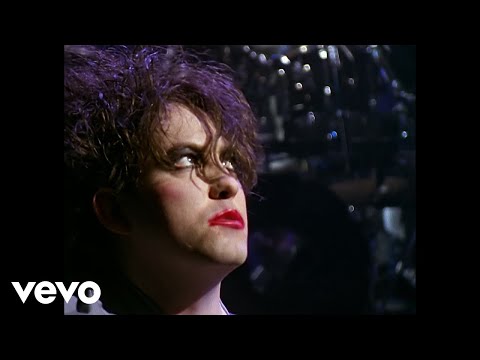
2) Faith (1981)
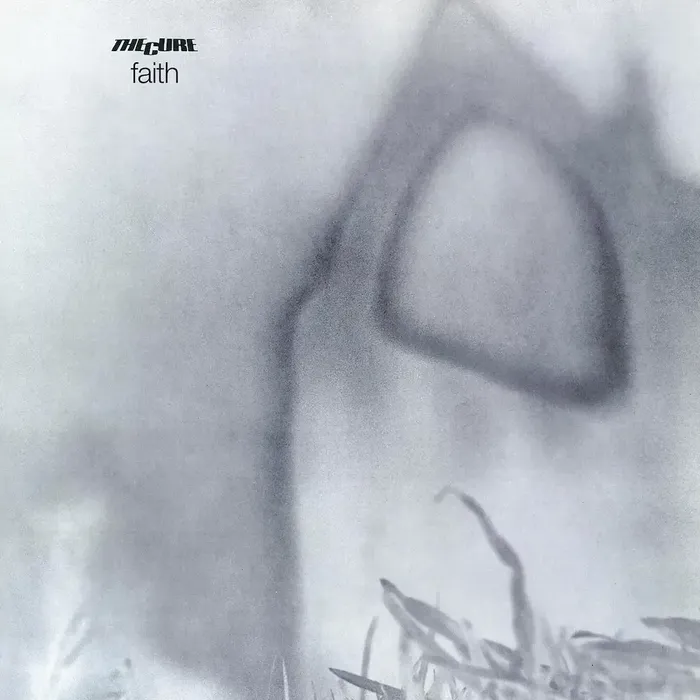
Situated as it is between Seventeen Seconds and Pornography, it’s easy to overlook Faith. Which is a shame because it features some truly sublime songs that were written while the band was reeling from loss — be it the deaths of family members or the loss of faith itself. It’s a deeply reflective album, with Robert Smith trying to find something that’ll guide him through a world of grief and alienation.
Given his well-known antipathy towards religion, it’s clear that Smith doesn’t find much hope by the album’s end, which perfectly sets up Pornography’s nihilistic excess. But his conclusion is not a willful or easy one, as heard in the plaintive despair of the album’s opening and closing songs (“The Holy Hour” and “Faith”). In-between those bleak bookends are some of the band’s most haunting songs.
“Other Voices” features an all-time Simon Gallup bass line, while Smith laments the alienation brought on by the band’s constant touring. Album highlight “All Cats Are Grey” finds Smith forever lamenting “No shapes sail on the dark deep lakes/And no flags wave me home” against a solemn backdrop of muted synths, echoing percussion, and stark piano notes. “All Cats Are Grey” was inspired by the impending death of Lol Tolhurst’s mother, while “The Funeral Party” is about the death of Smith’s grandparents. Such deeply personal songs temper the despair, imbuing it with a deeply human element that’s unique in the band’s catalog.
Highlights: “All Cats Are Grey,” “The Funeral Party,” “Faith”
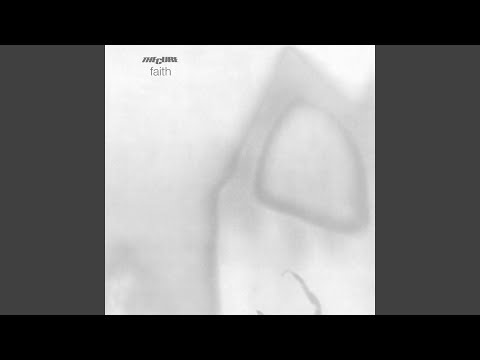
1) Disintegration (1989)

Was there any doubt whatsoever that Disintegration would take the top spot? Put simply, The Cure’s eighth album is the culmination of everything that Robert Smith and the band had been striving for since their inception in 1976.
Worried that he wouldn’t achieve anything truly great before turning 30 and overwhelmed by the band’s growing success following Kiss Me, Kiss Me, Kiss Me, Smith set out to create his masterpiece. The resulting album is epic and bombastic in all of the right ways, swelling with emotions deeper than you thought humanly possible and musical arrangements that drown you in all of their lush layers.
I think Nitsuh Abebe did as good a job as anyone summing up the album’s appeal when he reviewed the album’s 2010 reissue:
The trick, I think, is how well it serves as a soundtrack to that feeling that everything around you is meaningful, whether it’s beautiful or horrible or sublime: This is an album for capital-R Romantics, not sulkers. It’s muscular (like on the title track), wistful (“Pictures of You”), ghostly (“Closedown”), seething (“Fascination Street”), and yeah, morose, but what’s striking is how each of those qualities can reach really, really far into your gut. It’s not a record for the dead-inside: Get far enough into this album, and I will almost guarantee you will feel some shit.
Clocking in at nearly 72 minutes, Disintegration is certainly daunting, but not a single one of those minutes is wasted or superfluous. Rather, every single one is awash in sonic brilliance, from the sweeping synths and chiming guitars to some of Simon Gallup’s most iconic bass lines (e.g., “Fascination Street”).
Thirty-five years after its release, Disintegration still feels and sounds as vital and meaningful as ever. Which means that as soon as you hear “Plainsong”’s thunderous, cathedral-like opening, you will definitely feel some shit.
Highlights: “Plainsong,” “Last Dance,” “Fascination Street,” “Disintegration”

Honorable Mention: Japanese Whispers (1983)
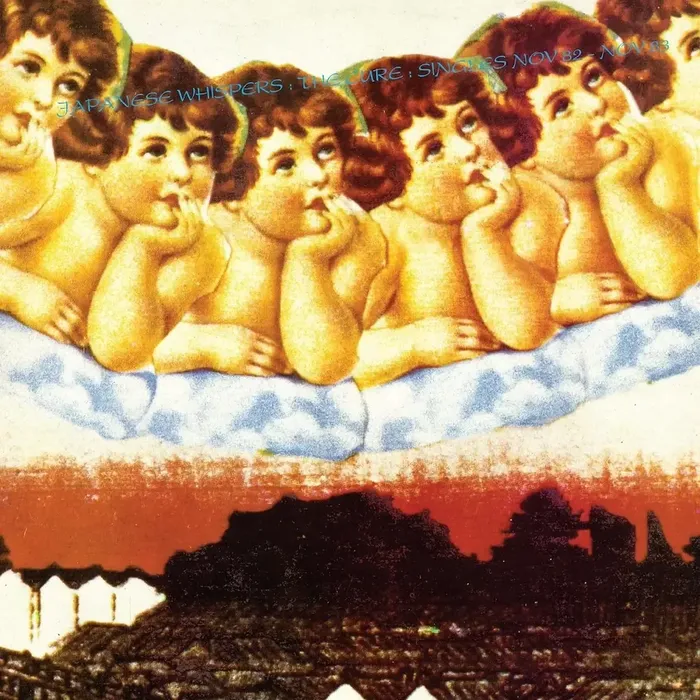
Japanese Whispers is technically not a proper Cure album, though many Cure fans consider it one. Officially, it’s a compilation of their post-Pornography singles, which found Robert Smith rejecting that album’s nihilism and instead, embracing a more cheerful and even whimsical pop sensibility.
Nevertheless, I feel compelled to mention it here because it was the first Cure release I actually bought, following the copy of Wish that I received for my birthday. I found a used cassette copy whilst perusing the shelves of Omaha’s now-defunct Antiquarium record store, and the exotic-sounding title was instantly intriguing. I knew very little about The Cure, so I had no idea where these songs fell in their catalog, nor did I know the backstory of their recording. All I knew was that these eight songs sounded unlike anything I’d ever heard before.
With their quasi-disco vibe, “Let’s Go to Bed” and “The Walk” certainly qualify as dance-y, but there’s something “off” about them that instantly intrigued me. Meanwhile, songs like “Just One Kiss,” “The Upstairs Room,” and “Lament” are filled with strange imagery and skewed sonics that are still haunting to this day. And then there’s “The Love Cats,” a jazzy number that was originally recorded as a drunken joke — Smith has been dismissive of the song in the past — but its playful nature and goofy video have made it a beloved single.
Highlights: “Just One Kiss,” “The Upstairs Room,” “Lament”
