The Killer by John Woo (Review)
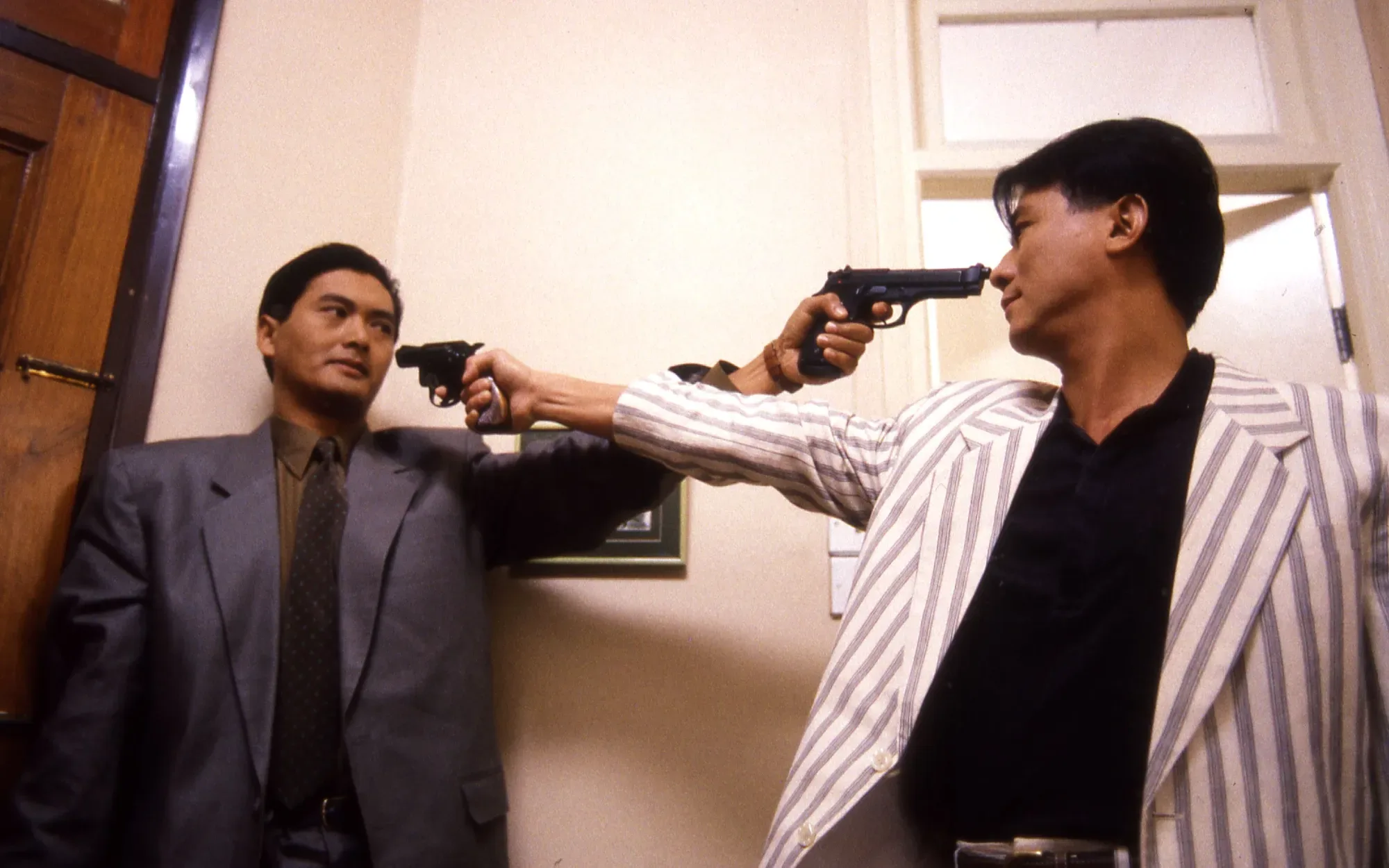
For the longest time, I felt like a total idiot. I had a chance to purchase the Criterion Collection’s release of The Killer on DVD but I chose not to simply because I didn’t own a DVD player at the time. Of course, after I got my player, I discovered that the DVD was actually out of print, and the only available copies were going on eBay for exorbitant prices. I kicked myself for quite some time, especially since I consider myself to be a fairly diehard John Woo fan. I did have it on VHS but I foresaw a future when my copy would be reduced to barely viewable pulp due to repeated watchings.
So I hope you’ll understand my joy when I discovered that The Killer would be coming out on DVD again. Although it doesn’t feature Criterion’s super-duper deluxe treatment, I don’t really care because I finally own one of the greatest action movies I’ve ever seen in a pristine, digital format.
In what may arguably be considered one of John Woo’s greatest films (the other being Hard Boiled), Woo takes his themes of honor, duty, and friendship to incredible heights. And of course, there’s Woo’s trademark over-the-top, yet never gratuitous violence. In fact, Woo is the only director who can take blood spurting out of a fresh gunshot wound and somehow extract some sort of abstract beauty from it. Combatants, pistols in each hand, spin and pirouette like dancers packing heat; bodies flying through the air jerk and twitch as they’re riddled with bullets; explosions fill the screen as cars explode and buildings are shot up. It’s a wonder that it all doesn’t become a muddled mess of blood and fire, but under Woo’s guidance, it unfolds like an opera or one of the musicals that fascinated Woo as a child.
Chow Yun-Fat plays Jeffrey, the best hitman in the business. Unfortunately, Jeffrey has a conscience. When he accidentally blinds a lounge singer named Jennie during a hit, he takes it upon himself to watch over her. When he discovers that a costly operation is the only thing that can return her sight, he takes one last job. However, his employers are afraid that he has been discovered, and refuse to pay the fee, even sending other hitmen and Jeffrey’s best friend against him. On top of that, Jeffrey has a cop, Li (played by Danny Lee), on his trail. But once Li discovers that Jeffrey actually operates under a code of honor, he finds himself siding with the hitman as the film reaches its conclusion.
Chow Yun-Fat is in peak form here, as he slides through each scene with more charisma and grace in his pinky than most of Hollywood’s “leading men” have in their entire body. He’s equally skilled at portraying the cold, efficient killer as well as the noble man pained by the consequences of his lifestyle. Although Danny Lee and Sally Yeh (who portrays Jenny, the singer Jeffrey wounds) do fine jobs as well, this is really Chow Yun-Fat’s tour de force. The only actor who comes close to matching Chow Yun-Fat is Chu Kong, who plays Jeffrey’s best friend and contact, Sydney. The scenes between Sydney and Jeffrey are all excellent, but Sydney’s shining moment takes place when he tries to retrieve Jeffrey’s money. Even after being beaten and humiliated, he refuses to back down, determined to remain faithful to his friend.
It’s really impossible to take this film realistically, given the outrageous action sequences and gunfights. Each one becomes more outrageous than the one before, ultimately culminating in a violent bloodbath at a monastery. However, I found myself more intrigued by the little, less violent flourishes. Only Woo can take the act of picking up a pistol and make it look like a spiritual act. During the boat chase, when Li first crosses paths with Jeffrey, Woo intercuts scenes with a traditional dragon boat race. One second, you’ll see the hitman and his police pursuers in modern speedboats. The next sees a hundred men rowing with all of their might, water churning and drums pounding out the rhythm of the scene. It sounds like a simple juxtaposition, but it adds a tension to the chase.
However, I think my favorite image in the movie takes place after a beachfront shootout. Jeffrey has rushed a little girl shot in the melee to the local hospital, with Li in hot pursuit. Jeffrey holds Li and his partner in gunpoint, waiting to see if the girl pulls through. Woo frames in close to the girl’s still fingers — they look like the most delicate, fragile things in the world. We watch them twitch as the girl regains consciousness, and a gentle melody is heard. Woo cuts back to Jeffrey, and we watch this vicious killer, gun in hand, grin with relief. It’s at that point that we know this is no ordinary hitman, but a man with nobility and honor. It’s this theme of nobility and honor that underscores everything Woo does in The Killer, and keeps the movie from being reduced to a violent bloodbath resorting to gratuitousness to be entertaining. That’s what Hollywood is for.