Rumours of Angels by Revolutionary Army of the Infant Jesus (Review)
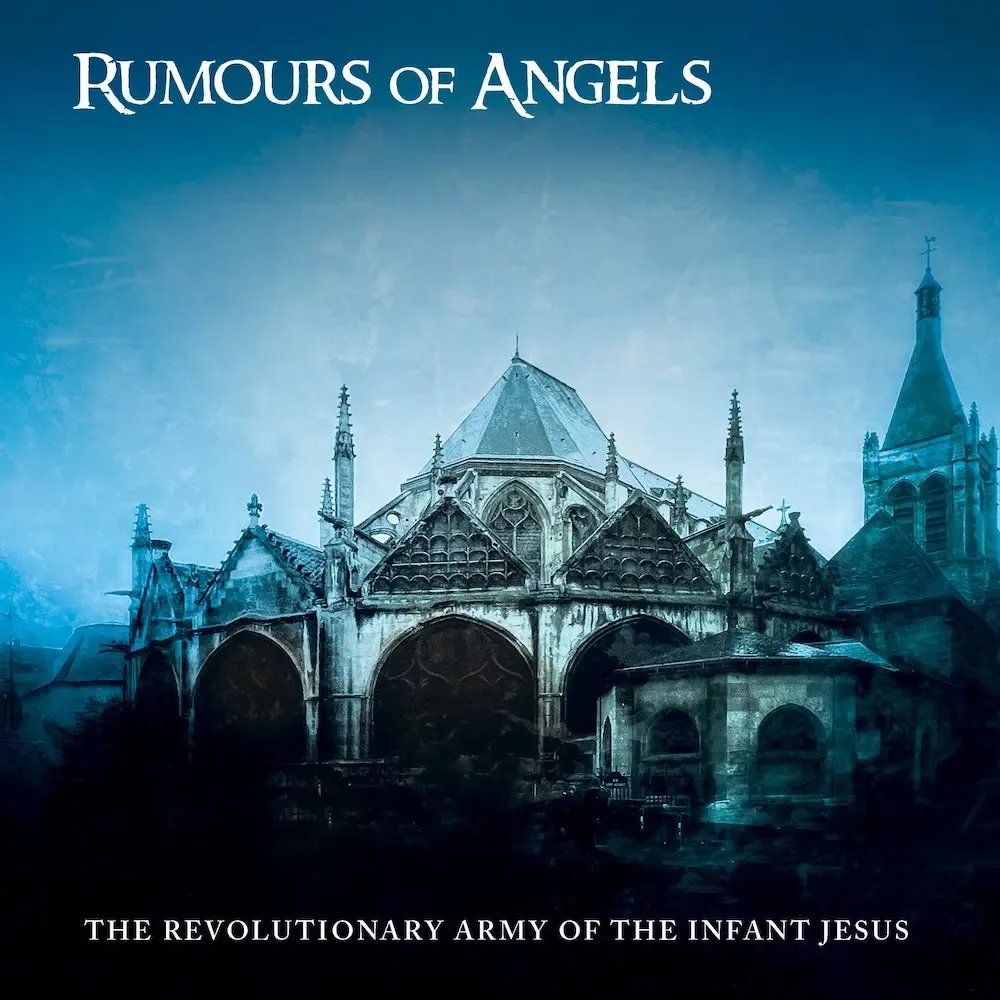
Back in 2013, the Revolutionary Army of the Infant Jesus returned from a decades-long exile with After the End, a three-disc set that featured all of their recorded material up until that point: 1987’s The Gift of Tears and 1991’s Mirror, both originally released by the Probe Plus label, and a collection of singles, EPs, and live performances titled A Rumour of Angels. Since then, RAIJ has released a series of acclaimed recordings, including 2015’s Beauty Will Save the World and 2024’s The Dream We Carry while also reissuing their first two albums.
However, A Rumour of Angels remained widely unavailable until earlier this month, when 9x9 Records released an updated version simply titled Rumours of Angels. Which means that all of RAIJ’s material is now widely available via digital, CD, and vinyl — and not a moment too soon.
If you’re only familiar with RAIJ’s more recent material, then Rumours of Angels offers a necessary dive into their earlier recordings. These songs don’t have the same polish and smoothed edges as, say, last year’s The Dream We Carry. Instead, they contain a raw, exhilarating blend of folk, traditional, and industrial music, one that initially placed the enigmatic Liverpool outfit in the same conversation as experimental and neofolk artists like Current 93 and Les Joyaux De La Princesse as well as ethereal acts like Dead Can Dance. (And if I’m honest, it’s a blend I miss hearing in the band’s more recent work.)
Originally appearing on Apocalyptic Vision’s Jekura — Deep the Eternal Forest compilation alongside offerings from Clair Obscur, Ordo Equitum Solis, and Jack or Jive, “Cantata Sacra” remixes several songs from The Gift of Tears and Mirror into a rhythmic affair of angelic female voices and worshipful lyrics. Meanwhile, “Le Monde Du Silence” and “Dies Irae” — which appeared on La Liturgie Pour La Fin Du Temps, an EP added to 1994’s The Gift of Tears / Mirror double CD — mix portentous spoken word passages with Coil-esque rhythms and monastic chants (the former) and harrowing drones, clattering percussion, and spooky piano melodies (the latter).
Similarly, “Paradis” (from 1995’s EP of the same name) combines goth-y female vocals, roiling guitars, and tribal drumming for an eleven-minute post-punk clamor. But such is RAIJ’s strength that despite lacking structure or direction, it remains challenging and compelling, start to finish — as does their noise-laden take on the traditional Irish ballad “She Moved Through the Fair.”
Suffice to say, it’s all pretty evocative, but the real highlight is a live performance of “Psalm” from 1991’s Mirror. Due to a paucity of concerts, live RAIJ recordings are few and far between. That said, their performance of Joseph Gelineau’s arrangement of Psalm 51 — a famous penitential psalm written by King David after his rape of Bathsheba — is proof plenty that they deliver an otherworldly experience. Thanks to Leslie Hampson’s piercing voice and a ceremonial pace, one can practically smell the sacred incense wafting through the reverent performance, which turns into a sort of musical “thin place” as it segues into “Shadowlands,” another song from Mirror.
2025 represents the Revolutionary Army of the Infant Jesus’ 40th anniversary, which means the Liverpool collective has spent the better part of four decades creating some of the most captivating music you’re likely to hear this side of eternity. Given that so much of their early music feels akin to obscure religious relics — strange, haunting, discomfiting even, but always drawing our attention to a deeper truth — it feels like a blessing that it’s all now so easily accessible. It remains up to us to accept and treat that like the gift that it is.