Running Out of Time by Johnnie To (Review)
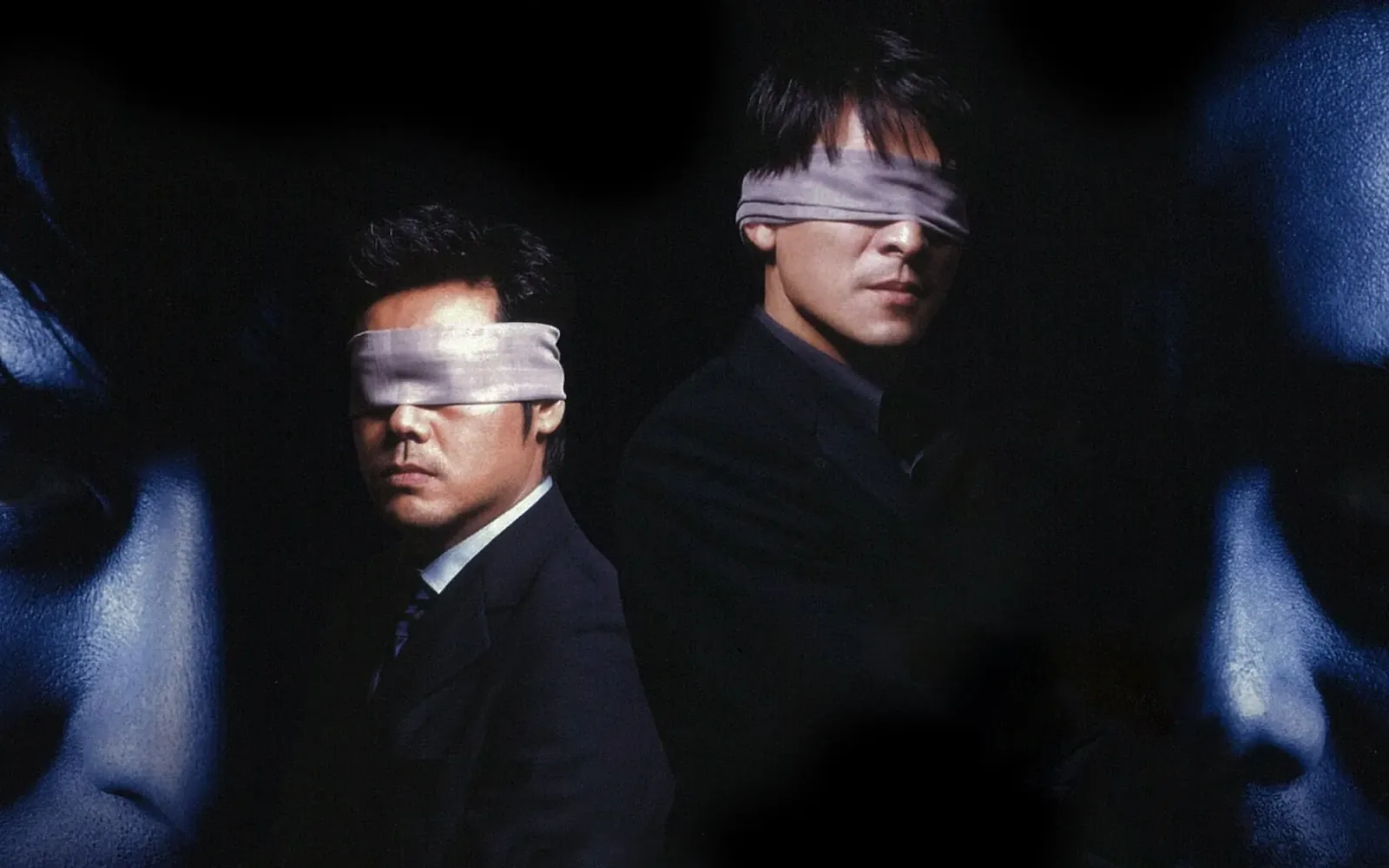
What would you do if you found out you only had a few weeks left to live? Oh sure… you could do good deeds, try to make the world a better place, and give your remaining days some meaning. How very noble of you. But don’t tell me there’s not a part of you that wouldn’t want to do something a little more… nefarious. After all, you’ve got nothing to lose. It’s that premise that sets up Running Out of Time. Unfortunately, the way it’s handled also proves to be the movie’s undoing.
Wah (Andy Lau) has just been told he has two weeks left to live. Dying of cancer, he decides to play a game of cat and mouse with the police. Wah makes the first move when he makes a jewel heist from a financier’s office and takes a hostage. When negotiations break down, the police bring in Sang (Lau Ching Wan), their best negotiator. Despite the police’s vigilance, Wah kills the hostage and easily escapes their trap. At first, Sang is puzzled by Wah’s actions, since they don’t seem to be driven by any criminal motives. And then the dead hostage turns out to still be alive, things grow more confusing.
When Wah steals a large diamond from a vicious gang, Sang realizes that he’s been a tool the whole time. Wah may be dying, but he’s not slowing down at all. As Wah makes his final plans for Sang, the jewel, and the gangsters, it’s obvious that no one has any idea what he’s going to do next. And Wah takes a certain satisfaction in that, egging Sang with little clues here and there. And further complicating things is the fact that Sang finds himself allied with Wah, wanting to understand him as much as he wants to arrest him.
This movie took no time drawing me in, it’s opening scenes promising a great thriller. In one corner, there’s a criminal who’s intelligent and collected, but the fact that he has nothing to lose also leaves the possibility that he could do something crazy at any minute. In the other is an unorthodox negotiator, one who breaks the rules whenever he feels it will help him solve a case. And for the first half, I was completely intrigued by Wah’s games. I was right there with Sang, trying to figure out Wah’s next move, trying to figure out the reasoning behind Wah’s crimes. And the fact that Wah is a complete enigma — all we know is that he’s dying — makes it all the more interesting.
Unfortunately, the movie just can’t remain a sleek thriller, but has to throw in some melodrama and poignancy. Wah’s impending death is mishandled to try and add some sort of tragedy to the movie’s final act. That feels completely at odds with how Wah’s character is set up. When he’s introduced, he’s cold and brutally efficient (and played perfectly by Lau). Not once in the movie does he ever feel sorry for himself, or seem too concerned with the tragedy of his circumstances. So why does director Johnnie To (The Heroic Trio) insist on making us feel that way? Perhaps he felt there needed to be some sort of emotional grip to the film so it’d resonate with viewers. Personally, I think the movie would’ve played out just fine if it had stayed more calculated and “intellectual,” focusing on the battle of wits between Sang and Wah.
Perhaps this emotionalism wouldn’t have been so bad if To hadn’t handled it so poorly. The obvious example of this is the burgeoning friendship between Wah and Sang, two men on opposite sides of the law who find they have something in common. But this kind of relationship has been explored before in films like The Killer and Heat, and much more effectively. Despite To’s attempts to beat it into the viewer, it doesn’t feel like any connection is made between the two. If anything, Sang comes off like an utter tool, because Wah plays him like a cheap violin.
But even more awkward is the relationship between Wah and a girl he meets on the bus (and briefly uses as a hostage). He uses her to get past a police blockade, and she suddenly falls for him. Yeah, I’ve heard of “Stockholm Syndrome,” but this is a little hard to swallow. Later in the film, she helps him again and they go on a date. Unfortunately, it’s ruined when Wah starts coughing up blood at the restaurant (bummer of a time for the cancer to kick in). The whole setup feels completely random and painfully awkward, and like another Heat homage/ripoff.
And then there’s the movie’s conclusion. I guess I was completely fooled. Here I thought Wah was this cold, calculating guy, and it turns out he only wanted to make a big donation to the Children’s Cancer Fund… and avenge his father. This attempt to wrap everything, especially this strange story involving Wah’s family and the gangsters, still feels confused at best. Despite the movie’s solid beginning, and it’s slick camerawork and editing (including a lot of sudden shifts in film speeds, which seems to be all the rage these days), it all falls apart in the last act.
I found myself waiting for Wah’s last defiant stand (the one we get doesn’t count), a final confrontation between Wah and Sang, a gunfight, a sacrifice… anything but the way the movie just peters out in the last 5 minutes. The movie’s first 20 minutes promises it’ll end with a bang… instead, I got a whimper.