Undefeatable by Godfrey Ho (Review)
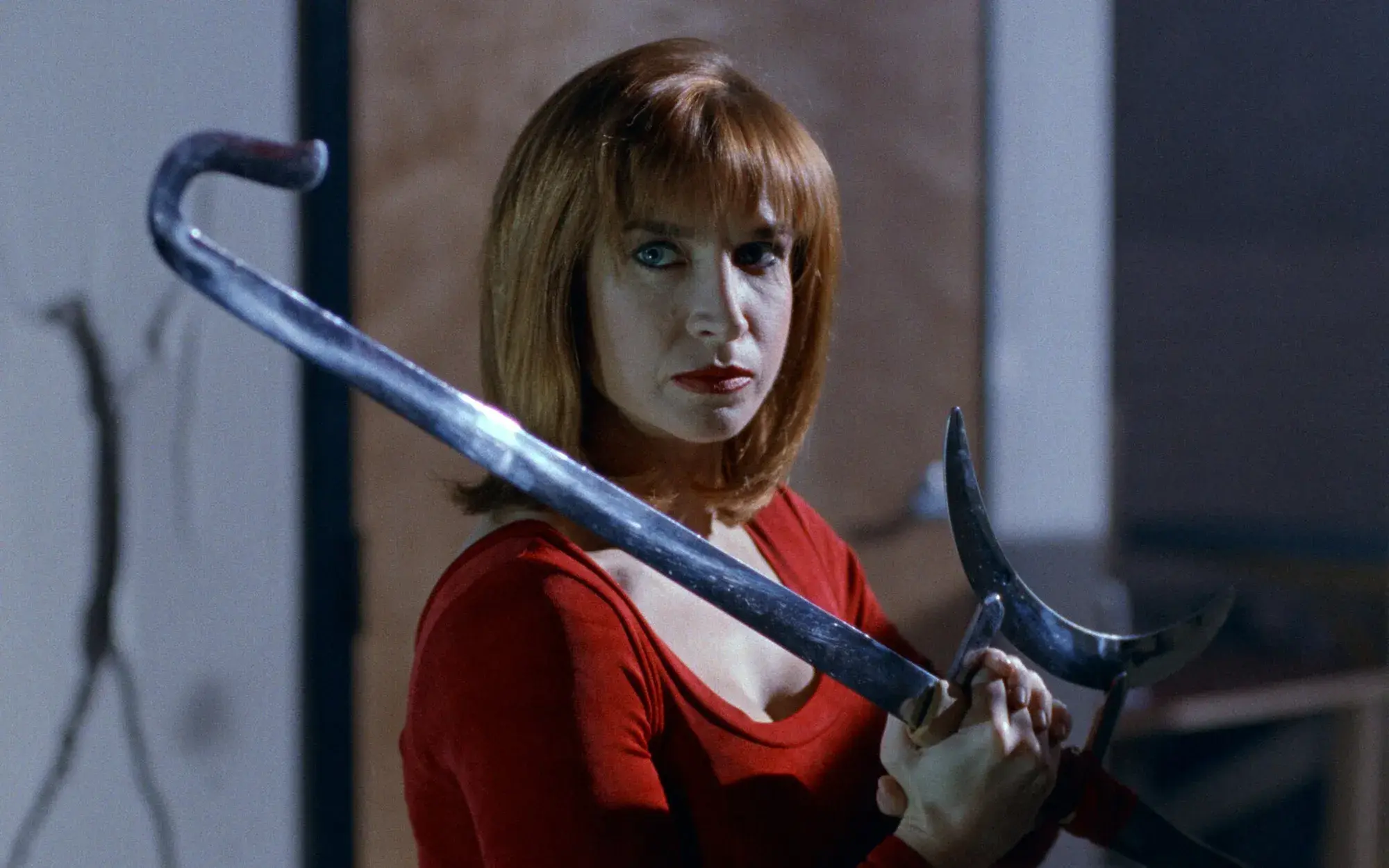
There’s a single moment that best encapsulates why Godfrey Ho’s Undefeatable was so enjoyable for me. No, I’m not referring to its amazing final duel, which went viral years ago, not because of any impressive martial arts choreography, but rather, because the two combatants spend most of the scene ripping off their shirts, posing, flexing their well-oiled muscles, and grunting and screaming at each other like two elk bulls during the rut. The scene I’m thinking of happens earlier in the movie, when Cynthia Rothrock (Martial Law, Yes, Madam!) finally confronts the deranged serial killer who murdered her sister.
In the course of their fight, the killer’s katana — because of course he has a katana — catches on a box filled with packing peanuts and sends them flying through the air, with Ho filming them in slow motion as they rain down around the two opponents. Punctuated by Todd M. Hahn’s synth-heavy score, the moment feels like Ho’s attempt at the sort of stylized, dream-like sequence one typically associates with a Wong Kar-wai arthouse film, and yet we’re still just talking about freakin’ packing peanuts. It’s both utterly sincere and utterly ridiculous, which is a very apt description of Undefeatable as a whole.
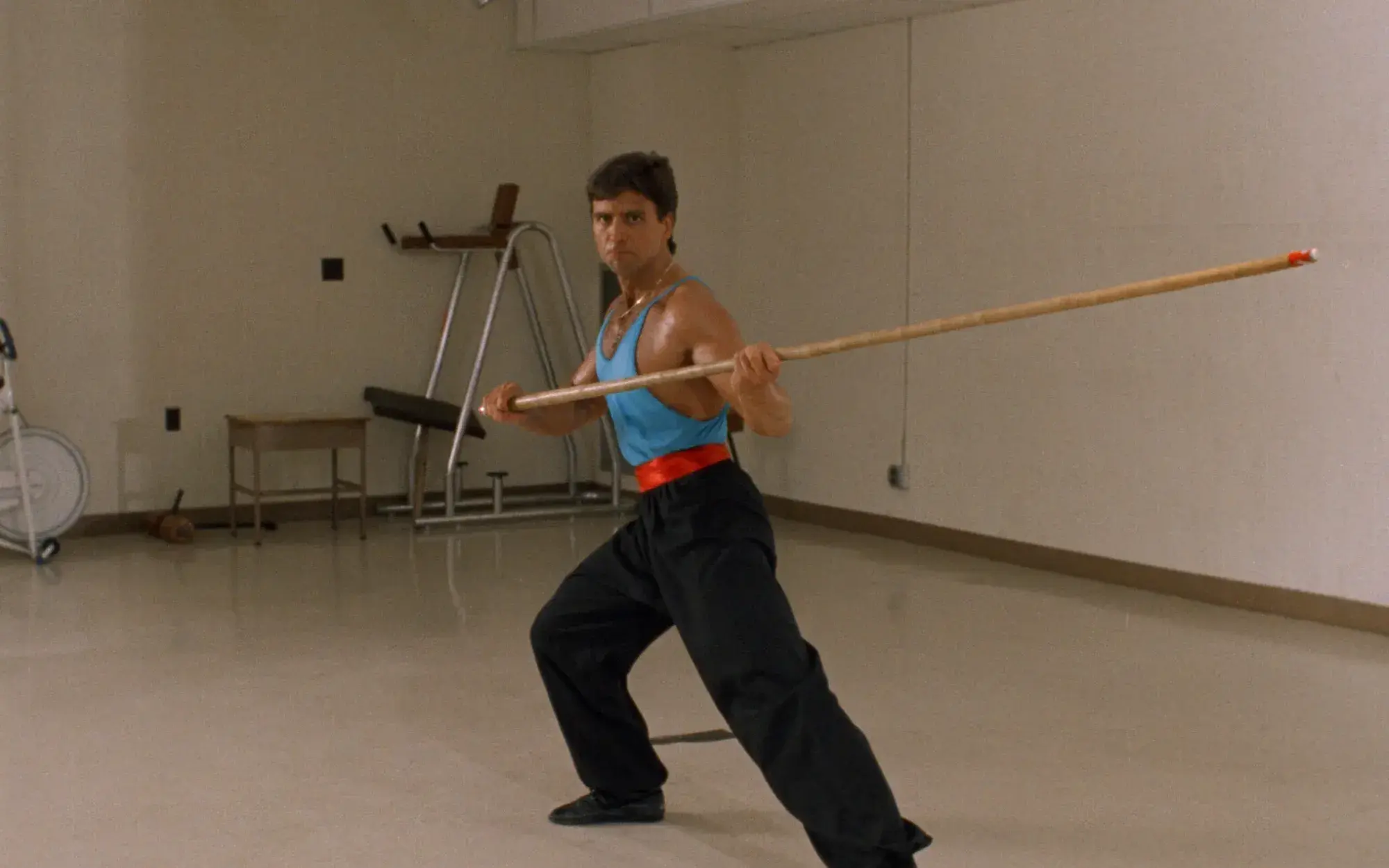
Kristi Jones (Rothrock) is desperately trying to put her sister through college. Unfortunately, waitressing just doesn’t earn enough, so she does what anyone in her shoes would do: participate in underground fight clubs. Kristi’s dreams are crushed, however, when her sister becomes the latest victim of a deranged serial killer named Stingray (Don Niam) who uses martial arts against his victims. Teaming up with homicide detective Nick DiMarco (John Miller), who also knows martial arts — it’s probably easier to count the number of characters who don’t know any martial arts in this movie — Jones is determined to track down her sister’s killer, even if that means cutting a swath through the city’s underworld.
Godfrey Ho is infamous for his “cut and paste” approach to filmmaking in which he spliced together original footage featuring white actors like Richard Harrison and Stuart Smith with scenes that he cribbed from low-budget Chinese, Filipino, and Korean movies. The result was a long string of Z-grade ninja flicks with such fabulous titles as Empire of the Spiritual Ninja and Ninja Knight Thunder Fox. Undefeatable features nary a single ninja, nor does it contain footage from another, totally unrelated movie. Nevertheless, it exists in the same sort of liminal space as Ho’s ninja movies, a space where every other random person knows martial arts and nobody bats an eye when goons don football pads or a flamboyantly colored karate gi to look bad-ass. (Which reminds me; someday I ought to write something about bad guy fashion choices in ’90s “B” action movies.)
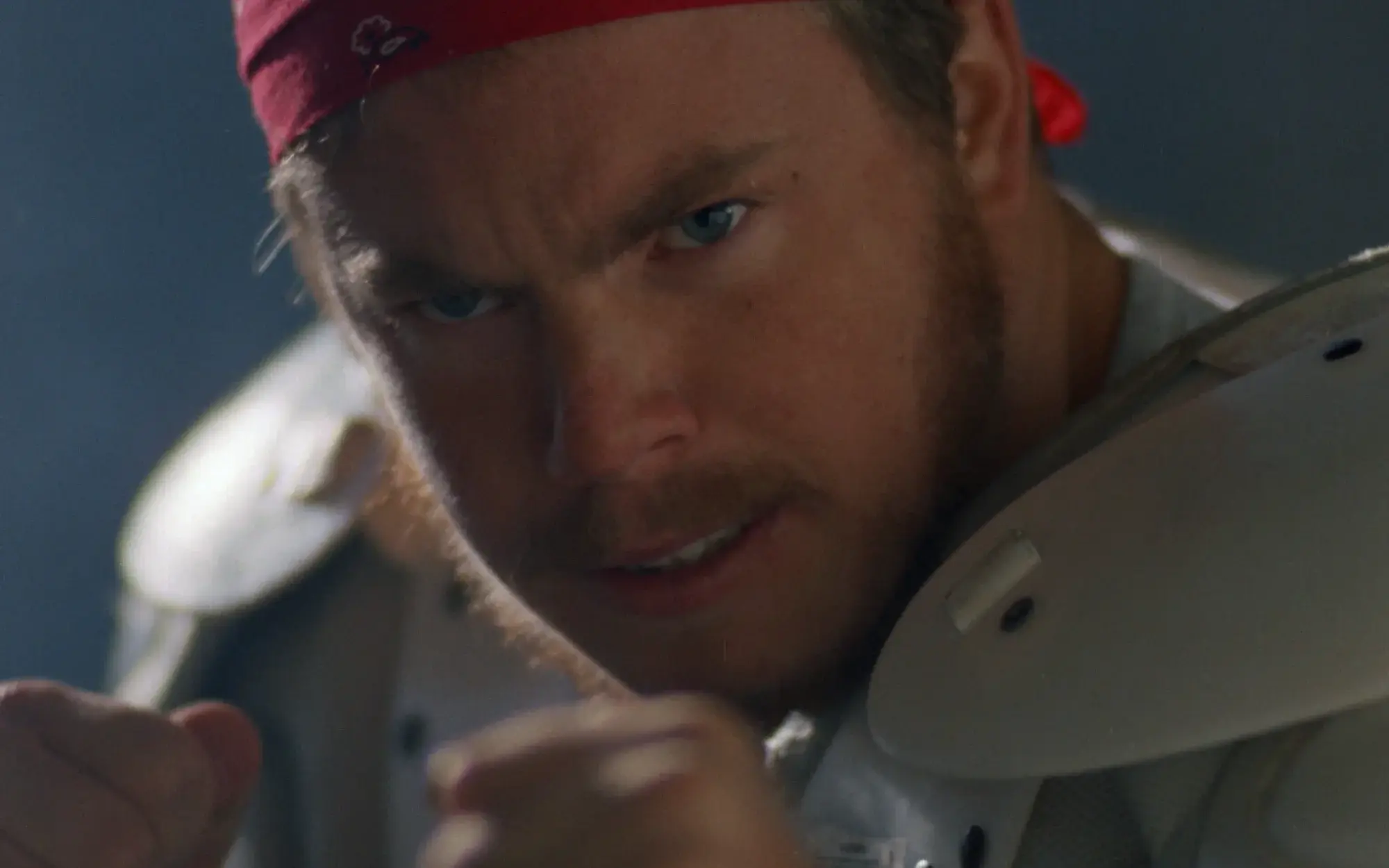
To its credit, Undefeatable does boast some legitimately good stunt work courtesy of Douglas Kung and Tai Yim. (Fun fact: Yim was a grandmaster of Hung Fut-style kung fu who ran his own martial arts school, and Undefeatable stars several of his pupils, including Messrs. Niam and Miller.) Ultimately, though, what sticks with me is the movie’s aforementioned sincerity. Normally, I’d say that Rothrock et al. were in on the joke while making Undefeatable, but to all appearances, they meant every single overwrought scene and performance that crops up in the movie’s 90 minutes.
Rothrock plays her tough-as-nails lady street fighter to the hilt and Miller aims for a similar intensity with his street smart detective. Never once do I doubt that I’m watching an actor who wants to sincerely portray a detective with every earnest fiber of his being. However, Don Niam steals the entire movie as Stingray, who snaps and embarks on his killing spree after his wife leaves him due to — surprise! — his increasingly violent tendencies.
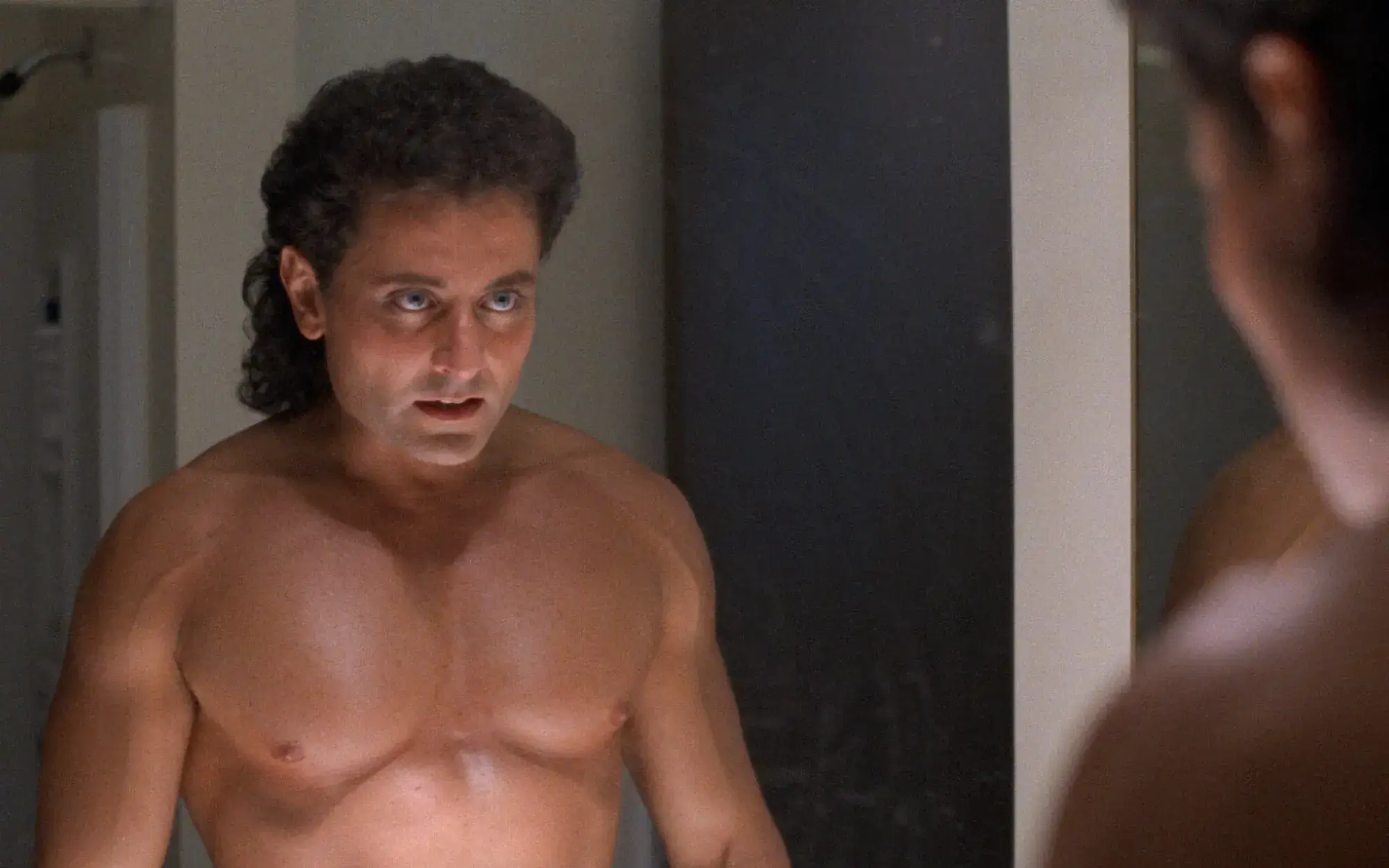
A master martial artist, Stingray uses his skills to kidnap, rape, and murder any woman who remotely resembles his wife. The movie tries to provide some explanation for Stingray’s cruelty by hinting at his unresolved abandonment issues, which explains why he says “Mommy” at the most awkward times (like when he’s sexually aroused). Niam, it seems, saw that he was playing an unhinged lunatic and opted to capture that in a perpetually bug-eyed performance that becomes even more ridiculous thanks to his puffy mullet, distinct lack of blinking, and excessive line deliveries — and I love every single second of it.
I’ve gone on record saying that one of the reasons why I love “B” movies — and even “Z” movies — is their scrappiness and distinct lack of polish. Strip away the polish, and you strip away the pretense that so often adorns Hollywood movies, even Hollywood movies that try to achieve a “B” movie vibe. For all of its tropes and silliness — it literally ends with a group high five at the grave of Kristi’s sister — there’s something refreshingly honest about a movie like Undefeatable that knows exactly what it is and does its damndest to deliver that to the audience. The fact that it culminates with one of the very best “worst fighting scenes” in cinematic history is just the icing on the cake.
Several years ago, Vinegar Syndrome released a deluxe 4K remastered edition of Undefeatable that’s packed with a slew of special features, including a commentary by Cynthia Rothrock; interviews with Godfrey Ho, Rothrock, Don Niam, and others involved in the production; a couple of video essays; and much more. The fact that a true cult classic like Undefeatable, which no doubt languished in obscurity and bargain bins for decades, has now received so much care and attention puts a big smile on my face.
