Victorialand by Cocteau Twins (Review)
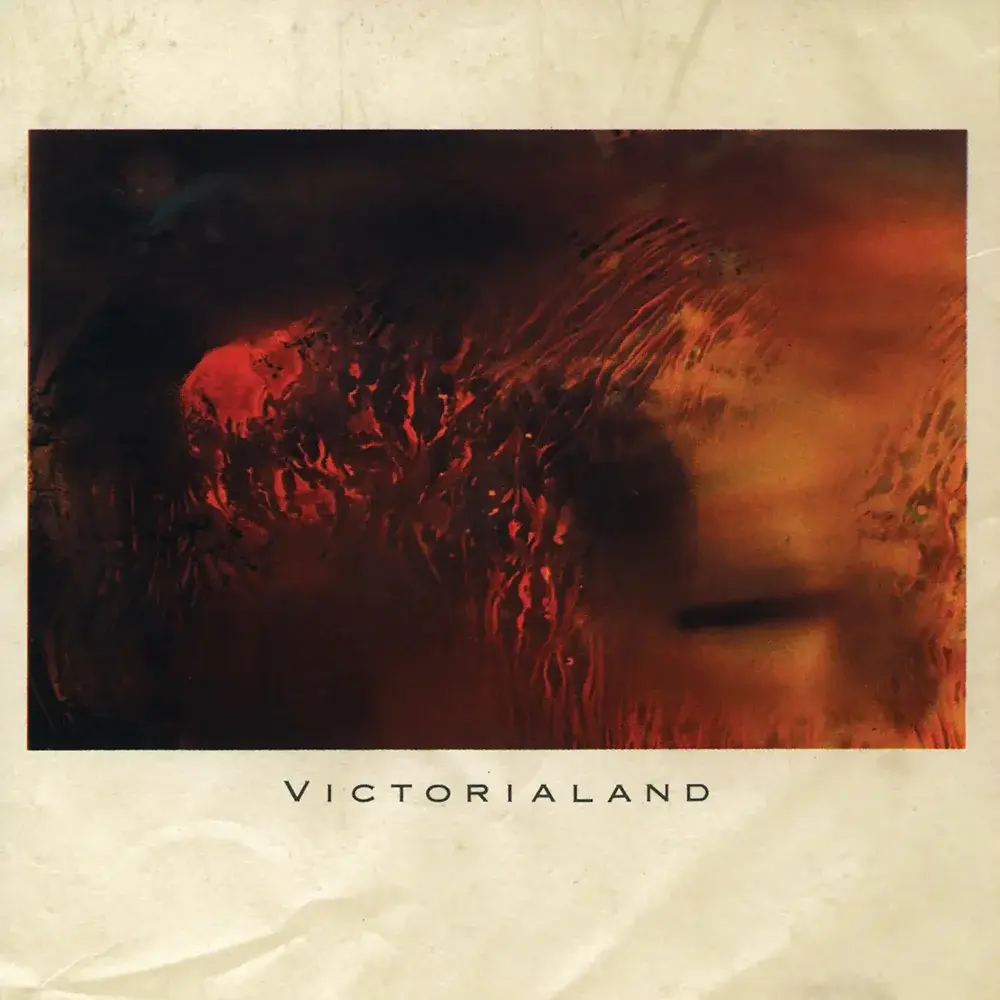
When Elizabeth Fraser and Robin Guthrie entered the studio to start working on the fourth Cocteau Twins album, they did so without bassist Simon Raymonde, who’d been recruited by 4AD boss Ivo Watts-Russell to work on This Mortal Coil’s Filigree & Shadow. As such, the duo opted for a more stripped down sound that focused on Fraser’s angelic voice and Guthrie’s ethereal guitar-work.
“Stripped down” is very much a relative term, though, because the resulting Victorialand is easily the dreamiest and most ambient album in the Twins’ catalog. Which means that it’s also one of the dreamiest and most ambient albums of all time by any band. Untethered by anything rhythmic — the Twins’ usual drum machine programming is also largely absent here — Fraser’s voice and Guthrie’s guitar are allowed to drift freely like the winds that cross the Antarctic region for which the album’s named. Richard Thomas’s (Dif Juz) languid saxophone only adds to that drifting sensation on album opener “Lazy Calm.”
Fittingly, the album’s nine songs all possess a chilly aspect, due in large part to the glittering timbre of Guthrie’s heavily processed acoustic guitar. “Fluffy Tufts” and “Oomingmak” sound like they were carved out of the purest ice, their delicate guitar notes seeming to refract the rising Antarctic sun. “Whales Tails,” on the other hand, takes on a slightly darker tone that’s no less gorgeous and inviting. Guthrie’s melodies summon the aurora australis, and Fraser’s voice trills and coos as if lost in wonder at the strange lights shimmering high overhead. Similarly, “The Thinner the Air” ends Victorialand on a pensive note that’s a true showcase for Fraser’s vocals, which sound particularly fragile and forlorn here.
Fraser is in full glossolalia mode throughout Victorialand, and the album is so much the better for her indecipherability. More so than on any other Cocteau Twins release, Fraser is fully content to sing in made-up languages, or pull from languages that she doesn’t understand (as is the case with “Whales Tails”). But much like label mate Lisa Gerrard (Dead Can Dance), who’s also known for singing in tongues, Fraser’s lyrics — though cryptic and nonsensical — still tap into and channel a sense of beauty that’s both deep and primal. In other words, I have no idea what she’s singing, but in some impossible-to-explain way, I know precisely what she means.
Victorialand is my second favorite Cocteau Twins album after 1990’s Heaven or Las Vegas. And on some days, particularly when the temperature’s a little chillier and the feel of snow is in the air, it might take the top spot. Although it’s inspired countless other dream pop acts (e.g., Autumn’s Grey Solace, Love Spirals Downwards, Memoryhouse), Victorialand forever remains set apart from the Twins’ many devotees. Huddled in the studio by themselves, Elizabeth Fraser and Robin Guthrie created something truly sublime with Victorialand: an album that, more so than most, conjures up a discrete world that’s entirely and wholly its own.