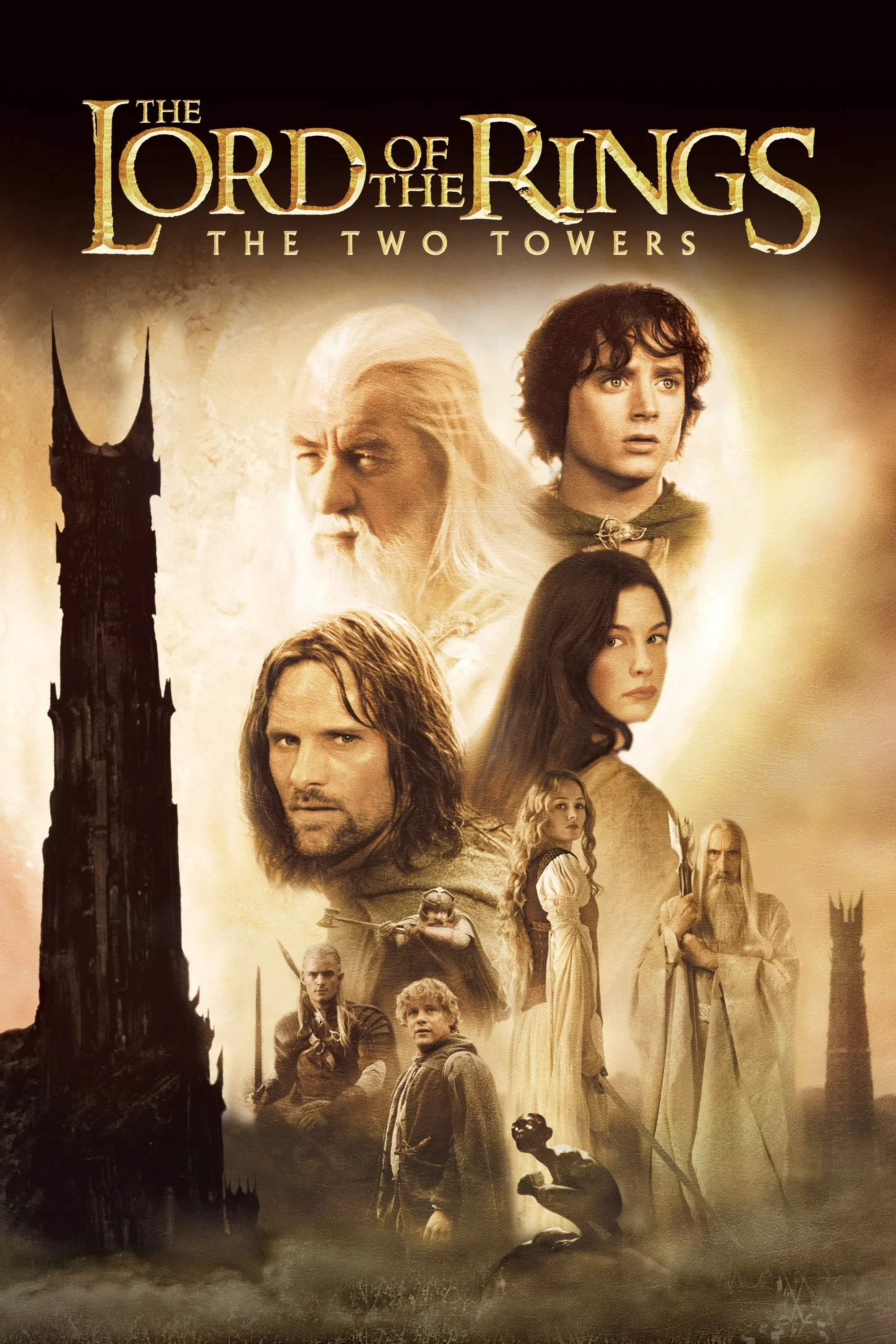
The Lord of the Rings: The Two Towers by Peter Jackson (2002)
This is where Peter Jackson’s liberties with Tolkien’s story really become noticeable, for better or worse. There’s the obvious shifting around of story beats, like moving Boromir’s last stand to The Fellowship of the Ring, or more seriously, altering the character of Faramir. (I have friends who absolutely hate that particular change, claiming that it ruins one of the Tolkien’s noblest characters. I get where they’re coming from, but I also understand why Jackson made the change for dramatic purposes, even though I don’t think it works as well as it could have.) On a more positive note, The Two Towers introduces us to Bernard Hill’s King Théoden of Rohan, whose desire to save his people might prove their undoing, and Miranda Otto’s proud Éowyn. But more importantly, it brings us Andy Serkis’s Gollum, who is brought to life by detailed visual effects work and is both loathsome and pitiable, sometimes even in the same scene. This time around, I was particularly struck by the interplay between Gollum, Frodo, and Sam as the two hobbits argue over how to treat the creature formerly known as Sméagol. Frodo is driven by a sense of mercy and compassion that borders on naïve while Sam’s suspicions are as warranted as they are cruel. It’s tricky storytelling, especially considering one of the characters is entirely digital, but done in a very compelling manner here.
I may earn an affiliate commission on items you buy through Opus. These commissions will go directly to supporting the site and my blogging.