923 reviews of movies, TV shows, books, restaurants, etc. My own private Goodreads, Letterboxd, and Yelp all rolled into one (more info). Star ratings are 100% subjective, non-scientific, and subject to change. May contain affiliate links, which support Opus.
I didn’t realize this was the third Reckless volume when I picked it up at the library. That, however, did nothing to diminish my enjoyment of this hard-boiled noir set in L.A. during the ’80s, in which a cinephile P.I. investigates a shady real estate tycoon — with predictably seedy and violent results. I’ve already put holds on all of the other Reckless volumes that I can.
This feels like the first consistently great Sandman volume, where Gaiman’s writing really hits his stride. The overarching storyline — Morpheus journeys to hell to retrieve a lover whom he condemned there thousands of years ago — plays out in all sorts of fascinating ways, culminating in Lucifer concocting a plan to shut down hell. Lots of fantastic ideas and imagery, and I’m intrigued by how Gaiman weaves his pantheon and theology together (e.g., the relationship between heaven and hell, the purpose of hell, Lucifer’s regrets). While not exactly orthodox, it’s imaginative and thought-provoking nevertheless.
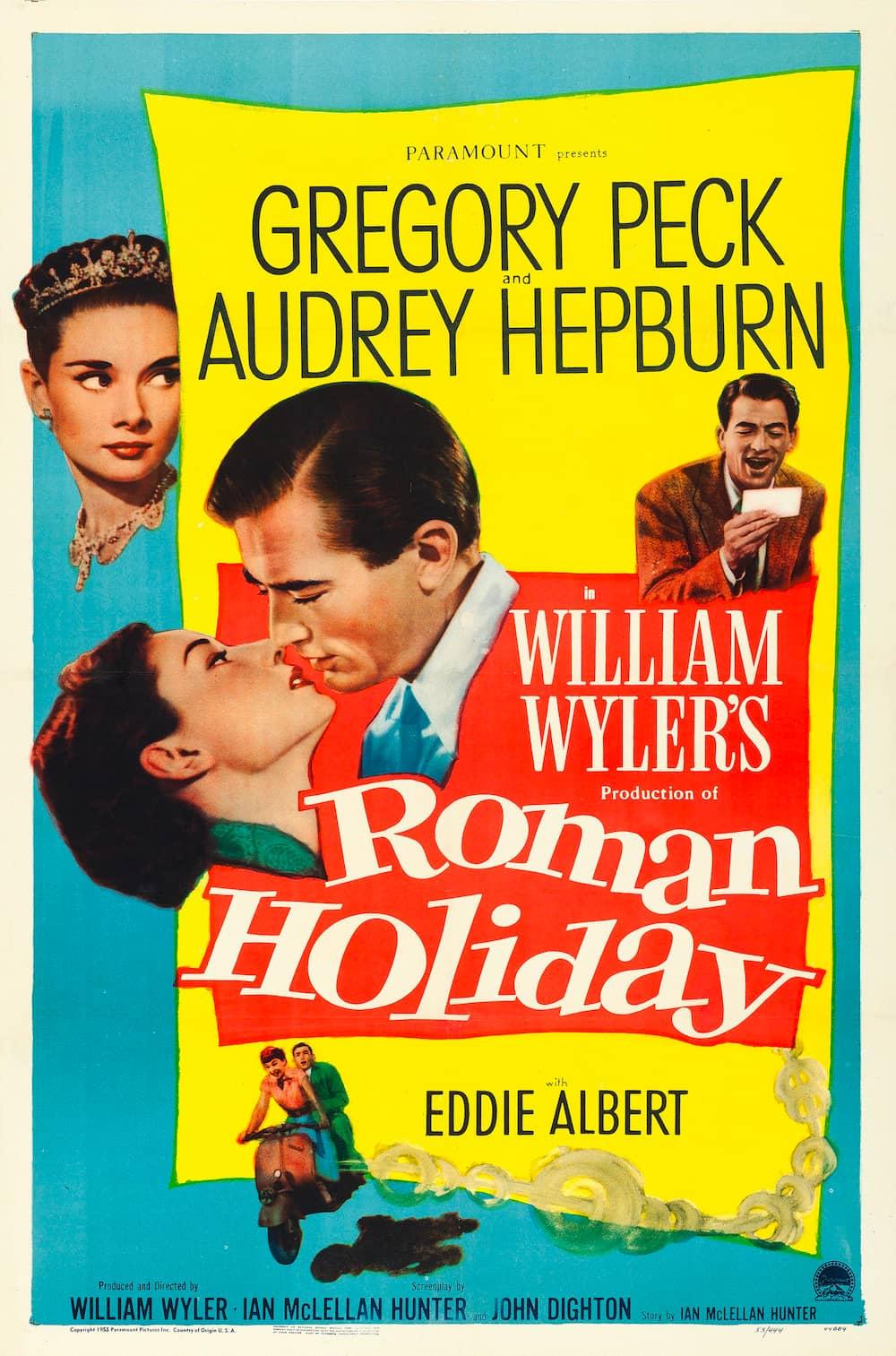
One of the great Hollywood classics. Audrey Hepburn (in her first major role) is absolutely luminous as Princess Ann and Gregory Peck is effortlessly charming as Joe Bradley. However, Eddie Albert almost steals the show as Joe’s photographer buddy. As for the Rome backdrop, it gives the film both authenticity and stunning scenery. I was struck by the film’s bittersweetness during this most recent viewing, as the young princess and opportunistic reporter alike come to realize the weight of duty and obligation. Hepburn and Peck were approached in the 1970s with doing a sequel, which probably would’ve been terrible. Roman Holiday works so well precisely because it ends on such a bittersweet and melancholy note.
This Michigan-based pub restaurant chain arrived in Lincoln back in 2016, and after hearing about it, we finally checked it out. I would eat here again, but I’m not in any great rush to do so, especially when Lincoln has so many other great restaurants. The next time I want to eat this kind of food, I’ll probably just stick with Lazlo’s Brewery & Grill.
Iria: Zeiram the Animation is one of my favorite anime OVAs of all time, so I was excited to finally see the live-action film that inspired it. Unfortunately, Zeiram didn’t meet expectations. It has all the makings of a cool sci-fi monster movie, from the creature and gadget designs to some icky body horror. The visual effects were cleverly done and there was even some martial arts action thrown in for good measure. But for whatever reason, a significant portion of the movie is spent following the bumbling exploits of two side characters. I assume they were intended as comedic relief, but they’re just annoying and end up overshadowing Yūko Moriyama’s capable heroine.
This collection of disconnected stories isn’t the greatest Sandman volume that I’ve read, but it does feature what is often considered one of the best Sandman stories: Neil Gaiman’s spin on Shakespeare’ A Midsummer Night’s Dream. I also enjoyed “Façade,” in which an immortal superhero (Element Girl) longs for the release of death due to her isolated existence. I don’t know if this was Gaiman’s intent, but it’s a nice deconstruction of superpowers; we think it’d be cool to have them, but we never consider the cost they might have on our soul and sanity.
Mechanical Violator Hakaider gets a star for its title alone. And I’ll give it another star for its post-apocalyptic meets campy, glam rock aesthetic. On the one hand, you’ve got an implacable cyborg fighting his way through a seemingly perfect (read: dystopic) society. On the other hand, the main villain wears a bird’s skeleton draped over his shoulder and pontificates on the beauty of flowers. Also, so many feathers. But to be honest, I wish the movie had leaned harder into one aspect or the other: either embrace the grimness and nihilism, or embrace the camp. Some interesting visuals, to be sure, be it the mechanical designs or the massive religious ruins dotting the landscape, and Hakaider always looks cool on his motorcycle. As for the many fight scenes, if you’ve ever watched a Power Rangers episode, you know what to expect.
I’m still slowly making my way through Neil Gaiman’s Sandman series. My favorite story is that of Hob Gadling, a man who thinks death is dumb and as such, simply refuses to die — which makes him an interesting companion for Morpheus, and allow Gaiman to make various comments on human nature and civilization (e.g., the more things change, the more they stay the same). The serial killer convention is goofy and weird and totally comic book-y — and utterly chilling. As for the appearance of G.K. Chesterton, well, that’s just fun.
Remember 2013’s 47 Ronin, starring Keanu Reeves? No? Well apparently, somebody thought it deserved a sequel, so here we are. Now, I think we can all agree that Mark Dacascos as a 21st century samurai warlord leading his clan against evil ninjas in, of all places, Budapest, is a fantastic premise for a film. Blade of the 47 Ronin, unfortunately, does not deliver on said premise. Dacascos is great, as expected, and I love that, in the film’s world, nobody bats an eye at the sight of fully-armed samurai walking around in modern-day Hungary. But the tone, herky-jerky storytelling, cheap effects, CGI blood, and uneven acting make this feel like a direct-to-Syfy title or worse, a rejected CW pilot. Which is a shame, because it had elements that could’ve made for a cool cult classic. A third 47 Ronin film is currently in development, which seems unnecessary. But maybe the third time will be the charm.
I have only a passing familiarity with Ultraman, so I don’t know how well Shin Ultraman works as a reboot of the classic tokusatsu series. The storyline was as ridiculous as you’d expect, filled with technobabble and over-the-top monsters, as was the filming, which constantly employed crazy edits and “Dutch angles” to make the proceedings feel ultra-dramatic (npi). Like its predecessor, 2016’s Shin Godzilla, Shin Ultraman often felt like a parody of the genre, albeit one made by people who obviously love the genre. I enjoyed film’s visuals — e.g., Ultraman’s “Spacium Beam” attack and his flying poses — all of which had a delightfully retro feel to them. But its episodic nature was a downside. It felt less like a coherent film and more like a miniseries that’d been chopped up and re-edited together, and thus missing key scenes that would’ve helped smooth things out.
The final book in David Zindell’s trilogy is supremely underwhelming. His striking prose is unable to redeem the meandering plot or make up for the total lack of resolution in some key storylines. But even said prose starts to feel tedious after awhile, especially when the protagonist — who is practically perfect in every way — experiences a mind-blowing epiphany seemingly every other chapter, epiphanies that Zindell describes in great detail. Perhaps most annoying of all, the novel’s climax is basically a riff on classic utilitarianism, which (A) requires the protagonist to abandon the lofty idealism he’s spouted throughout the trilogy and (B) undermines Zindell’s passionately written ruminations on life’s purpose and humanity’s potential.
I didn’t enjoy this as much as the first Lost Bullet, due mainly to some weird tonal shifts. The film couldn’t quite decide if it was a hard-boiled police thriller, a car stunt showcase, or an action comedy. It tries to do all three to varying degrees, and suffers a bit as a result. Still, a decent enough Friday night popcorn film with some truly ridiculous (read: enjoyable) stunts and action scenes. The end clearly sets up a third film, which I’ll definitely be watching when it (presumably) arrives on Netflix.
The problem facing Alice in Borderland’s second season is two-fold. First, after establishing its crazy premise (random strangers wake up in an abandoned Tokyo and must survive by winning ultra-twisted games — think Lost meets Battle Royale), it has to constantly up the ante. And second, any explanations concerning the series’ world, the purpose of the games, etc., are bound to be underwhelming. To its credit, I think Alice in Borderland understands that; the series finale constantly toys with your expectations. Still, the ending is, well, underwhelming considering everything that transpires, à laLost. But it’s a fun ride getting there and I was engaged by the characters’ stories, also like Lost. A third season seems unlikely, but if it happens, I’ll watch it.
Some thoughts after watching Yuen Woo-Ping’s 1993 kung fu classic for the umpteenth time. First, why isn’t Yu Rongguang more well-known? He’s so good as the titular bandit, even outshining Donnie Yen. Second, it’s safe to say that The Matrix, as we know it, wouldn’t exist without Iron Monkey if only because Yuen lifted some of this movie’s choreography for Neo et al. Third, few things are as consistently entertaining as early-to-mid ’90s Hong Kong movies. It’s a testament to that era’s filmmaking that Iron Monkey is so frenetic, visually speaking, but also so legible and easy to follow.
Lean, mean French action movie about a former crook-turned-police mechanic who goes on the run after corrupt cops kill his mentor. The stunts and fight scenes are pretty great, but what’s really impressive is the movie’s storytelling efficiency. There’s almost no filler here and very little exposition, and yet the characters and their relationships still feel fleshed out.
A film about Santa Claus relying on his violent past to save a young girl from kidnappers? Seems like a total home run. Violent Night has some clever Santa-themed kills (though the violence is blunted by CGI blood). But the movie’s best aspects (e.g., Santa’s violent Viking past, David Harbour’s performance) get diluted by references and similarities to other classic Christmas-themed movies (e.g., Home Alone, Die Hard, The Ref). Which is a shame, because this has “cult hit” written all over it.
The first Knives Out was an instant classic here at Opus HQ. Glass Onion hits some of the same high points — Blanc solving the original murder mystery in seconds is a delight — but it just doesn’t have the same joie de vivre as its predecessor. Maybe it’s because a film featuring an infantile billionaire hits a little too close in light of Elon Musk’s Twitter activity, or the irony of an “eat the rich” film costing Netflix $469 million is a little too, um, rich for my blood, or because the destruction of priceless art feels different in light of Just Stop Oil’s protests. These things obviously aren’t the fault of Rian Johnson or his talented cast, but I couldn’t stop thinking about them while watching the film.
A collection of stories about each of Dream’s Endless siblings (e.g., Death, Desire). Each story is illustrated by a different artist, so they’re all wildly different in tone and atmosphere. Apparently the first comic to ever land on the New York Times Bestseller List. I thought it was OK.
I didn’t like season two as much as season one — I think it wasted too much time on the characters’ various global travels — but I still enjoy the film’s Wes Anderson-esque aesthetic and of course, Constance Contraire remains a delight.
There’s much to like about Guillermo del Toro’s adaptation of the classic tale: the stop motion animation, the depiction of fascist Italy, the Blue Fairy’s angelic design, Gregory Mann’s performance as the titular character. So I’m still trying to figure out why I didn’t like it more than I did.