Shanghai Affairs by Donnie Yen (Review)
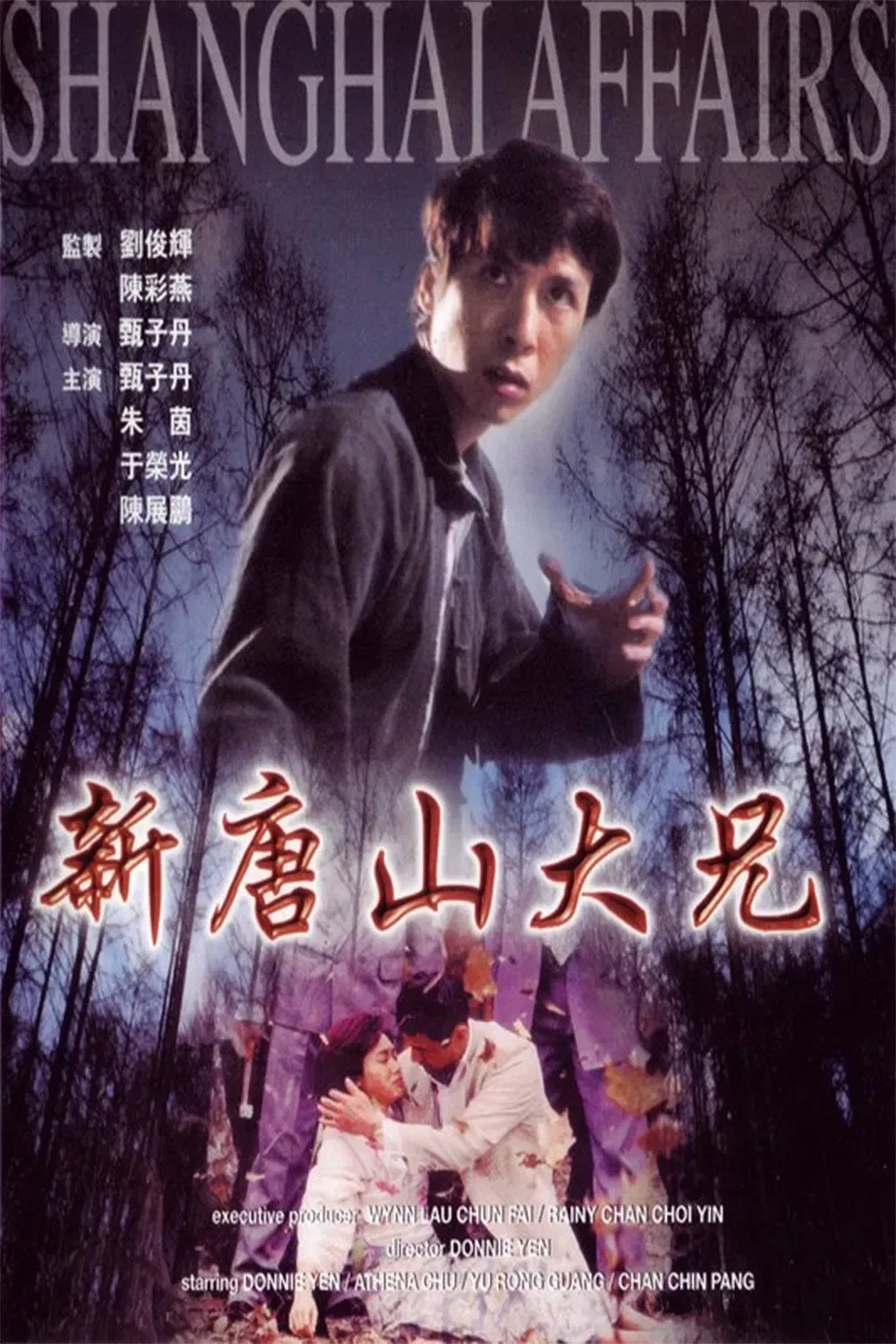
I’m starting to become less and less impressed with Donnie Yen as I watch more and more of his movies. I first really noticed him in the stellar Iron Monkey (which is required viewing for anyone claiming to be a lover of martial arts films). I’d also seen Wing Chun, which is a fairly decent romp, in spite of its absurd sexual hijinks. But then I watched Crystal Hunt, an subpar treasure hunt movie with loads of undercranked fight scenes. And now Shanghai Affairs is coming close to sealing Yen’s fate in my book. And the sad thing is that it had all the makings of a really great movie.
Yen plays Tong Shan, a doctor educated in the West who returns to Shanghai to open a clinic in a poor section of the city. Shortly after arriving in town, he gets mixed up with a local gang led by Brother Chi (Yu Rongguang), and completely wipes the floor with them. But despite being skilled in the martial arts (which must’ve been required reading at medical school), Shan refuses to get caught up in local affairs and remains neutral, much to his assistant’s chagrin. When it’s discovered that Chi’s gang works for one of Yen’s former teachers, a British doctor, Shan and Chi agree to stop fighting each other. But things are never quite this simple in movies, are they?
Brother Chi’s younger sister Shen is mute, and Chi refuses to send her to the doctors, believing instead in local superstition. But Shan knows he can cure her with Western medicine, and proceeds to do so. Naturally, Shen falls for Shan, but so does Chi’s girlfriend (who happens to be Shen’s best friend). So now we’ve got the romantic angle covered. But wait, there’s one more strand to the plot. Young children have started disappearing, only to be found dead a few days later with all of their internal organs removed. Could all of these be related? If you really have to think about that one, you obviously need to start watching more movies. And it’s pretty safe to say that things aren’t going to end on an incredibly positive note.
This movie had a lot going for it, and it does an okay job at balancing all of the various plotlines. I was impressed, however, by how the romantic angle was handled (a rare thing for me, or maybe just an indicator of how uninteresting I found the rest of the movie). Shen and Shan obviously like each other, but the affections of Chi’s girlfriend complicate matters. And Chi isn’t ignorant of the romantic shenanigans going on under his nose. There’s one especially lovely scene where it all comes to boil, as all four characters must wrestle with their feelings of love and betrayal.
Unlike most martial arts flicks, this one isn’t at all manic. Most movies in the genre try to pack so much into one scene that it becomes an overload. In comparison, Shanghai Affairs is pretty slow-moving. Unfortunately, this reveals the movie’s greatest weakness: the acting, and most of that falls on Yen’s shoulders. I really want to like Yen, but he just doesn’t have the personality to pull off this movie. The supporting parts, with the exception Rongguang, don’t help too much either. There are many scenes where there’s little or no dialog, which is fine, if the acting can save them. Silence can be used to great effect in movies, revealing the thoughts and feelings of the characters in far more subtle ways. But far too often, the characters in Shanghai Affairs simply look as if they’re trying to remember their cues, turning to wood until the next time they need to speak.
Even the martial arts sequences seem lacking. With a good fight sequence, you become aware of the fight’s rhythm, but all of them seem cut off prematurely. And many of them are shot up close, so that you never get a real sense of what’s going on. There are times when the camera does pull back, and we get to see the fight in all its glory, but those are few and far between. And that goes for most of the movie as well.
There are times when a good movie does peek through, but overall it’s fairly predictable and even a little blatant in the ripoff department. The conflict between Chi’s superstition and Shan’s medicine is reminiscent of Once Upon a Time in China and there’s a scene where Shan battles a horde of axe-wielding gangsters with a tree branch that’s lifted directly from Drunken Master II. I found myself more impressed by the scenery (set in autumn against falling leaves and grey skies, the movie has a fairly downcast look from the beginning), which adds more to the movie’s inherent tragedy than nearly anything else.